






Psychology says children often repeat behaviours that get attention, even when that attention is negative: What parents can do |


A child keeps interrupting while a parent is on a phone call. The parent says, “Stop interrupting me.” The child does it again. This time the parent raises their voice. A few minutes later, another interruption. The parent sighs, explains, threatens and finally gives the child a long lecture about manners.It can feel as though nothing is working. But there is another way to look at the interaction: every time the behaviour happens, the child is getting something powerful from the parent- attention.
22 Sept 2026 | 10:49
Does your toddler behave differently with grandparents than with you? What’s the biggest difference?
That attention may be irritated, angry or negative, but for a young child, it can still be attention. And sometimes, without meaning to, parents can end up giving more attention to the behaviour they want to stop than to the behaviour they want to see.The US Centers for Disease Control and Prevention (CDC), in its parenting guidance for toddlers and preschoolers, notes that both positive and negative attention can reinforce behaviour. Its guidance explains that when attention follows a behaviour, the likelihood of that behaviour happening again can increase.This does not mean every tantrum, interruption or act of defiance is an attempt to get attention. Children behave in difficult ways for many reasons- tiredness, hunger, frustration, boredom, an unmet need, difficulty expressing emotions or simply because they are still learning self-control. But when a particular behaviour repeatedly results in a strong parental response, that response can become part of the pattern.

Even scolding can become attention that reinforces a child’s behaviour.
Why negative attention can become rewarding
Imagine a parent working from home while their preschooler plays nearby. The child asks a question. The parent says, “Not now.” The child asks again. The parent continues working. The child starts tapping a pencil on the table. The parent looks up and says, “How many times do I have to tell you to stop?”From the parent’s perspective, the child has just been scolded. From the child’s perspective, however, the parent has stopped working and is now completely focused on them.This is one reason attention is such a powerful part of children’s behaviour. The CDC describes attention from caregivers as highly rewarding for young children and specifically notes that negative attention – including scolding, correcting and yelling – is still attention.The American Academy of Pediatrics’ HealthyChildren.org similarly explains the principle as “behavior + attention = more behavior”: when parents tend to notice children mainly when they misbehave, the attention surrounding the misbehaviour can unintentionally encourage more of it.The important point is not that parents should stop correcting children. Rather, they need to become more aware of which behaviours receive the most emotional energy.
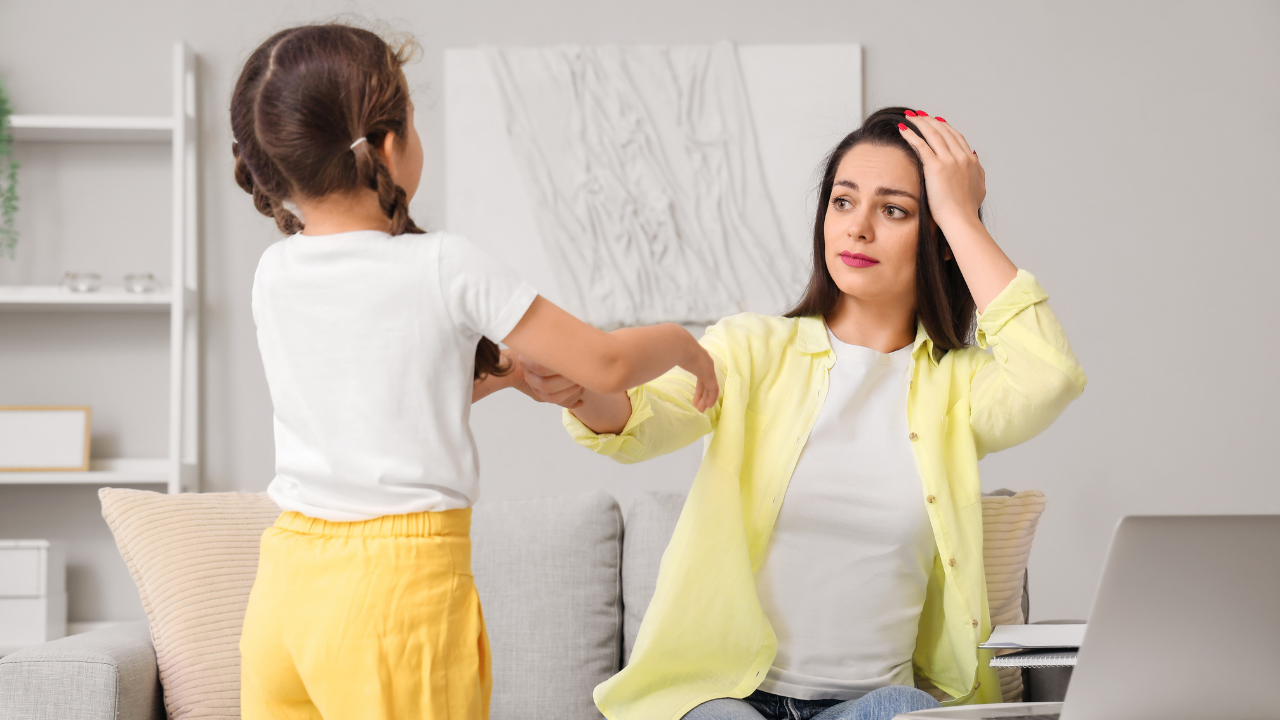
A child’s behaviour may change when parents shift how they respond to it.
Children also need attention when they are doing nothing wrong
One common parenting trap is that good behaviour can become almost invisible. A child is quietly drawing, playing with blocks or sitting through dinner without complaining. Nobody says anything. But the moment the child throws the crayons, shouts at a sibling or starts whining, an adult immediately intervenes.Over time, the pattern can become surprisingly clear: quiet behaviour gets little response; disruptive behaviour gets a reaction.This is why positive attention matters. The CDC recommends noticing and praising desired behaviour, particularly with specific comments that tell children exactly what they did well. Instead of a general “Good job”, a parent might say, “I noticed you waited for your brother to finish talking,” or “Thank you for putting the toys away without being asked.” The goal is not to praise every tiny action or turn parenting into a constant reward system. It is simply to make appropriate behaviour visible.
The evidence is more nuanced than “just ignore your child”
Research supports the use of carefully applied attention withdrawal for some minor behaviours, but that is very different from ignoring a child’s emotional needs.A 2018 multilevel meta-analysis published in PLOS One examined 19 studies involving 75 effect sizes on parenting behaviours including praise, verbal reprimands, time-out and ignoring. The researchers found that briefly ignoring children after non-compliance was associated with increased compliance across the studies they analysed. However, the authors also noted that the research largely examined immediate or short-term effects, rather than proving that one particular strategy is the answer to all behaviour problems.Ignoring is not appropriate when a child is frightened, genuinely distressed, hungry, unwell or trying to communicate a legitimate need. It is also not appropriate for dangerous behaviour. The CDC specifically says attention withdrawal should be reserved for minor, attention-seeking behaviours and should not be used when a child is hurting themselves or someone else, destroying things or experiencing genuine distress. In other words, the question is not simply, “Should I ignore this?”A better question is: “What is my child communicating, and what response will help them learn the behaviour I want to encourage?”

Children need attention for positive behaviour, not only when they misbehave.
What parents can do differently
For minor behaviours such as repeated whining, interrupting or demanding attention, parents can try reducing the amount of attention attached to the behaviour.That may mean staying calm, avoiding a long lecture and giving a brief response rather than entering into a prolonged argument. If the behaviour is safe to ignore, the parent can withdraw eye contact and conversation for a short period, then reconnect as soon as the child stops.The CDC describes this as an active strategy rather than simply “doing nothing”. Parents should continue to monitor the child for safety and return attention when the unwanted behaviour stops.For example, instead of repeatedly saying, “Stop whining. I already told you no. Why do you always do this?”, a parent might calmly say once, “I’ll listen when you ask without whining.” Then, when the child uses a calmer voice, the parent can immediately respond: “That was a much better way to ask. Tell me what you need.”The child is then learning something more useful than simply “whining doesn’t work”. They are learning what does work.
Catch the behaviour you want to see
Perhaps the most useful shift is to notice children before they demand to be noticed.If a child is playing independently for 10 minutes, a parent might sit beside them and say, “You’ve been building that tower very carefully.” If siblings are sharing without arguing, say, “I like how you both took turns.” If a child gets ready for school without repeated reminders, acknowledge it.These small moments give children attention without requiring them to create a problem first.There is research supporting the broader role of parental responsiveness too. A study of parent-child interactions found that maternal responsiveness was associated with children’s compliance and satisfaction during an observed activity, suggesting that positive parenting is more than simply using isolated techniques such as praise.
And sometimes the behaviour needs curiosity, not correction
A child who suddenly starts screaming every time a parent answers the phone may not simply be “attention-seeking”. Perhaps the child has noticed that the phone consistently gets the parent’s attention. Perhaps they have been missing one-on-one time with the parent. Perhaps they have learned that shouting is the fastest way to interrupt an activity they find boring.That is why behaviour is worth observing before labelling it.Parents can ask themselves: When does this behaviour happen? What happens immediately before it? What does my child get immediately afterwards?The answers can reveal a pattern.If the behaviour happens whenever the parent becomes unavailable, for example, creating a predictable 10-minute period of undivided attention before the phone call may work better than repeatedly reprimanding the child during it.
The bigger lesson: attention is a parenting tool
Children do not need parents to respond perfectly every time. Real homes are noisy, parents get tired and sometimes everyone loses patience.But if a parent notices that the same behaviour keeps returning, it may be worth looking at what happens immediately afterwards.Does the child get a long conversation? Eye contact? A parent leaving work to intervene? A negotiation? A laugh? A threat? Even an angry lecture can become a reliable source of attention.The answer is not to give children less attention. It is often the opposite: give more attention to the behaviours you want to grow, and less emotional energy to minor behaviours that are maintained by the reaction they produce.And when a child is genuinely struggling, the response should be connection first. A behaviour can be inconvenient and still be communicating something important.For parents, the shift is subtle but powerful: instead of asking only, “How do I stop this behaviour?”, ask, “What behaviour do I want to see instead – and am I giving that behaviour enough attention?”