








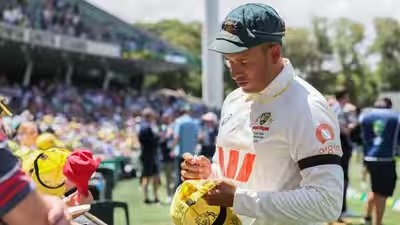
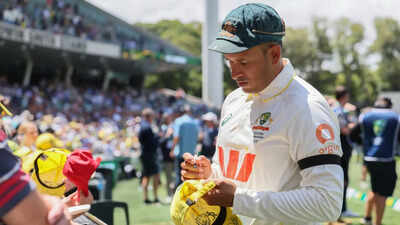
The Sandpapergate scandal that rocked Australian cricket in 2018 has returned to the spotlight following fresh revelations from Usman Khawaja, who has claimed that the entire team was aware of the ball-tampering attempts during the Test series against South Africa.Excerpts from Khawaja’s upcoming autobiography, Sabr, published by the Sydney Morning Herald (SMH) on Saturday, suggested that the controversial practice was not restricted to the third Test in Cape Town but had also been attempted in the preceding match. The revelations have triggered strong reactions, with former Australia coach Darren Lehmann rejecting Khawaja’s claims and ex-England captain Michael Vaughan also expressing his displeasure.Amid the growing controversy, Khawaja took to social media on Sunday to clarify his comments, insisting that his account had been misrepresented and that he stood by what he had written.“Alright, it’s time to clear up some facts because the media has taken this to the moon, as expected.“I stayed quiet yesterday, but number one, if you read my article, you would have seen when I mentioned it was all of us that’s implying that, whether we like it or not, we are all responsible for what happened. Together, as a team, we need to take that collectively. That is all,” the former Australian batter said.However, Khawaja stopped short of retracting his assertion that the players knew about the ball-tampering episode.“But now that everyone’s talking, am I going to deny that everyone knew? Nah. I won’t deny that either.“But I never speak on behalf of anyone else in my book. Contrary to all the headlines the clickbait media would have you think. Don’t get caught up in this s***.”The former opener also addressed suggestions that he had chosen to make the revelations eight years after the incident to generate publicity and boost sales of his autobiography. Khawaja maintained that he had deliberately held back the account until the Australian team had returned from South Africa.“What I say now isn’t a reflection of them anymore, and now my words don’t influence the team at all. I speak for myself.“But even so, I refused to publish any of this while the boys were still in South Africa. That’s why I called Pat (Cummins).“Why would someone who really wants to increase the sale of his book refuse the greatest marketing opportunity he has? I haven’t thrown anyone under the bus… those three guys [Steve Smith, David Warner and Cameron Bancroft] who took the blame for all of us, they’re the victims,” he said.Khawaja reveals two teammates opposed collective responsibilityFurther details from the autobiography, reported by Code Sports, have also shed light on a disagreement within the Australian dressing room after the Cape Town Test. Khawaja claimed that two members of the team objected to his proposal that the players collectively accept responsibility for what had happened.“This was the most disappointing thing for me. I knew who those two guys were, and it was ludicrous; out of everyone, it was them. It showed me their true colours, though. When the going got tough, all they cared about was themselves. But I was not going to stop fighting this cause,” Khawaja wrote.The issue resurfaced years later when Cameron Bancroft appeared to suggest in an interview that Australia’s bowlers had knowledge of the ball-tampering operation.Following those remarks, Pat Cummins, Josh Hazlewood, Mitchell Starc and Nathan Lyon issued a joint statement distancing themselves from the incident.Khawaja’s autobiography further claims that he contacted then head coach Justin Langer and CEO Todd Greenberg after Bancroft’s interview. He reportedly urged them to ensure that the entire team accepted responsibility rather than placing the burden solely on the bowling group.According to Khawaja, both Langer and Greenberg agreed with his suggestion. However, the eventual statement released publicly came only from the four Australian bowlers, leaving the former batter disappointed with how the matter was handled.The latest revelations have reopened questions surrounding one of the darkest episodes in Australian cricket, with Khawaja maintaining that responsibility for the incident extended beyond the three players who were formally punished.