








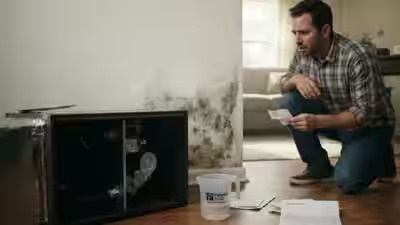
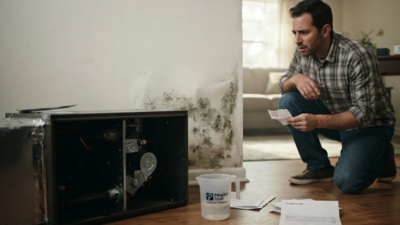
A Florida homeowner got $10,000 from his insurer for water damage from an air-conditioning system, and now he has lost a second $10,000 award for mold repairs after an appeals court ruled his insurance policy did not allow the extra payment. Florida’s Third District Court of Appeal threw out the extra award given to Jacinto Molina, finding the policy capped pay for the underlying water damage at $10,000, and although the deal had separate wording offering up to $10,000 for mold damage, it also said that extra cover could not raise the limit on the damaged property. In its 25 November 2026 ruling, the court backed People’s Trust Insurance Company, which argued it had already paid the top amount owed under the policy, overturning the lower court’s decision and sending the case back for more steps in a dispute focused on how the insurance contract handled mold caused by water from an air-conditioning system, according to Justia Law.
Air-conditioning leak led to insurance dispute
According to the court’s 25 November opinion, Molina bought a Limited Water Damage Coverage Endorsement from People’s Trust Insurance Company, an added policy rule that covered sudden and accidental water damage from leaks or discharges in certain home systems, including plumbing, heating and air-conditioning gear. The endorsement set a top payout of $10,000 for covered property damage and said this cover would not raise the existing insurance limit for the damaged property, while Molina’s policy also had another rule offering up to $10,000 in extra cover for mold caused by an insured event, called a “Peril Insured Against” in the contract.The clash started because water from Molina’s air-conditioning system later caused mold damage to his property, and both sides agreed on how the mold formed and that People’s Trust had already paid Molina the full $10,000 allowed under the limited water damage endorsement. Even so, Molina got another $10,000 through a lower court judgment for the mold damage, letting him collect $20,000 in total for losses tied to the same water event, which People’s Trust fought by arguing the second payout went against the terms of the insurance contract.
Insurer argued the policy had a single limit
In its appeal, People’s Trust argued the lower court wrongly treated the mold rule as a separate payment limit and added it on top of the water damage cover. The insurer said the policy offered up to $10,000 for mold damage, yet that rule did not let the total payout for the damaged property go past the limit set by the water damage endorsement, pointing to wording in both rules stating the cover did not raise the liability limit on the damaged property. The key question was therefore whether Molina could get two separate $10,000 payouts under different parts of the same policy when both claims came from the same event, which the insurer argued the contract clearly barred.
Appeals court examines the policy wording
The Third District Court of Appeal agreed with People’s Trust and found the lower court made a mistake by awarding the extra mold payout, with Judge Gordo writing the opinion for the appeals court that the wording of the insurance deal was clear and had to be followed. The court said insurance policies must be read as a whole, giving each rule its proper meaning, because a separate cover benefit cannot automatically be read as permission to raise another limit when the contract bars that.The judges pointed to an earlier ruling, Arguelles v. Citizens Property Insurance Corporation, 278 So. 3d 108 (Fla. 3d DCA 2019), which said courts must follow the ordinary meaning of clear insurance policy text, and also cited Florida Wellness & Rehabilitation v. Allstate Fire & Casualty Insurance Company, 201 So. 3d 169 (Fla. 3d DCA 2016), on how courts read insurance contracts. The appeals court found the mold rule gave cover for damage from an insured event, yet clearly kept that benefit from raising the limit on the damaged property, so because the air-conditioning leak fell under the limited water damage endorsement, the $10,000 limit applied to the underlying event and Molina was not owed another $10,000 on top of what was already paid.
Coverage checklist could not override the contract
The appeals court also looked at another part of the lower court’s reasoning, where the trial court had leaned on an insurance coverage checklist when awarding Molina the extra payout. The appeals judges rejected that view, saying the checklist could not change the real terms of the insurance deal, and cited Florida Peninsula Insurance Company v. Cespedes, 161 So. 3d 581 (Fla. 2d DCA 2014), which looked at why coverage summaries are given to homeowners. Under Florida law, insurers must give homeowners an outline of coverage to help explain what their policies cover, yet that paper is for information and cannot replace or change the contract itself, so the appeals court said the lower court gave the checklist too much weight when ruling Molina qualified for another payout.
$10,000 award overturned
The Third District Court of Appeal overturned the lower court judgment that gave Molina the extra $10,000 in mold benefits and sent the case back to the lower court for further steps matching the appeals ruling. The ruling came out on 25 November 2026, in People’s Trust Insurance Company v. Jacinto Molina, case number 3D25-1166, on appeal from the County Court for Miami-Dade County, where Judge Stephanie Silver handled the first case, before an appeals panel of Judges Fernandez, Gordo and Rebull, with Judge Gordo writing the opinion and noting the ruling is not final until any timely motion for rehearing is settled.