






Middle East war enters day 12 as US, Israel unleash ‘heaviest strikes’ on Iran as Tehran rules out ceasefire
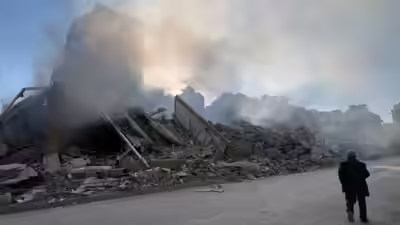
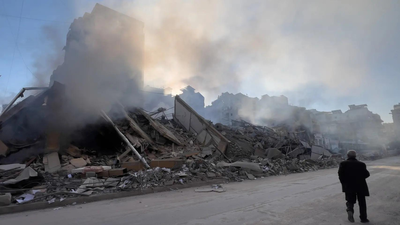
The war between United States, Israel and Iran entered its 12th day on Wednesday with no sign of easing, as American and Israeli forces carried out what officials described as the most intense strikes yet on Iranian targets while the conflict spread across the region. US defense secretary Pete Hegseth said Tuesday would see the largest wave of US attacks since the war began, with more aircraft, bombers and intelligence-guided strikes deployed against Iranian military infrastructure. Iran, whose military capabilities have been battered by days of bombardment, vowed to continue fighting. Iranian parliament speaker Mohammad Bagher Ghalibaf rejected the possibility of a ceasefire, saying Tehran intends to punish what it calls aggression by Washington and Tel Aviv. Another senior Iranian figure, Ali Larijani, issued a warning to US President Donald Trump on social media, saying Iran does not fear US threats. Israeli Prime Minister Benjamin Netanyahu meanwhile said the broader aim of the war was to weaken Iran’s leadership to the point where popular forces could overthrow the government. “We are breaking their bones,” Netanyahu said of the ongoing campaign.
Strikes expand across the region
The fighting has spread well beyond Iran’s borders, with new strikes reported across Lebanon and Iraq. Lebanon’s health ministry said Israeli strikes killed at least seven people across southern Lebanon early Wednesday, including five in the town of Qana. Additional airstrikes in the Tyre and Bint Jbeil districts also caused casualties. Israeli forces also launched strikes on infrastructure linked to Hezbollah in the southern suburbs of Beirut after issuing evacuation warnings for the densely populated area. Elsewhere, drones targeted military installations at Baghdad International Airport in Baghdad late Tuesday, according to Iraqi security officials. The drones landed near facilities used by US-led coalition forces, including the American-operated Victoria Base, though no casualties were reported.
Heavy bombardment in Tehran
Residents of Tehran reported some of the war’s “heaviest bombardment” overnight, with powerful explosions shaking neighborhoods and causing electricity outages across parts of the capital. Witnesses said the strikes lasted for extended periods around midnight, with some residents describing residential buildings being hit. Many businesses in Tehran closed early amid fears of further attacks, AP reported. Tens of thousands of civilians have reportedly fled major cities, seeking refuge in rural areas.
US targets Iranian naval assets
The US military said it had destroyed 16 Iranian mine-laying vessels near the strategic Strait of Hormuz amid fears Tehran could attempt to block the vital shipping lane. The waterway, through which about one-fifth of the world’s oil supply passes, has become a focal point of the conflict. President Trump warned that if Iran deploys naval mines in the strait, they must be removed immediately or face severe military consequences.“If Iran has put out any mines in the Hormuz Strait, and we have no reports of them doing so, we want them removed, IMMEDIATELY! If for any reason mines were placed, and they are not removed forthwith, the Military consequences to Iran will be at a level never seen before. If, on the other hand, they remove what may have been placed, it will be a giant step in the right direction! Additionally, we are using the same Technology and Missile capabilities deployed against Drug Traffickers to permanently eliminate any boat or ship attempting to mine the Hormuz Strait. They will be dealt with quickly and violently. BEWARE!” he said.
140 US service members wounded
The Pentagon said about 140 US service members have been wounded since the conflict began, though most injuries are minor. Eight troops were reported to be severely injured, while several have already returned to duty. Civilian and military casualties have mounted across the region as well. In Lebanon alone, authorities say hundreds have been killed and more than a thousand wounded since the latest round of fighting began.
Markets and global concerns
Despite the escalating conflict, financial markets showed relative stability Tuesday after days of volatility triggered by uncertainty about how long the war might last. The S&P 500 slipped slightly, while oil prices stabilized after plunging from nearly $120 per barrel earlier in the week to around $90. Global leaders are closely monitoring the conflict’s economic consequences. Leaders of the Group of Seven are expected to hold emergency talks on energy security and potential measures to stabilize oil markets. With both sides rejecting calls for negotiations and intensifying military operations, fears are growing that the conflict could further destabilize the Middle East and disrupt global energy supplies.