






Purple Brinjal vs Green Brinjal: Which is better for bharta, fry, and sabzi |
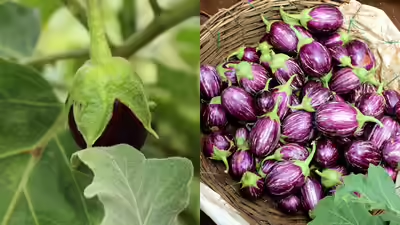
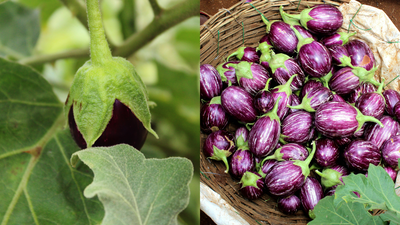
While purple brinjal is popular for smoking baingan bharta, green brinjal suits well for stir-fry and dry sabzi preparations. Each type differs from the others in flavour, number of seeds, softness, and cooking characteristics. When it comes to preparing bharta, fry, or sabzi at home, one should consider the differences between the two types and choose accordingly. Learning about the difference between purple and green brinjal would help you choose the correct one for your bharta, fry, or sabzi prepared in curry sauce.
Difference between purple brinjal and green brinjal
Purple brinjal is bigger and has smooth and shiny skin. The flesh is comparatively soft and turns creamy after cooking. As a result, the fruit is highly versatile. It also contains many seeds; however, these seeds soften after cooking and don’t affect the texture.Green brinjal is firmer and denser than the purple variant. It doesn’t contain many seeds, unlike the purple variety. It has an earthy and slightly bitter taste. It doesn’t break easily during the cooking process. Different brinjal varieties vary in “shape, colour, texture and culinary suitability,” which is why choosing the right one matters in cooking.
Purple Brinjal vs Green Brinjal: Which is the best brinjal for making bharta
Purple brinjal is the better option when making baingan bharta. Its soft flesh easily chars on the fire, providing the smoky taste characteristic of the dish. After charring, it is simple to remove the skin and blend it into a creamy paste.The green variant cannot do so well in this case because its tougher flesh cannot be easily mashed. It can result in a dish with a coarse texture rather than a smooth one.Research on food preparation indicates that roasted aubergines become sweeter and acquire a smoky smell. This is the reason why the soft variety of purple aubergines is used in pastes such as bharta.
Which is the best brinjal for fry
For the frying process, the green variety of brinjal enjoys an edge over the others due to its firm flesh. The firm nature allows the vegetable to maintain its structure even after being cut into pieces or slices, making it ideal for frying. Furthermore, its oil uptake is lower, producing a healthier meal as a consequence.The purple variety of brinjal can also be fried. However, since it has softer flesh than the green one, it needs more attention while being fried; otherwise, it can turn mushy and undesirable in taste and texture. When prepared correctly, it produces a pleasant texture.According to some culinary experiments, vegetables with softer flesh tend to absorb oil easily while being fried.
Best brinjal option for making sabzi
When making sabzi for daily consumption, particularly those that are dry or semi-dry, green brinjal should be preferred. It can maintain its structure even after being cooked with spices, onion, and potato, thus adding crunchiness to the dish.On the other hand, purple brinjal is ideal for making sabzi in which curries are used as a base. This vegetable will soften in the gravy, thus adding flavour to the dish.In terms of nutrition, both vegetables have almost identical nutritional profiles. They have low-calorie content and are rich in fibre, antioxidants, and nutrients.
Which one should you choose: Purple Brinjal or Green Brinjal
There is no such thing as a “better” brinjal; it all depends upon how you cook it. The purple brinjal suits bharta well because it is easily roasted and gives a smoky taste. On the other hand, green brinjal is more suited for frying because it holds its shape while frying.To put it simply, you have to use the purple brinjal if you want a creamy texture, and green brinjal if you prefer a firmer one.