





Meet Choupette, the world’s richest cat, whose lifestyle would make Cleopatra envious
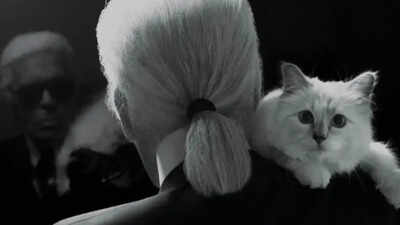
There are many ways to measure a civilisation, but one of the more reliable methods is to examine what it does with cats. Cleopatra had Egypt, the Nile, Roman generals losing their minds in her general direction, and a place in history so large that Elizabeth Taylor needed four hours and several costume changes to do justice to it. But even she might have paused before Choupette and wondered whether power had become considerably more comfortable in the modern age. Cleopatra had to rule, negotiate and survive imperial politics. Choupette merely had to be fluffy, aloof and photogenic, and still ended up with maids, private flights, brand deals, inheritance rumours and a luxury ecosystem that would make ancient royalty look overworked.The ancient Egyptians understood the feline instinct better than most. Cats were useful because they protected grain stores from rodents and snakes, but usefulness alone does not explain reverence. In Egyptian imagination, the cat came to occupy that strange space between domestic intimacy and divine symbolism. Bastet, the goddess associated with protection, fertility and the home, was represented in feline form, while cat mummies and cat imagery became part of the religious and cultural landscape. Long before Instagram discovered that cats were content machines, Egypt had already grasped the central truth: a cat does not need to do much to be treated like a superior being.The British, being less mystical but no less absurd, eventually gave the cat a government job. Larry the Cat has lived at 10 Downing Street since 2011 as Chief Mouser to the Cabinet Office, which is a title so perfectly British it sounds like satire until one realises the satire is also the constitution. Larry has watched prime ministers come and go with the serene contempt of a creature who understands that mice are easier to manage than politicians. Empires fall, cabinets collapse, slogans are shredded by reality, but the cat remains at the door, faintly annoyed that lunch is late.And then there is Choupette.Choupette, for the uninitiated, is Karl Lagerfeld’s blue-cream Birman, the cat who entered the designer’s life over Christmas in 2011 and appears to have conquered it almost immediately. Lagerfeld, the legendary creative director of Chanel and Fendi, was a man of extraordinary possessions and even more extraordinary self-invention. He had homes in Paris, Rome, the Côte d’Azur, Biarritz and Hamburg. He had three Rolls-Royces, vast collections of art and furniture, hundreds of sunglasses and gloves, and a personal library he estimated at 300,000 books. According to one account in The Atlantic piece, his annual flower budget may have been around 1.5 million euros, which is the sort of number that makes ordinary people wonder whether they have misunderstood both flowers and money.Into this world walked Choupette.Lagerfeld had not been known as a great cat man before her arrival. She originally belonged to the model Baptiste Giabiconi, who left her with Lagerfeld during the Christmas holidays. Lagerfeld became besotted, and Choupette stayed. From there, her life became less pet ownership and more court protocol. She ate from proper dishes. Lagerfeld said she did not eat on the floor. She had two personal maids, one for day and one for night. Her behaviour was documented in detail so that Lagerfeld could know what she had eaten, how she had slept and what she had done in his absence. At one point, he claimed there were 600 pages of such documentation.
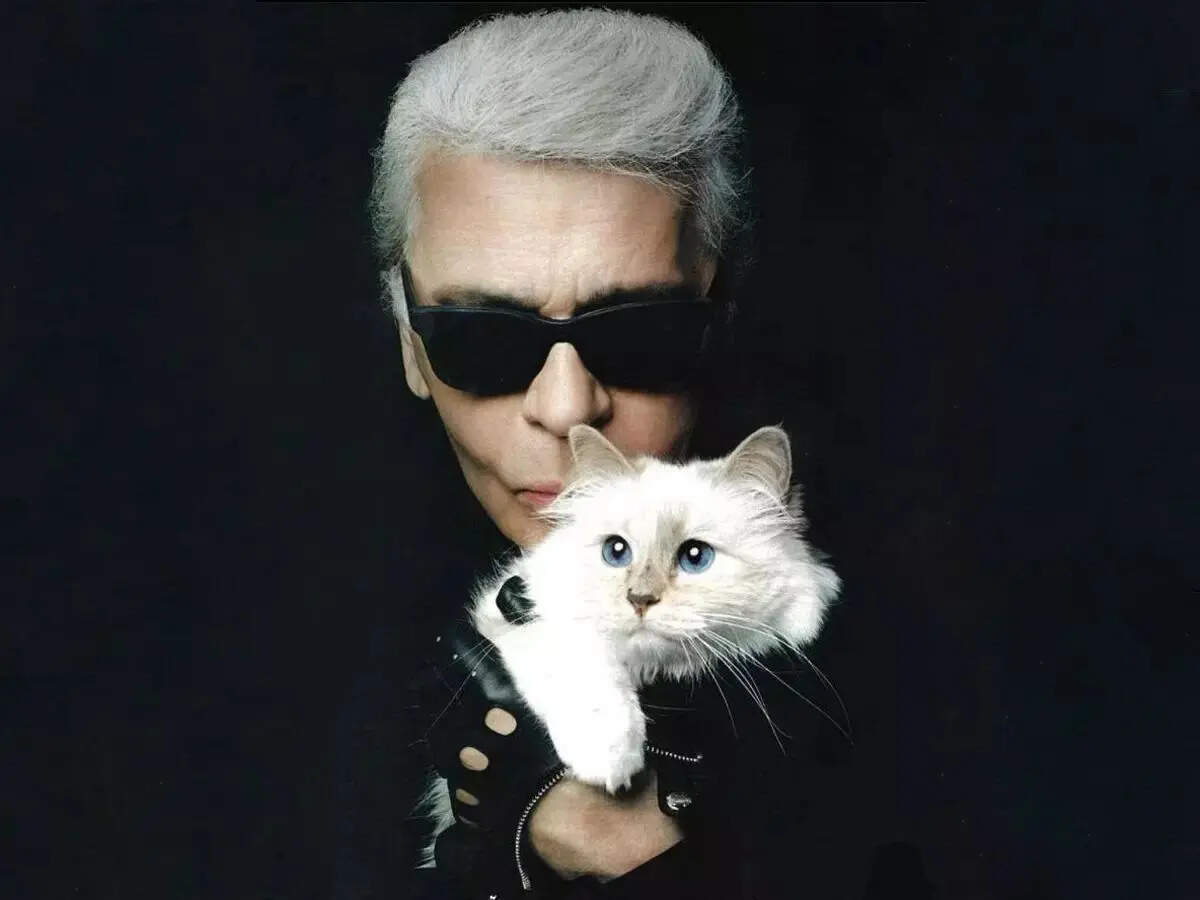
This is not a cat diary. This is an archive.Naturally, the fashion world did what the fashion world does when confronted with something beautiful, expensive and faintly ridiculous: it monetised it. Choupette became famous in her own right. Lagerfeld said she earned more than $3 million in 2014 from campaigns for Opel Corsa and Shu Uemura. She appeared in books, photographs and advertising work. She travelled by private jet. She became a fashion-world creature, not in the way normal animals become famous online, but in the way aristocrats become famous: by being near power, photographed well and surrounded by people whose job is to preserve the myth.The real circus began after Lagerfeld died in 2019. He had no wife and no children, and his fortune was widely estimated by media reports at more than $200 million. The question that followed was irresistible: had the cat inherited the money?The careful answer is: not directly, and possibly not in the way people imagine. French law does not allow animals to inherit directly. The details of Lagerfeld’s will are not public. Various human beneficiaries have been rumoured, including models, executives, associates and members of his household circle. Choupette’s name became the centre of the story because it was too perfect to resist: a fashion emperor dies, the estate becomes mysterious, and somewhere in Paris a cat with blue eyes and a private-care arrangement becomes the symbol of late-capitalist absurdity.The numbers around Choupette must be handled carefully. Reports have suggested that Lagerfeld arranged money for her care, often put at around $1.5 million, though some accounts have placed it as high as $4 million. These are not confirmed estate figures. They are reported or rumoured figures. Choupette’s agent has also pushed back against the more extravagant mythology, making the obvious but necessary point that a cat cannot own a bank account. That is the law, and perhaps one of the last remaining barriers between civilisation and full feline rule.But even the lower reported number is staggering. If one uses the $1.5 million figure and compares it with the median net worth of an American family, about $192,900 in the most recent Federal Reserve survey, Choupette’s supposed care arrangement works out to roughly 7.8 times that figure. Round it off, and the headline becomes irresistible: this cat may be worth eight times the typical American family. If one uses the higher $4 million rumour, the number rises to about 20.7 times the median American family net worth.That is the point at which comedy becomes sociology. Millions of humans spend their lives building credit scores, paying rent, saving for retirement, navigating medical bills and praying that one emergency does not turn their finances into a Greek tragedy. Choupette, meanwhile, has an agent, a caretaker, a brand history, lawyers hovering somewhere in the background, and a public image that still generates commercial interest years after Lagerfeld’s death. The American dream now has four paws and refuses to be photographed from above.That last part is also factual. Choupette’s professional life comes with conditions. Shoots must be quiet. Everything must be ready before she arrives. There is a two-hour limit. She gets a private room. She is not supposed to be shot from unflattering angles. For some shoots, there may even be cat doubles, chosen depending on what is required: friendliness, playfulness, similar eyes, similar tail. Somewhere in Hollywood, a struggling actor has just discovered that even Choupette’s understudy has better representation.And yet, beneath all this velvet-rope absurdity, there is a strangely moving story. Lagerfeld’s life was built on performance. He turned himself into an instantly recognisable silhouette: white ponytail, black glasses, high collar, gloves, icy pronouncements and the air of a man who had personally copyrighted detachment. He lived among beauty, objects, books, art and fabric, but also inside a carefully managed distance from ordinary intimacy. Choupette seems to have broken through that distance precisely because she demanded nothing in the human sense. She did not need conversation. She did not ask for emotional clarity. She did not require explanations. She simply existed, beautifully and indifferently, and Lagerfeld arranged his world around her.That is the strange genius of cats. They make humans sentimental without becoming sentimental themselves. A dog reflects love back with embarrassing sincerity. A cat absorbs love like a tax haven absorbs money. You pour devotion into it and receive, at best, a slow blink, which cat owners will insist is the equivalent of Shakespeare’s sonnets. Lagerfeld, who understood surfaces better than almost anyone, seems to have recognised in Choupette the ultimate surface: beautiful, unreadable, indifferent and therefore irresistible.The world believed the inheritance story because it wanted to believe it. A cat inheriting a fortune feels absurd, but so does much of modern wealth. Teenagers become millionaires by dancing into cameras. Meme coins briefly acquire the seriousness of sovereign debt. Loss-making companies are called visionary if the founder has the right aura. In such a world, Choupette does not feel like satire. She feels like financial journalism with whiskers.That is why Choupette works so well as a symbol. Her wealth is real and unreal at the same time. She may not have a bank account. She may not legally own millions. The inheritance story may be tangled in rumour, tax issues and legal uncertainty. But she has something more durable than liquidity. She has myth. She has Lagerfeld’s halo. She has a place in the luxury imagination. She has the public’s willingness to believe that a beautiful white cat could sit at the centre of a story about money, grief, celebrity, inheritance and inequality.Ancient Egypt worshipped cats because they seemed to stand between the domestic and the divine. Britain gave one a bureaucratic title because even a declining empire needs someone competent near the front door. Karl Lagerfeld gave one china, maids, diaries, campaigns, private flights and a life so strange that the word “pet” feels almost insulting.Choupette may or may not be the richest cat in the world. But she is certainly one of the most perfect symbols of it: a creature who does not understand money, cannot legally possess it, has no use for status, and yet somehow sits at the centre of a global conversation about luxury, inheritance and the ridiculous emotional architecture of human beings.Which, when you think about it, is exactly what a cat would do.