





US-Iran deal, Uranium stockpile and the $300 billion question: What exactly has Tehran agreed to?
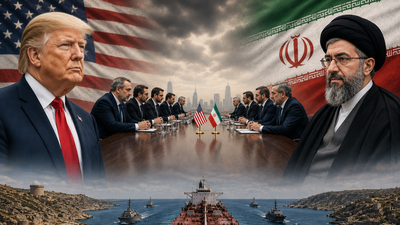
AI generated
US President Donald Trump has declared that Iran has agreed to never acquire nuclear weapons, presenting the emerging agreement with Tehran as a major breakthrough.Yet days after the announcement, key details of the proposed deal, from uranium enrichment to sanctions relief and a reported $300 billion reconstruction fund, remain uncertain.The confusion has centred on reports that Iran could gain access to a $300 billion reconstruction and investment package if it complies with the agreement. Trump dismissed the claim on Truth Social, calling reports that the United States would pay Iran “$300 billion” “fake news.”Trump posted on Truth Social: “Iran has agreed to never have a Nuclear Weapon! Also, the story that the US is paying Iran 300 billion Dollars is Fake News, put out by the Dumocrats!!!”However, senior US officials have acknowledged that a fund of that scale has been discussed as part of the broader framework. According to officials, the proposal would not involve direct American payments but rather an international investment vehicle funded by Gulf nations and tied entirely to Iran’s compliance with the agreement.Vice President JD Vance confirmed the possibility, saying Iran could gain access to such benefits “so long as they honor their end of the obligation.”
The $300 billion question
The reported $300 billion figure first emerged in media reports citing diplomatic sources familiar with the negotiations. While Trump has publicly rejected claims that the US would hand Iran such money, senior administration officials have clarified that discussions have taken place around a reconstruction and investment mechanism that could eventually help revive Iran’s economy.Officials stressed that no US taxpayer money would be involved and that any economic package would be linked to Iran fulfilling its commitments under the agreement.Vance has repeatedly argued that Iran “doesn’t get a dime” unless it performs its obligations, while also suggesting that sanctions relief and international investment could follow if Tehran complies.
What happens to Iran’s enriched uranium?
The future nuclear agreement is expected to address four major issues: a lengthy suspension of uranium enrichment, the reduction or dilution of Iran’s enriched uranium stockpile, the dismantling of nuclear facilities and an enhanced inspection regime.But even on these core provisions, significant differences remain.The United States has reportedly pushed for Iran to halt uranium enrichment for up to 20 years. Iran has countered with a shorter timeline, while negotiations continue over a possible compromise.Vance has said Iran is “agreeing right now to eliminate the enriched stockpile.” Tehran, however, has offered a different interpretation. Iranian foreign minister Abbas Araghchi has insisted that any dilution of highly enriched uranium should take place inside Iran rather than through transfers abroad.Tehran maintains that detailed nuclear negotiations will begin only after the interim agreement is implemented.
No money released yet
Questions also remain over sanctions relief and access to frozen Iranian assets.US officials insist that no frozen Iranian funds have been released so far. However, they acknowledge that discussions have taken place on sanctions relief, the possible release of frozen assets and broader economic incentives if Iran complies with the agreement.“The very simple fact is zero dollars of frozen assets have been released,” one senior US official said.Vance has argued that bringing Iran back into the global economy could create economic opportunities without requiring direct US financial assistance.
A deal with many unanswered questions
The uncertainty surrounding the agreement extends beyond the reconstruction fund.
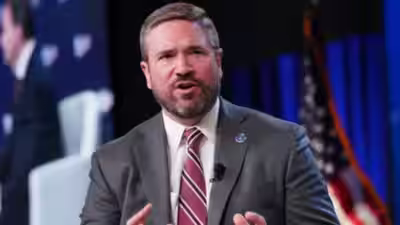
Vance has described the signed memorandum as a “very general document” spanning only around one-and-a-half pages. The White House has said fuller details will be released later this week.That has fuelled questions over whether Washington and Tehran are describing the same agreement. While US officials have highlighted restrictions on Iran’s nuclear programme and conditions for economic benefits, Iranian officials have publicly maintained positions that appear at odds with some American claims.Even Republican Senator Lindsey Graham expressed caution, saying he was concerned that Iran’s understanding of the agreement seemed different from that of the US negotiating team.For now, both sides are portraying the agreement as a step forward. But critical questions remain unresolved: What happens to Iran’s enriched uranium stockpile? How extensive will sanctions relief be? And what exactly does the reported $300 billion reconstruction package involve?
Could Congress weigh in?
Another question is whether the agreement will face scrutiny on Capitol Hill.Under the Iran Nuclear Agreement Review Act, agreements related to Iran’s nuclear programme can be submitted to Congress for review. A similar process was followed for former President Barack Obama’s 2015 nuclear deal, known as the JCPOA.
Do you think the recent agreement with Iran will stop nuclear weapon development?
While submission is not automatic and depends on the administration’s approach, congressional review could become another political battleground if the deal evolves into a more detailed and binding agreement.With the White House expected to release the text of the memorandum in the coming days, lawmakers, allies and critics alike will be looking for answers to questions that remain unresolved.