





Dr APJ Abdul Kalam handed a young scientist an impossible mission, decades later, his missile system protected India during Operation Sindoor
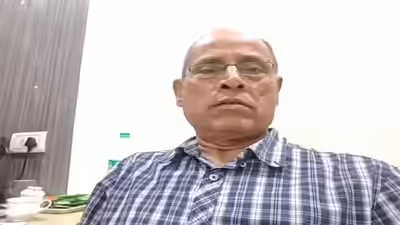
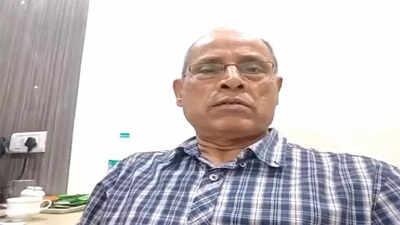
On the evening of May 8, 2025, as news channels flashed updates about Pakistani drones and missiles being intercepted during Operation Sindoor, one man watched quietly from home.For most Indians, it was a moment of reassurance.For Dr. Prahlada Ramarao, it was deeply personal.The retired DRDO scientist wasn’t just watching India’s air defence system in action—he was watching the result of a mission that had defined 15 years of his life.“This is the happiest day of my life,” he later said.More than four decades earlier, a young scientist named Dr APJ Abdul Kalam had entrusted him with one of the most challenging defence projects India had ever attempted. Back then, few outside the scientific community knew his name. Today, the technology he helped build has become one of India’s most important shields.
When Dr APJ Abdul Kalam asked a young scientist to build the impossible
The story goes back to 1983.India had just launched the Integrated Guided Missile Development Programme (IGMDP), an ambitious initiative aimed at designing indigenous missile systems instead of relying on foreign technology.Among the five missile projects planned under the programme was Akash, a surface-to-air missile system designed to intercept enemy aircraft and aerial threats.It was one of the most difficult projects in the programme.Dr APJ Abdul Kalam, who headed the mission, entrusted the responsibility to a relatively young scientist—Prahlada Ramarao.The assignment was daunting.“I was young and scared about handling such a massive responsibility,” Prahlada would later recall.Kalam’s response was characteristically simple.Get it done.
Fifteen years, 1,000 scientists and one indigenous defence system
Building Akash wasn’t just about designing a missile.It meant creating an entire ecosystem of advanced defence technologies that India had never built before.Prahlada coordinated nearly 1,000 scientists working across 12 DRDO laboratories, tackling challenges ranging from propulsion and avionics to radar systems and electronic warfare.One of the biggest breakthroughs was the Rajendra Radar, a sophisticated phased-array radar capable of tracking multiple airborne threats simultaneously, even in environments where enemy aircraft attempted to jam or confuse radar signals.Together, the Akash missile and Rajendra Radar formed an integrated air defence system capable of detecting, tracking and engaging multiple aerial targets at the same time.Perhaps even more remarkable was its cost.According to DRDO, the indigenous system was developed at a fraction of the cost of comparable foreign air defence systems while offering capabilities tailored to India’s operational requirements.Years later, the system would also find international buyers, with countries such as Armenia placing export orders.For his contributions to India’s defence capabilities, Dr. Prahlada Ramarao was awarded the Padma Shri in 2015.Yet, outside defence circles, he remained largely unknown.
The day his life’s work went to war
Scientists rarely get to witness the real-world impact of technologies they spend decades creating.Prahlada did.During Operation Sindoor in May 2025, India’s layered air defence network was deployed to counter incoming aerial threats.Watching reports of successful interceptions, the veteran scientist saw something far greater than a successful military operation.He saw years of failures, experiments, calculations and perseverance finally proving their worth.The missile system he had begun building in his thirties had become part of India’s defence shield more than four decades later.His emotional reaction reminded many people that behind every major technological achievement are thousands of engineers and scientists whose names seldom make headlines.
A lesson for students: Great inventions take time
Dr. Prahlada Ramarao’s journey is also a lesson in what engineering truly means.After graduating in mechanical engineering from University Visvesvaraya College of Engineering, earning a master’s degree in aeronautical engineering from the Indian Institute of Science (IISc) and later completing his doctorate, he spent his career solving problems that had no ready-made answers.His work extended far beyond Akash, contributing to programmes involving Prithvi, Agni, Nag, Astra, BrahMos and several advanced aerospace technologies developed in India.Yet his greatest legacy may not be a single missile system.It is the belief that world-class technology can be designed, developed and perfected in India when scientists are given the freedom, resources and time to innovate.For students dreaming of becoming engineers, scientists or researchers, his story offers an important reminder.Not every achievement is measured by viral fame or instant success.Some projects take decades.Some breakthroughs require thousands of people working quietly behind laboratory doors.And sometimes, the greatest reward comes years later, when something you built helps protect an entire nation.Disclaimer: This article is based on publicly available information about Dr. Prahlada Ramarao, official accounts of his career, and reported statements relating to Operation Sindoor and the Akash missile programme. It is intended for informational and educational purposes only.