





Maryland’s first human composting facility offers an alternative to burial and cremation through natural organic reduction
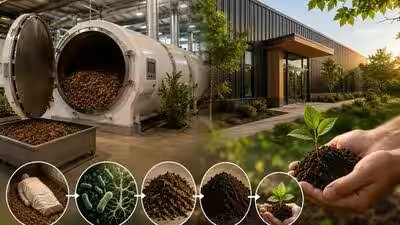
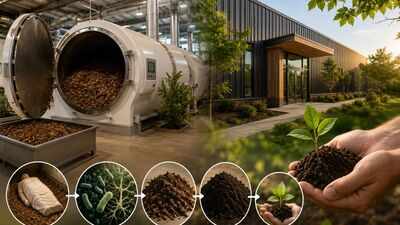
Maryland is giving residents a new option for what happens to their bodies after death. According to WYPR, a public radio station serving Maryland, the state is now home to what is described as the nation’s largest human composting facility: a 37,000-square-foot facility in Elkridge operated by Earth Funeral. The facility uses a process formally known as natural organic reduction, offering an alternative to conventional burial and cremation.Human composting may sound unusual, but the basic idea is rooted in the natural decomposition of organic material. Instead of placing a body underground or exposing it to the high temperatures of cremation, natural organic reduction uses a controlled environment to accelerate the body’s natural breakdown and eventually produce soil-like material.
How human composting works
The process takes place inside specially designed vessels, where bacteria, fungi and organic materials such as mulch help break down the remains over roughly a month. At the end of the process, about 300 pounds of soil remain. The bones are pulverised and added to the soil, which can then be returned to the family or placed in land-conservation projects.
A new option for Maryland families
Maryland is among the states that have legalised natural organic reduction, allowing the service to become available to residents. Earth Funeral recently opened its Elkridge facility, creating a new human-composting option for people on the East Coast.According to WYPR, the facility is nearly 37,000 square feet and is described as the nation’s largest human-composting facility. The facility was designed to make the service more accessible to people on the East Coast, who previously may have had to transport remains long distances to reach a human composting facility. This option is also emerging as part of a wider discussion about the environmental impact of traditional funeral practices. Traditional burial requires land and may involve embalming fluids and caskets. Cremation eliminates the need for a burial plot but relies on combustion and produces emissions.Natural organic reduction takes a different approach by allowing the body to return to the natural material cycle. The resulting soil can be returned to families or placed in land-conservation projects, subject to Maryland’s regulations.
The debate around a different kind of farewell
The arrival of human composting in Maryland also reflects changing attitudes toward death and end-of-life planning. For some people, the attraction is environmental: they want their final disposition to use fewer resources and avoid a permanent burial space. For others, the idea of becoming part of the natural landscape provides a meaningful alternative to conventional funeral traditions.The practice remains relatively new in the United States. Washington became the first state to legalise natural organic reduction in 2019, and Maryland is among a growing number of states that have since approved it. Availability, regulations and the rules governing the use or scattering of the resulting soil vary by state. For Maryland, however, the opening of the Elkridge facility expands the choices available for end-of-life arrangements. What was once an option accessible only in a limited number of places is now available in the state, giving residents and people in the wider region another choice.Rather than viewing death only through the traditional choices of burial or cremation, natural organic reduction offers another possibility: allowing the body to decompose in a carefully controlled setting and ultimately be transformed into soil-like material. For families interested in a lower-impact approach, Maryland’s new facility represents a distinctly different way of saying goodbye.