



Deepak Dhar: Indian professor Deepak Dhar receives Dirac Medal: Who is the IIT Kanpur and California Institute laureate to receive one of the highest honours in theoretical physics
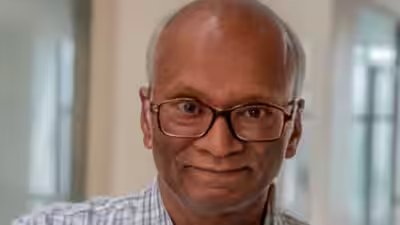
Professor Deepak Dhar has been awarded the 2026 Dirac Medal by the International Centre for Theoretical Physics (ICTP), which stands as one of the highest honours in theoretical physics.This medal was instituted in 1985 and is announced each year on Paul Dirac’s birthday, the founder of quantum mechanics.It has been awarded to some of the biggest names in the field, including Stephen Hawking. This year, Dhar shares the honour with three other physicists, Bernard Derrida, Marc Mézard, and Haim Sompolinsky, for their pioneering work in statistical mechanics and its extension into fields as varied as optimisation, neuroscience, and artificial intelligence.
Who is Professor Deepak Dhar?
Born in 1951 in Pratapgarh, Uttar Pradesh, Deepak Dhar grew up in a Hindi-medium household. While his mother hoped he would become an IAS officer, his father encouraged a different kind of curiosity, regularly bringing home science magazines. One title, “Understanding Science,” left a lasting impression on him. Dhar went on to study at Allahabad University before moving to IIT Kanpur for his MSc.According to IIT Kanpur’s official website, Dhar then went on to study at the California Institute of Technology in the United States, where he received a Richard Feynman fellowship. There, he worked closely with Feynman himself, serving as his teaching assistant, before completing his PhD in 1978. The experience placed him at the heart of some of the most influential physics thinking of the twentieth century, at an early stage in his own research career.
Dhar chose to come back to India rather than work in the US
For many young scientists trained at Caltech, it would have been easier to build a career in the United States, which is the most preferred one. But Dhar chose to come back to India after his doctorate to join the Tata Institute of Fundamental Research (TIFR) in Mumbai. He later spent nearly eight years as a professor at IISER Pune, before joining the International Centre for Theoretical Sciences (ICTS), Bengaluru, where he has been an INSA Distinguished Professor since 2024.
Dhar has made significant contributions to statistical mechanics
Over four decades, Dhar made notable contributions to statistical mechanics, the branch of physics that studies how systems with a very large number of particles behave together.The “sandpile model” and its associated burning algorithm, his most popularly known works, explain how simple interactions can produce unpredictable outcomes.
Apart from the 2026 Dirac Medal, he has numerous accolades to his name
The Dirac Medal adds to a long list of several other awards for Dhar, including the Boltzmann Medal in 2022, awarded jointly with John Hopfield, which made him the first Indian to receive statistical physics’ highest honour, and the Padma Bhushan in 2023. He is also only the second Indian scientist, after physicist Ashoke Sen, to receive the Dirac Medal.