





Parliament flags uranium shortfall: Why domestic mining matters
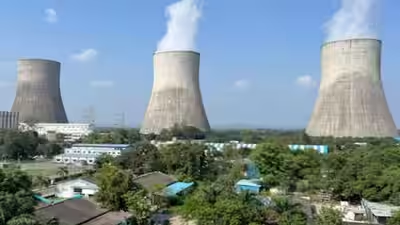
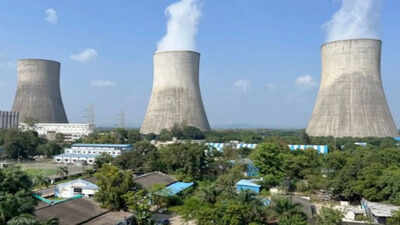
A Parliamentary Standing Committee (the Committee on Public Undertakings), reviewing the performance of the Nuclear Power Corporation of India Limited (NPCIL), has flagged that India’s domestic uranium production meets only about 30 per cent of the country’s requirement for its Pressurised Heavy Water Reactors (PHWRs). As India’s nuclear fleet expands, PHWR fuel needs could touch around 5,400 tonnes of natural uranium oxide (U3O8) a year. The panel has called for faster domestic mining, policy clarity on private sector participation through mine developer-cum-operator (MDO) contracts, and diversification of imports beyond the current sources: Kazakhstan, Russia, Uzbekistan and Canada.Separately, another parliamentary panel examining regulatory enablement of strategic minerals has also pushed for quicker clearances for uranium mining projects. In this context, let’s understand uranium as a nuclear fuel, India’s uranium mining landscape, and the committee’s key recommendations.
Understanding uranium as a fuel
Uranium is a heavy, naturally occurring radioactive metal found in rock and soil across the world. It exists in three natural isotopes: U-238 (about 99.27 per cent), U-235 (about 0.72 per cent) and U-234 (a trace amount). Of these, only U-235 splits easily in a controlled chain reaction, a process called nuclear fission, which releases large amounts of energy.Because natural uranium contains so little U-235, most reactors worldwide use enriched uranium, where the U-235 share is raised, typically to 3-5 per cent for commercial power reactors (highly enriched uranium, above 20 per cent, is used mainly for defence purposes). India’s PHWRs are an exception. They run on natural, unenriched uranium and use heavy water as a moderator, a design choice made when India lacked enrichment capability but had access to natural uranium and thorium. This is why domestic natural uranium supply is so important for India’s PHWR fleet, while its two light water reactors at Tarapur and Kudankulam depend entirely on imported enriched uranium.
The process explained
- Mining and milling: uranium ore is mined and processed into a concentrate called yellowcake (U3O8).
- Enrichment (where required): raises the U-235 share, mainly through gas centrifuges.
- Fuel fabrication: the concentrate is converted into pellets and assembled into fuel bundles.
- Fission in the reactor core: neutrons split U-235 atoms, releasing heat that generates steam to drive turbines and produce electricity.
- Spent fuel management: used fuel remains radioactive and needs safe storage or reprocessing.
In India, Uranium Corporation of India Limited (UCIL), a public sector unit under the Department of Atomic Energy (DAE), mines and mills uranium ore, mainly at Jaduguda and Turamdih in Jharkhand and Tummalapalle in Andhra Pradesh. This concentrate feeds the Nuclear Fuel Complex, which fabricates fuel assemblies for NPCIL’s reactors.
Who’s involved
- Department of Atomic Energy (DAE): the apex body overseeing India’s nuclear programme.
- Uranium Corporation of India Limited (UCIL): the DAE public sector unit responsible for uranium mining and milling.
Nuclear Power Corporation of India Limited (NPCIL): operates India’s nuclear power plants.- Atomic Minerals Directorate for Exploration and Research (AMD): the DAE unit that explores and estimates uranium and other strategic mineral resources.
- Mines and Minerals (Development and Regulation) Act (MMDR): governs mining leases; the panel noted that current provisions do not allow seamless extension of lease areas when newly identified ore bodies extend beyond existing boundaries.
- India-Australia civil nuclear cooperation agreement: an administrative arrangement was recently signed to enable uranium exports to India under this framework.
- Atomic Energy Act, 1962: keeps atomic minerals under central government and DAE control, which is why private participation is structured through contracted MDO arrangements rather than ownership.
India’s uranium story
India’s nuclear programme follows a three-stage strategy conceived by Homi Bhabha, designed around the country’s mineral endowments:
- Stage 1: natural uranium-fuelled PHWRs.
- Stage 2: plutonium-based mixed oxide fuel in Fast Breeder Reactors, also using spent PHWR fuel.
- Stage 3: thorium-based Advanced Heavy Water Reactors, since India has far larger thorium reserves than uranium reserves.
On the current shortfall, the committee’s key points include:
- Domestic production covers roughly 30 per cent of projected PHWR fuel needs; the rest relies on imports.
- A clear policy roadmap is needed for MDO participation in uranium mining, to remain under strict DAE oversight.
- The proposed UCIL-NTPC joint venture to acquire stakes in overseas uranium assets should be expedited, to diversify supply and reduce exposure to market and geopolitical risk.
- India needs an update on securing long-term uranium supply from Uzbekistan beyond 2026, when the existing contract lapses.
- UCIL should upgrade existing mines and mills, expand capacity at Turamdih, Jaduguda and Tummalapalle, and accelerate new mining centres in Rajasthan, Andhra Pradesh and Chhattisgarh.
- Better exploration technology, sensor-based ore sorting and mine automation are needed to raise ore grades and cut costs.
- Strategic uranium stockpiles, aligned with reactor refuelling cycles, would help cushion against supply disruption.
On reserves, AMD has established about 4.31 lakh tonnes of domestic uranium oxide resources. Of the roughly 80,423 tonnes transferred to UCIL so far, close to 39 per cent has already been depleted, and at current production rates the remainder could last around four decades unless new reserves are added.
Prelims fact box
| Fact | Detail |
| Fissile isotope of uranium | U-235 |
| Natural U-235 content | about 0.72 per cent |
| PHWR fuel | natural, unenriched uranium |
| Tarapur and Kudankulam reactors run on | imported enriched uranium |
| Largest known uranium reserves | Australia (about 28 per cent of the world total) |
| Leading uranium producer | Kazakhstan |
| India’s uranium mining PSU | UCIL, under the DAE |
| India’s nuclear fuel fabricator | Nuclear Fuel Complex, Hyderabad |
| Architect of India’s three-stage nuclear programme | Homi Bhabha |
| Element central to Stage 3 of the programme | thorium (Th-232) |
For mains practice“India’s nuclear power expansion is constrained more by fuel security than by reactor technology.” Examine this statement with reference to the recent parliamentary committee observations on uranium mining and India’s three-stage nuclear programme. (250 words)
Test yourself
1. Consider the following statements about uranium as a nuclear fuel:
- U-235 is the only naturally occurring fissile isotope of uranium.
- Enrichment increases the proportion of U-238 in natural uranium.
- India’s Pressurised Heavy Water Reactors use enriched uranium as fuel.
Which of the statements given above is/are correct? (a) 1 only (b) 1 and 2 only (c) 2 and 3 only (d) 1, 2 and 3Answer: (a)2. Which of the following functions under the Department of Atomic Energy?
- Uranium Corporation of India Limited
- Nuclear Power Corporation of India Limited
- Atomic Minerals Directorate for Exploration and Research
Select the correct answer: (a) 1 and 2 only (b) 2 and 3 only (c) 1 and 3 only (d) 1, 2 and 3Answer: (d)3. With reference to India’s three-stage nuclear power programme, consider the following statements:
- Stage 1 uses natural uranium-fuelled Pressurised Heavy Water Reactors.
- Stage 2 uses Fast Breeder Reactors fuelled by plutonium-based mixed oxide.
- Stage 3 seeks to use thorium in Advanced Heavy Water Reactors.
Which of the statements given above is/are correct? (a) 1 and 2 only (b) 2 and 3 only (c) 1 and 3 only (d) 1, 2 and 3Answer: (d)4. Consider the following statements regarding global uranium reserves and production:
- Australia holds the largest share of the world’s known uranium reserves.
- Kazakhstan has been among the largest producers of mined uranium for over a decade.
- India currently imports uranium only from Russia and Canada.
Which of the statements given above is/are correct? (a) 1 and 2 only (b) 2 and 3 only (c) 1 and 3 only (d) 1, 2 and 3Answer: (a)5. With reference to the recent parliamentary committee recommendations on uranium mining in India, consider the following statements:
- The committee recommended greater participation of mine developer-cum-operator (MDO) contractors, under DAE oversight.
- The committee suggested expediting a joint venture between UCIL and NTPC to acquire overseas uranium assets.
- The committee noted that India’s long-term uranium supply contract with Uzbekistan has no fixed expiry date.
Which of the statements given above is/are correct? (a) 1 and 2 only (b) 2 and 3 only (c) 1 and 3 only (d) 1, 2 and 3Answer: (a)
Must-know terms
- Fissile material – a substance that can sustain a nuclear chain reaction, such as U-235.
- Fertile material – a substance that converts into fissile material on absorbing a neutron, such as U-238 or thorium-232.
- Yellowcake (U3O8) – the concentrated uranium product from milling, an intermediate stage before enrichment and fuel fabrication.
- Mine developer-cum-operator (MDO) – a contractor engaged to develop and operate a mine on behalf of the owner, typically a public sector entity, under regulatory oversight.
- Strategic stockpile – a reserve of a critical resource, held to cushion against supply disruption, price shocks or geopolitical dependency.