






‘Nazar lag gayi?’ 5 signs traditionally linked to the evil eye |
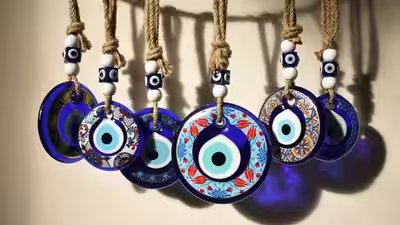
“Nazar lag gayi hai.”It is one of those sentences that can instantly change the mood in an Indian household. A baby who was perfectly fine a little while ago starts crying, someone falls ill after a much-celebrated occasion, or an unexpected setback follows a long-awaited piece of good news. Someone, somewhere, is likely to bring up nazar.The belief in nazar, or the evil eye, is built around a simple idea: excessive admiration, envy, or an intense gaze can bring harm to a person, a child, a relationship, a possession, or even a period of good fortune. The details vary from one community and region to another, but the underlying belief has remained remarkably familiar.Importantly, these are traditional interpretations, not scientifically proven signs. What one family calls nazar may have an entirely ordinary explanation in real life. But within Indian folk traditions, certain situations have long been associated with the evil eye.Here are five of the most commonly recognized ones.
A healthy, happy child suddenly becomes unwell
Children are among the most common subjects of nazar beliefs.A baby who is admired for being especially healthy, cheerful, or beautiful is traditionally considered vulnerable to the evil eye. If the child subsequently becomes unusually unsettled or unwell, some families may say the baby has “caught nazar.”This belief also explains a familiar sight in Indian homes: a small black kala tika placed on or near a baby. The idea is not that the mark is treating an illness. Traditionally, it is meant to protect the child from excessive attention and admiration.In some communities, black threads, amulets, and other protective objects are used for the same reason.
A sudden change after something has been openly admired
There is a reason elders sometimes become uncomfortable when someone praises a person’s looks, a new house, a car, or a successful business a little too much.Traditional nazar beliefs often connect admiration with vulnerability. The attention does not necessarily have to come from someone deliberately wishing harm. The gaze itself is considered capable of carrying envy or negative influence.That is why a person may say “nazar na lage” immediately after complimenting something they genuinely admire.It is less about accusing the person giving the compliment and more about protecting what has been praised.
An unexpected setback during a particularly good phase
Nazar is also traditionally associated with the sudden loss of barkat, or a sense of prosperity and well-being.Someone may be doing exceptionally well at work, a business may be thriving, a new home may bring excitement, or a family may be celebrating an important milestone. If something unexpectedly goes wrong soon after, some people may interpret the change as nazar.This belief is one reason why modesty around success has traditionally mattered in many Indian families. The idea is essentially: enjoy the good things, but do not invite unnecessary attention to them.Today, the same thinking has found a very modern setting in social media, where achievements, holidays, relationships, expensive purchases, and personal milestones can be displayed to hundreds or thousands of people at once.
A prized possession suddenly faces trouble
Nazar is not traditionally limited to people.A new car, a recently built house, a thriving shop, or another prized possession can also be considered vulnerable to the evil eye. This is where familiar practices such as hanging a nazar battu or lemon-and-chilli decoration on a vehicle or outside a business come in.The object itself is not necessarily believed to have done anything wrong. Rather, it is the attention surrounding something valuable that is thought to make it vulnerable.So when an elder insists on putting a protective symbol on a brand-new car, it is usually part of a much older cultural idea about keeping prosperity from attracting unwanted attention.
Something precious suddenly feels surrounded by “bad luck”
Perhaps the broadest traditional sign is a sudden run of misfortune involving something or someone considered especially precious.A person may feel that everything was going smoothly, and then several unrelated things begin going wrong. A family may experience an unexpected problem soon after a major celebration. Or someone may simply feel that a particularly happy period has changed without an obvious reason.In traditional thinking, this can sometimes be described as nazar lagna.That does not mean every unfortunate event is traditionally considered proof of nazar. The belief is more closely tied to the idea that something good, visible, and admired has attracted harmful attention.
Why do people still believe in nazar?
Maybe because nazar is not really just about fear.For generations, it has also been a way of expressing a very human instinct: when something matters deeply to us, we want to protect it. A black dot on a baby’s cheek, a phrase whispered after a compliment, or a protective charm on a new vehicle can all become small rituals through which families express that feeling.And the belief is not limited to one community or one religious tradition. Different Indian communities have their own names, explanations, and methods associated with the evil eye.Whether someone considers nazar a spiritual reality, an old family belief, or simply part of Indian cultural tradition, its language remains deeply familiar.The next time someone says, “Nazar na lage,” it may sound like a casual phrase. But behind those three words sits a much older idea: good things attract attention, and people have always found ways to protect what they value.Disclaimer: Nazar and the evil eye are traditional cultural and spiritual beliefs. There is no scientific evidence establishing nazar as a cause of illness, accidents, or misfortune. Any persistent physical or mental health symptoms should be addressed through appropriate professional care.Thumb image: Canva (for representative purposes only)