






Quote of the day by Seneca: “The greatest obstacle to living is expectancy, which depends on tomorrow and wastes today” | World News
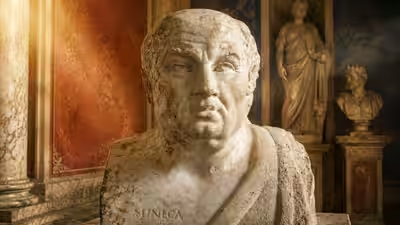
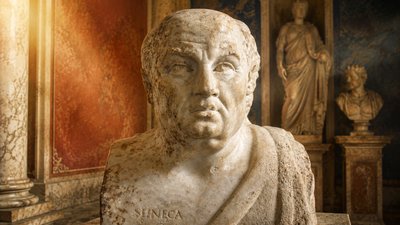
People often imagine that life will truly begin once they reach a particular destination, achieve a goal or resolve a problem. Seneca, the Roman Stoic philosopher, warned against this habit more than two thousand years ago. In his essay On the Shortness of Life, he wrote that “the greatest obstacle to living is expectancy, which depends on tomorrow and wastes today.” His observation challenges the tendency to postpone happiness, ambition and meaningful experiences in the hope that the future will offer a better moment. Seneca’s words suggest that the constant anticipation of what comes next can become a form of distraction, causing people to overlook the only part of life that is immediately within their reach, the present.
Quote of the day by Seneca: What did Seneca mean by the quote?
Seneca’s argument centres on the danger of postponement. By “expectancy”, he was referring to the habit of looking towards the future with the assumption that something better is still to come. People may tell themselves that they will rest after becoming successful, spend more time with family after completing their work or pursue their interests once their responsibilities become lighter. Yet the future remains uncertain, while the present disappears continuously. Seneca believed that people who spend their lives preparing to live can ultimately find that they have spent their lives waiting. His message is therefore not a rejection of planning or ambition. Rather, it is a warning against allowing anticipation of tomorrow to consume the experience of today.
Why people keep postponing their lives
The tendency to postpone life can appear in many ordinary forms. Someone may delay taking a holiday until they have saved enough money, postpone a passion until their career becomes stable or keep waiting for the “right time” to make an important change. Modern life can reinforce this mindset because people are constantly encouraged to work towards the next milestone. There is always another promotion, another financial target, another qualification or another achievement to pursue. Ambition itself is not the problem. The danger arises when every present moment is treated merely as preparation for a future that may never unfold exactly as expected. Seneca’s observation reminds us that a life spent permanently preparing for a better tomorrow can quietly deprive us of today.
Why the present matters more than we realise
Seneca’s philosophy places unusual importance on the present because it is the only part of time over which people have some immediate influence. The past cannot be changed and the future remains uncertain, but the present offers an opportunity to decide how one’s time will be used. This does not mean ignoring responsibilities or refusing to plan ahead. It means recognising that planning should support life rather than replace it. A person can work towards a future goal while still appreciating the relationships, experiences and opportunities that exist in the present. Seneca’s warning is ultimately about balance. The future deserves preparation, but it should not be allowed to consume the present entirely.
Seneca and his philosophy of time
Lucius Annaeus Seneca was a Roman Stoic philosopher, statesman and writer whose works frequently examined time, mortality, wealth, anger and human behaviour. In On the Shortness of Life, he argued that life is not necessarily short by nature but becomes short when people waste the time available to them. He criticised those who remain constantly occupied with plans for the distant future while neglecting the life unfolding around them. Seneca’s philosophy was shaped by the Stoic belief that people should distinguish between what lies within their control and what does not. His discussion of expectancy reflects that principle because the future is uncertain, while the way a person uses the present is more immediately within their power.
The timeless lesson
Seneca’s words ultimately offer a reminder that waiting for life to become perfect can itself become a way of wasting it. There will almost always be another goal to achieve, another problem to solve and another reason to believe that happiness belongs somewhere in the future. Yet time continues to pass regardless of whether people feel ready to use it. His message is not to abandon ambition or stop preparing for tomorrow, but to avoid sacrificing today entirely in pursuit of it. The future may bring opportunities that the present cannot offer, but it can never return the hours that have already disappeared. Sometimes, the most meaningful way to prepare for tomorrow is simply to make better use of today.