






Should married women avoid keeping Ekadashi fast? Here’s what Hindu scriptures and traditional beliefs actually say |
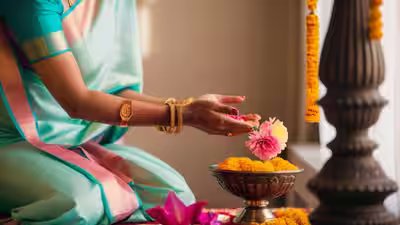
Ekadashi is observed twice every lunar month by millions of Hindus as a day of fasting, prayer and devotion to Lord Vishnu. Yet, alongside the tradition of observing the fast, a question has also persisted in some families: should married women, particularly women whose husbands are alive, keep an Ekadashi fast?The belief that married or “suhagin” women should avoid Ekadashi while widows may observe it is heard in some communities. But is there a scriptural basis for this distinction?A look at the traditional account of Ekadashi, along with the views of spiritual teachers, offers a different perspective.
The story behind Ekadashi
According to a discourse by Srila Bhaktivedanta Narayana Gosvami Maharaja, published by Pure Bhakti, Ekadashi is not simply about staying without food. The word is associated with the 11 senses, including the mind, and the observance is described as a way of turning those senses towards the Supreme Lord.
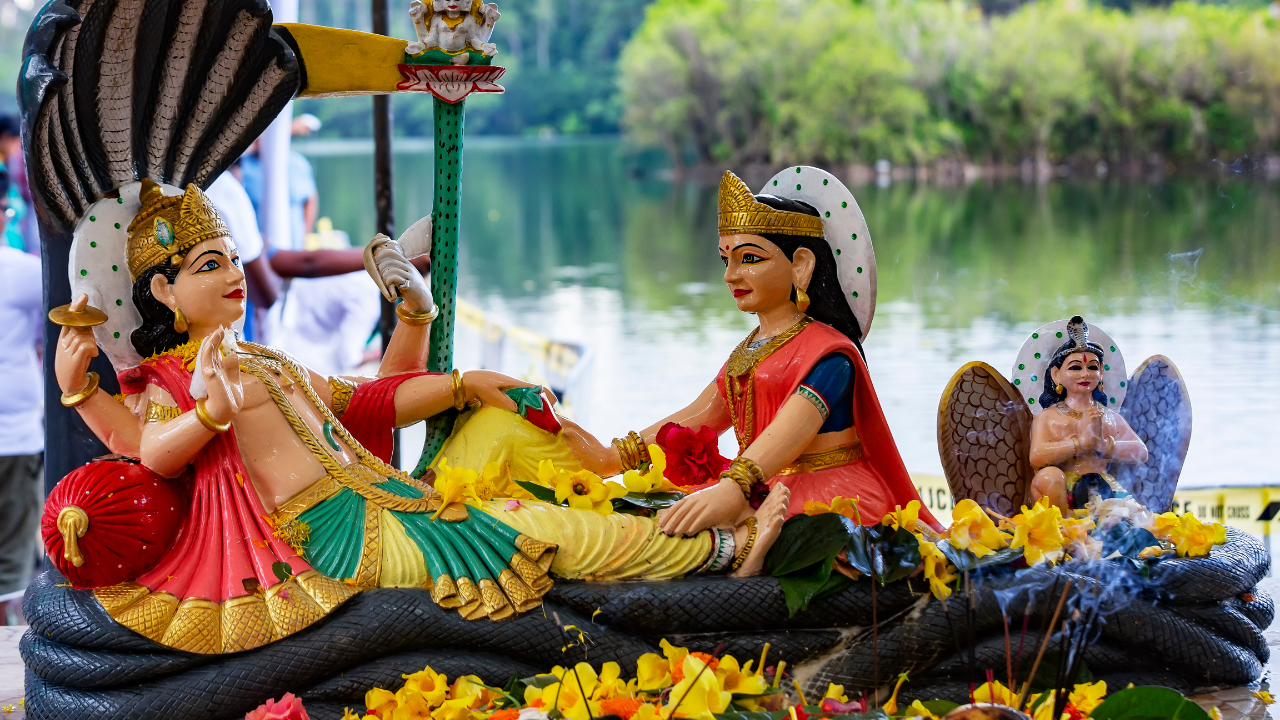
Image: Canva
The discourse explains “upavasa” in a deeper sense- as drawing closer to the Lord. On Ekadashi, devotees are encouraged to engage the mind and senses in remembering God, hearing spiritual teachings, chanting and other forms of devotional practice.The discourse also recounts the story of King Ambarisa, who was a married ruler with children and yet was described as a devoted observer of Ekadashi. His story is presented as an example of how spiritual devotion can be practised even while living a worldly life.Another story narrated in the discourse concerns King Rukmanga, who was known for observing Ekadashi. When a new queen questioned the practice, a group of Brahmins claimed that Ekadashi was meant only for widows and certain other people, and that a married woman whose husband was alive should not observe it.The king rejected their argument, saying that they were not speaking from genuine scriptural knowledge. The story ultimately presents Ekadashi as a practice connected with devotion rather than marital status.The discourse further says that Ekadashi is not restricted by caste or creed and describes the observance as beneficial for spiritual advancement.It is worth noting that this is a particular Vaishnava discourse and should be understood in that theological context, rather than presented as a single statement representing every Hindu tradition.
So, should married women observe Ekadashi?
A similar question was recently addressed by Shri Rajendra Das Ji Maharaj of Malook Peeth, Vrindavan. According to his explanation, the idea that “sadhwa” or married women should not observe Ekadashi, while widows should, does not have a scriptural basis that he has encountered.He points to the Bhagavad Gita’s emphasis on scripture as the authority for determining what should and should not be done. In his view, personal customs or commonly held social beliefs cannot automatically be treated as scriptural rules.He specifically questions the belief that a woman whose husband is alive should not observe Ekadashi. He says that he has not found such a prohibition in the Puranas or other scriptures he has studied, describing it instead as a belief that may have become established socially over time.In other words, according to this interpretation, marital status by itself is not a reason for a woman to avoid Ekadashi.
Where did the belief about married women come from?
This is where tradition and scripture can sometimes become difficult to separate.Different Hindu communities have developed their own customs around fasting, food restrictions, worship and who should observe particular vows. A practice followed within a family or community for generations can eventually come to be understood as a religious rule, even when its original basis is not clear.Shri Rajendra Das Ji Maharaj’s argument is essentially that such social beliefs should not automatically be presented as scriptural injunctions.The Pure Bhakti discourse also offers an interesting illustration of this distinction through the story of Rukmanga. In that account, the claim that Ekadashi was only for widows is attributed to Brahmins who were portrayed as having been influenced by material considerations. The story ultimately rejects that claim.
Is fasting mandatory for everyone?
There is another important point in Shri Rajendra Das Ji Maharaj’s explanation: the observance of a religious vow can also take age and individual circumstances into account.He says that children below five years of age are not at fault if they do not observe Ekadashi. Similarly, he says that a person above 90 who is unable to observe the fast, or misses an Ekadashi because of old age, should not be considered at fault.This reflects an important distinction between the principle of a religious observance and the practical ability of an individual to undertake it.
Image: Canva
The larger meaning of Ekadashi
For devotees, Ekadashi is ultimately about much more than food.The Pure Bhakti discourse describes the day as an opportunity to withdraw, as far as possible, from ordinary worldly distractions and spend more time in prayer, chanting, hearing scripture and remembering Krishna. That is also why the question of whether a woman is married or widowed may not be the central issue in these teachings.Based on the interpretation given by Shri Rajendra Das Ji Maharaj, there is no scriptural prohibition on married women observing Ekadashi simply because their husbands are alive. The belief that Ekadashi is only for widows should therefore not be presented as an established scriptural rule without citing a specific scriptural source.At the same time, Hindu religious practices vary across traditions, families and sampradayas. Women who follow a particular family or sectarian tradition may choose to follow the guidance of their own guru, acharya or religious authority.Ultimately, the question is less about whether a woman is married or widowed and more about how the Ekadashi observance is understood within the tradition she follows.