




Meet Arthur, the 7-year-old British boy who found ancient human teeth while exploring a Cornish coastline | World News
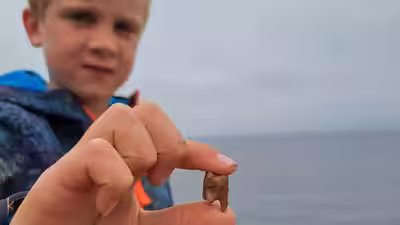
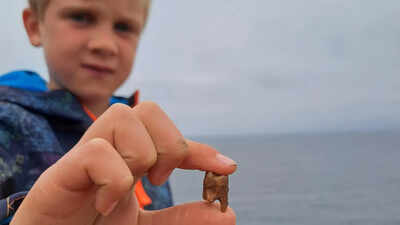
In August 2025, 7-year-old Arthur was exploring Lizard Point in Cornwall, the most southerly point of mainland Britain, when he discovered a collection of teeth in the ground. He showed them to Ken Wallace, a Wildlife Watchpoint volunteer who happened to be a retired dentist, and Wallace recognised them as human. After a short police inquiry confirmed that the discovery was archaeological rather than a modern case, the find was passed to National Trust archaeologist Jim Parry for investigation. What followed turned a chance discovery by a child into an archaeological excavation of a previously unconfirmed burial site. Parry found further teeth, fragments of jawbone and part of a skull, while erosion continued to expose more remains from the coastal mound. Initial suspicions that at least one burial might be prehistoric soon gave way to a much more complicated picture. Radiocarbon dating has since placed some of the remains in the early 1720s, raising the possibility that the site could be connected to one of Cornwall’s most notorious maritime disasters.
How erosion at Lizard Point exposed human remains buried in a coastal mound
The mound where Arthur found the teeth had already been gradually eroding through a combination of natural and human activity, and the National Trust says that erosion is expected to continue because of the site’s exposed coastal position. When Jim Parry investigated, he recovered fragments of jawbone, teeth and a skull belonging to at least one individual, along with evidence that additional remains were being revealed as the ground continued to erode. The early assessment was deliberately cautious: at least one of the burials appeared potentially prehistoric, but the archaeologists could not yet establish how many people were represented or whether the remains belonged to the same period. A week-long excavation in early November 2025 provided the first major breakthrough. Archaeologists uncovered the remains of five individuals within a relatively small section of the site. All five had been buried in an east-to-west orientation, and no clothing or other artefacts were found with them. Their condition and the way they had been buried led the National Trust team to conclude that it was highly probable they were victims of a shipwreck rather than people buried as part of an ordinary cemetery.
Why archaeologists think the remains could belong to victims of the Royal Anne Galley
Radiocarbon dating provided another important clue. Samples taken from remains recovered during the 2025 excavation produced dates indicating that the bones likely belonged to the early 1720s, while initial analysis suggested that the individuals were associated with a single event rather than a series of burials carried out over many years. The location adds another piece to the puzzle. Lizard Point was the scene of the wreck of the Royal Anne Galley in 1721, a British naval galley that was forced back toward the Cornish coast in severe weather before striking the Stag Rocks. Historic England records that the ship was carrying Lord Belhaven, who was travelling to take up the governorship of Barbados, and that only three people survived the disaster. More than 200 people are recorded by the National Trust as having died. Local traditions have long associated a burial site in the Lizard area with those who perished, but no confirmed burial place had previously been identified. The newly discovered remains therefore raise an intriguing possibility: that at least some of the people buried at the site could have been victims of the 1721 wreck. However, the National Trust has not identified the remains as Royal Anne Galley victims, and the connection remains unproven.
What the bones reveal about the people buried at Lizard Point
The excavation has already provided archaeologists with small clues about the people whose remains were found there. An osteoarchaeologist examining one individual’s front teeth identified distinctive wear patterns that may be associated with smoking a clay pipe, offering a glimpse into an everyday habit from the period. The absence of clothing and artefacts alongside the skeletons is also significant because it reinforces the interpretation that this was not a conventional cemetery with the usual objects associated with individual burials. The broader historical context is equally important. The Royal Anne was wrecked off the Lizard in November 1721, and the wreck site itself is now a protected maritime site. Historic England records the vessel as the Royal Navy’s last oared fighting ship and places its wreck at the Stag Rocks off Lizard Point. Historical and archaeological assessments have also documented long-standing traditions concerning the burial of the wreck’s casualties on land. The newly excavated site is therefore being investigated against a much larger landscape of maritime history, local tradition and previous archaeological research rather than as an isolated discovery.
How a single discovery grew into a possible burial site containing 20 to 25 people
The scale of the discovery became clearer during a further excavation in June 2026. Archaeologists working with volunteers from the Meneage Archaeology Group uncovered five additional skeletons, bringing the number of identified individuals to around 12. The total also includes a jumbled deposit of bones recovered during the 2025 excavation that is believed to represent parts of another three or four individuals. Based on everything uncovered so far, the National Trust estimates that the wider site may contain the remains of approximately 20 to 25 people. That figure is still an estimate, however, rather than a confirmed count of complete skeletons. The excavation has attracted enough interest that television crews from both the BBC and Channel 4 have visited the site, with programmes expected to feature the discovery later in 2026 and early 2027. Archaeologists are due to return in September and October 2026 for a final phase of fieldwork, when they will attempt to recover remaining vulnerable remains before the coastal erosion claims them. Once the excavation is complete, the work will move to cleaning, cataloguing and analysing the recovered material, potentially revealing more about the identities, lives and deaths of the people buried at Lizard Point nearly three centuries ago. What began when a 7-year-old boy spotted a few teeth in the ground has therefore become a much larger investigation into one of Cornwall’s most enduring maritime mysteries.