






600-year-old Hindu temple in Rajasthan has a Muslim priest; family that came from Sindh has been serving the Hindu goddess for 14 generations: The story of Jodhpur’s Bagoria Mataji Mandir
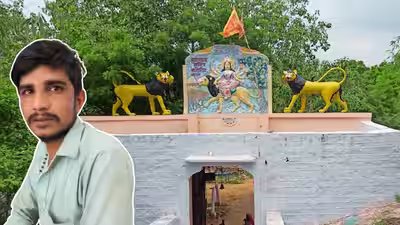
In Rajasthan’s Bhopalgarh, there is a temple where the person performing the rituals is not a Hindu priest. For generations, a Muslim family has been serving Bagoria Mata (a local deity), performing the temple’s rituals while continuing to follow Islam and offer namaz. The tradition has made the Bagoria Mataji Mandir, located in Bagoria village in Jodhpur district, a striking example of how faith and local traditions have sometimes evolved beyond religious boundaries.For the family that has served here for generations, there appears to be no contradiction in doing both. The family’s members have followed Islam in their personal lives while taking responsibility for the Hindu temple and its rituals. According to Dainik Bhaskar and various media reports, the tradition has continued for around 14 generations.But in May this year, the temple lost one of the most familiar faces associated with this tradition Jamaluddin Khan (Bhopaji), who had spent much of his life serving the goddess.
A tradition that began with a story of faith
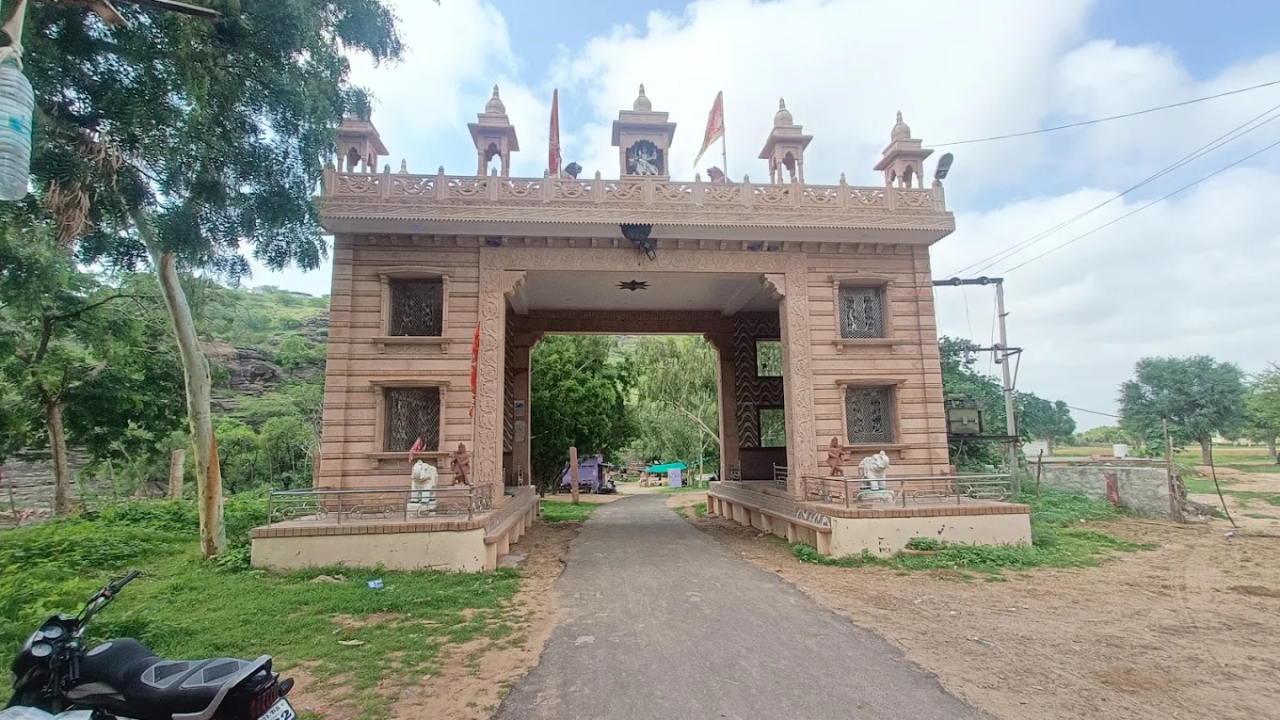
At Bagoria Mata temple, the priest’s responsibilities include the rituals associated with the goddess, including pooja, aarti, bhog and other customary practices.
The origins of the family’s association with Bagoria Mata are preserved largely through local oral tradition. According to the story told by the family and villagers, their ancestors came from Sindh, then undivided India and now in Pakistan, travelling with a camel caravan. During the journey, some of their camels became seriously ill. The caravan is said to have stopped near what is now Bagoria. The family sought the blessings of the goddess, and the animals eventually recovered.Another version of the story says that the family was struggling without food and water when an ancestor dreamt of the goddess, who showed him the way to a nearby well. A statue of the goddess was subsequently found near the well, according to local belief. Whether viewed as a miracle or a story passed down through generations, the incident became the foundation of the family’s connection with the shrine.The ancestors decided to stay and serve the goddess. What began as an act of faith eventually became a family tradition. Today, local accounts say the family has continued that responsibility for roughly 13-14 generations.
They offer namaz and perform temple rituals
What makes the tradition particularly unusual is that the family has not abandoned its Islamic identity while serving at the Hindu shrine. The priests have continued to follow Islamic practices, including offering namaz, while also carrying out rituals at the temple. At Bagoria Mata temple, the priest’s responsibilities include the rituals associated with the goddess, including pooja, aarti, bhog and other customary practices. For the villagers, the priest’s religion has apparently never been the central question. What matters is the tradition that connects his family to the temple and the goddess. The temple is visited by people from different communities, and the Muslim family’s role has become part of the identity of the shrine itself.
Jamaluddin Khan’s death adds a new chapter to the story
Jamaluddin Khan was one of the most recognisable members of the family associated with the temple. He continued the tradition handed down by his ancestors and spent his life serving Bagoria Mata. His death in May 2026 has now brought renewed attention to the unusual history of the shrine and the family that has been associated with it for centuries.
Where is the temple and how to get there?
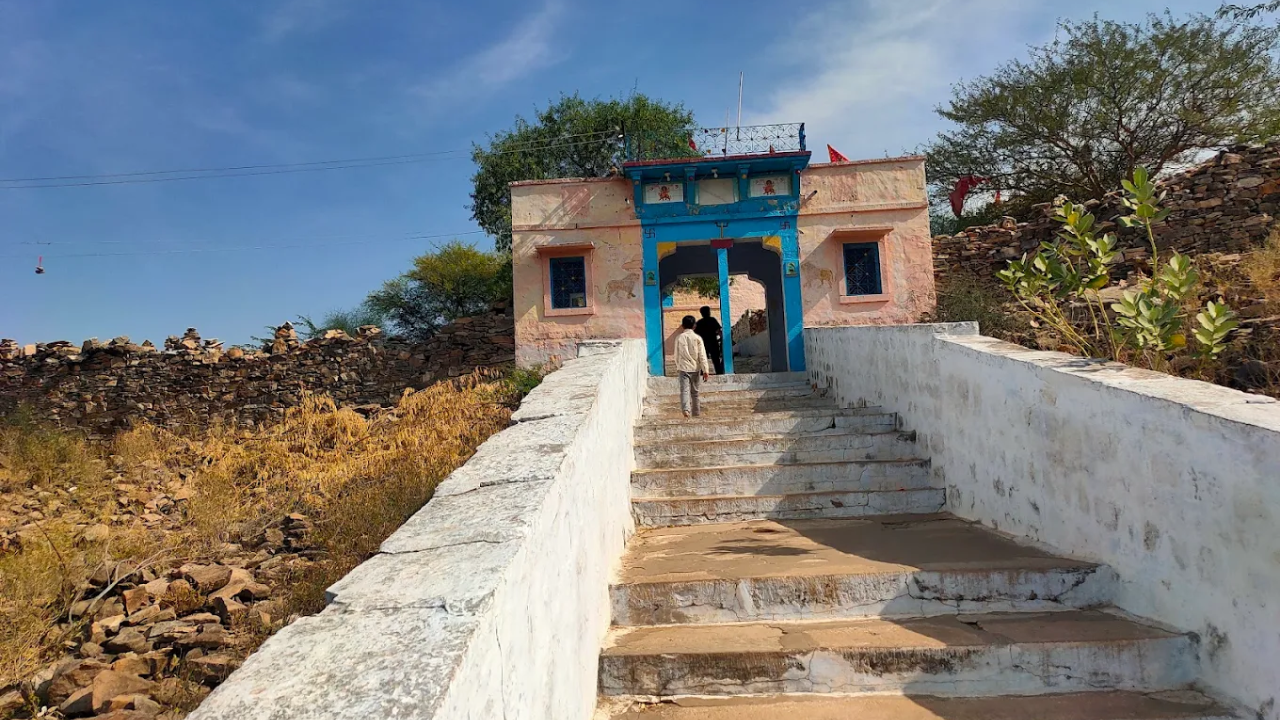
Bagoria Mataji Mandir is located in Bagoria village, in the Bhopalgarh tehsil of Jodhpur.
Bagoria Mataji Mandir is located in Bagoria village, in the Bhopalgarh tehsil of Jodhpur district, Rajasthan. The temple is situated on a hill and is around 65 km from Jodhpur city. If you are travelling by public transport, you can first reach the nearby city of Jodhpuriya Gautam and then travel towards Bhopalgarh. From Bhopalgarh, buses are available for Bagoria at regular intervals, with a bus reportedly running roughly every hour.However, the bus does not take you right up to the temple. Visitors are dropped at a junction from where the temple is still around 2.5 km away. The remaining distance has to be covered on foot. The final part of the journey is the most demanding. The temple is located on a hill and visitors have to climb around 500 steps to reach the shrine. There is also a sacred bawdi (stepwell) in the temple area.For those travelling with children, elderly family members or anyone who may find the climb difficult, travelling by a private car is a more convenient option, as it allows you to get closer to the temple before beginning the climb.