






Wrapping an almond in aluminium foil: What this simple hack is for and why people recommend it
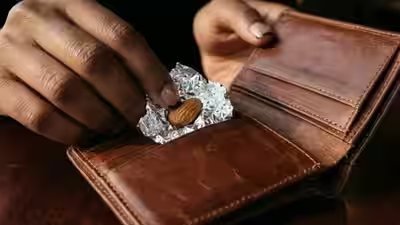
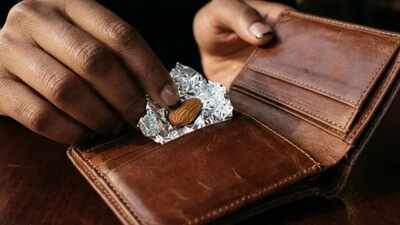
A small, oddly specific ritual has been doing the rounds lately, wrap a single almond in aluminium foil, tuck it into your wallet, purse or bag, and carry it around as a kind of good-luck charm. It sounds almost too simple to mean anything, and yet it has picked up a genuine following among people who swear by small symbolic habits to nudge their mindset in the right direction. The practice borrows loosely from Feng Shui, the centuries-old Chinese philosophy built around harmonising spaces and personal energy, though this particular version is a fairly modern spin on it rather than an ancient, codified custom. There’s no science backing any of it, and even the people who practise it tend to admit as much, but the reasoning behind why an almond, why foil, and why the wallet is worth actually unpacking.
Where the idea comes from
The core idea traces back to interpretations of Feng Shui that assign symbolic meaning to everyday objects based on what they represent rather than what they literally are. An almond, being a seed, gets tied to concepts like growth, potential and new beginnings, the logic being that a seed carries within it the possibility of becoming something much bigger. Wrapping it in foil isn’t random either; within this belief system, the metal is treated as a kind of protective shell that seals in whatever intention the person has placed on the object. None of this is drawn from classical, centuries-old Feng Shui texts specifically; it’s more of a contemporary adaptation that has spread informally, largely through word of mouth and social media, rather than through any established school of practice.
What people believe it’s for
Ask around and you’ll get a few overlapping reasons for why someone might be carrying an almond wrapped in foil in their back pocket. The most common one is prosperity, the belief that keeping it in a wallet or purse signals an intention to attract money, opportunities or general abundance. Others use it more as a personal talisman, a physical reminder to stay resilient and focused when things get difficult, rather than anything tied specifically to finances. It also shows up a lot around fresh starts, a new job, a business launch, the beginning of a course of study, and moments where people want a small object to represent the growth they’re hoping for. In every version of the ritual, the almond itself isn’t doing anything mystical; it’s functioning more like a worry stone or a lucky coin, a tangible object that gives an abstract hope somewhere to live.
How it’s actually carried out
The instructions, such as they are, tend to stay pretty consistent across people who follow this practice. The almond goes into a personal, separate space, most commonly the wallet since that ties it most directly to the money angle, though a handbag or a dedicated pouch works just as well for people more focused on the personal-growth interpretation. Some recommend keeping it away from other objects in the bag entirely, treating it almost like a small shrine rather than just another item rattling around with keys and receipts. There’s no elaborate ceremony involved, no chanting or timing requirements, which is probably part of why the habit has spread so easily, it takes about ten seconds to wrap an almond and drop it in a pocket.
Why the almond eventually needs replacing
Interestingly, the ritual doesn’t treat the almond as a permanent fixture. Most people who follow it recommend swapping it out roughly once a month, or whenever a significant new chapter begins, a job change, a move, a big decision. The idea is that replacing it symbolically renews the intention behind it, rather than letting the object just sit there indefinitely. There are also more practical triggers for a swap, if the foil tears, if the almond picks up moisture, or if the wrapping starts looking worn out, most practitioners will simply throw the whole thing away and start fresh with a new almond and a clean sheet of foil. It’s treated less like a permanent lucky charm and more like something with a natural shelf life.
Does it actually work
Here’s the honest answer: there’s no research anywhere suggesting that a wrapped almond has any measurable effect on a person’s finances, luck or life circumstances. This is squarely in the territory of folk belief and symbolic ritual, not anything that’s been tested or verified. What it can arguably do is far more psychological than magical, having a small object tied to a goal can work as a quiet, recurring reminder of what someone is working toward, similar to how vision boards or affirmation cards function for people who use them. If it helps someone stay a little more intentional about their goals, that’s really the extent of its function, the almond isn’t pulling any strings behind the scenes.
Should you actually try it
If you’re the sort of person who likes small rituals, mental anchors, a few grains of superstition mixed into daily life, there’s genuinely no harm in trying it. It costs nothing beyond one almond and a scrap of foil, and if it gives you a small nudge of motivation every time you open your wallet, that’s a perfectly reasonable reason to keep doing it. Just don’t go in expecting it to do any actual financial heavy lifting; the almond isn’t a substitute for budgeting, saving or making good decisions. It’s simply a symbol, and like most symbols, whatever power it has comes entirely from the meaning you choose to place on it.
Disclaimer:
This article is based on popular folk beliefs and informal Feng Shui-inspired practices circulating online. There is no scientific evidence that this or any similar ritual can influence a person’s finances, luck or life outcomes. The information here is shared for general and cultural interest only, and readers are encouraged to treat it as symbolic rather than as advice of any kind.