






The students of this country are among the naughtiest in the world and know where India stands

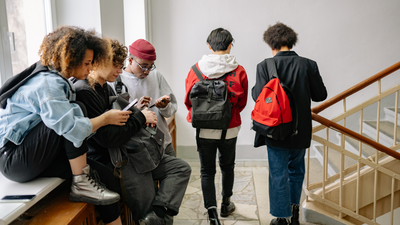
A classroom may look quiet from outside, but keeping a group of teenagers focused is not always easy. Students talking while the teacher is speaking, making noise, using phones or laptops and disturbing others can make it difficult for everyone to learn.A new international report has now put the spotlight on one country where such problems appear to be particularly common. The findings have also come at a time when the country’s students are seeing a decline in their academic performance.
28 Jul 2026 | 16:25
Do you think social media has changed the parent-teen relationship?
Which country’s students are among the world’s worst behaved?
According to the latest Programme for International Student Assessment (PISA) findings, the country is Australia.Australia ranked 69th out of 80 education systems for classroom behaviour. The report does not officially call Australian students the “naughtiest” in the world. Instead, it looks at how much classroom noise, disruption and distraction students experience during lessons.According to Newswire’s report on the findings, 41% of Australian students said there was noise and disorder during most or all of their science lessons. The average across OECD countries was 31%.About 34% of Australian students said students often did not listen to what the teacher was saying, while 21% said students found it difficult to work well during lessons.The findings suggest that keeping students focused is a bigger challenge in Australian classrooms than in many other countries.

Australia ranks among the countries with the poorest classroom behaviour in PISA 2025.
Digital devices are adding to the problem
Phones, laptops and tablets have also become a major source of distraction. As per the PISA findings, 39% of Australian students said their classmates were often distracted by digital devices during science lessons. The OECD average was 28%. Around 77% of Australian students said technology such as laptops and iPads was a source of distraction.For teachers, this can create a difficult situation. Digital devices can help students learn and find information quickly, but they can also take their attention away from the lesson.Bullying is another concernThe report also looked at bullying among students. 23% of Australian students said they had experienced at least one form of bullying a few times a month or more in 2025.
And what about India?
This is where the comparison becomes interesting. India does not have a rank in the latest PISA report. India did not take part in the 2025 PISA assessment, which covered 91 countries and economies.India’s last participation in PISA dates back to the 2009 cycle, and it was not a nationwide assessment. Students from Tamil Nadu and Himachal Pradesh took part as India’s representatives. According to the OECD, these two states were included among the partner economies in the PISA 2009 assessment, with the assessment in these two states being conducted in 2010. The test measured the skills of 15-year-old students in areas including reading, mathematics and science. India has not taken part in subsequent PISA cycles, which means there is no current PISA ranking for the country.The bigger takeaway from the Australian findings is that academic performance is only one part of a school’s picture. Noise in classrooms, bullying, missed classes and constant digital distractions can also shape how well students are able to learn.