





A UK farmer started with 20 sheep on 18 acres; free grazing beneath solar panels helped her expand to more than 200 sheep and 250 acres | World News
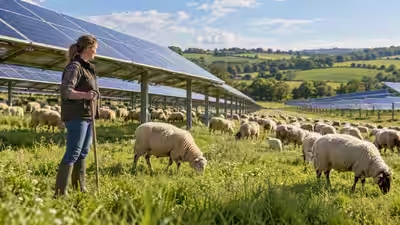
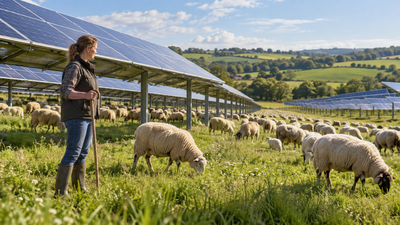
For first-generation sheep farmer Hannah Thorogood, gaining access to land beneath solar panels has opened a new chapter in her farming journey. She began with just 20 sheep on 18 acres in Lincolnshire, a scale she says was all she could afford at the time. Today, her flock has grown to more than 200 sheep, while the land available to her has expanded to 250 acres. Free grazing on solar sites has helped the change, where sheep manage grass beneath the panels. Thorogood says the arrangement has given her a “massive leg-up” in an industry where land can be difficult to secure.
How solar grazing helped Hannah expand
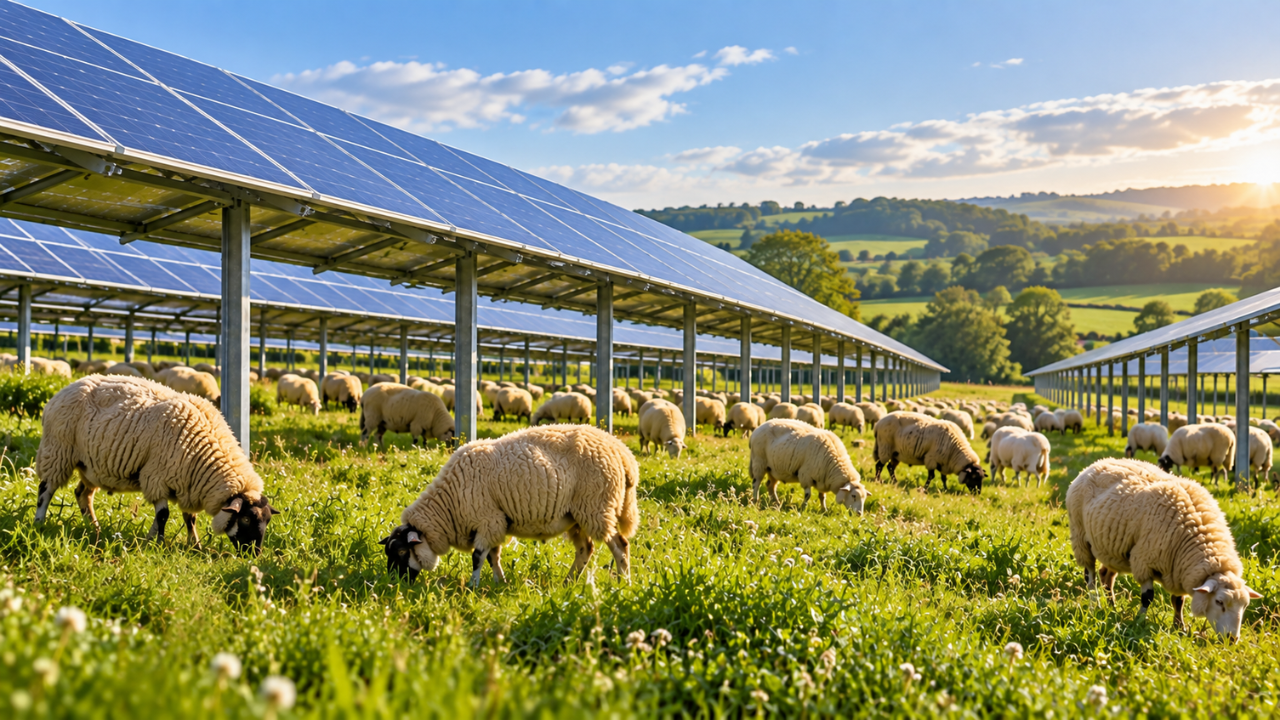
Solar grazing involves using sheep to manage vegetation growing beneath and around solar panels. Solar farms need grassland to be kept under control, and the Guardian reported that maintaining a typical site can involve tens of acres of grass that would otherwise need mowing or spraying. Those conventional maintenance methods can cost as much as £50,000 a year.Sheep provide an alternative because they can graze in spaces that machinery cannot easily reach. They move between solar panel supports and consume vegetation without heavy mowing equipment. For farmers such as Thorogood, that creates a chance to use land that is already occupied by renewable-energy infrastructure while providing pasture for their animals.
Benefits for sheep and land
Thorogood says the arrangement has brought several benefits for both her flock and the land. She believes the sheep improve soil quality and increase pasture diversity, while their grazing means the land does not need spraying.The panels also provide shelter for the sheep. Thorogood said the land is secure because cameras are present across the site, while technology teams monitor the flock. She added that the solar panels give the animals protection from snow and extreme heat, providing a form of shelter alongside the grazing they offer.
Solar grazing offers farmers new opportunities
As reported by the Guardian, Thorogood’s experience comes as farmers across the UK face high costs and limited access to agricultural land. The country has traditionally been largely self-sufficient in sheep meat, but high feed and farming costs, the market and weak profitability have contributed to falling sheep numbers.Nicola Noble of the National Sheep Association described free grazing on solar sites as a “valuable opportunity for new, younger or smaller farmers”. Dr Liz Genever, another Lincolnshire sheep farmer, told the Guardian that free solar grazing had enabled her to triple her sheep numbers and said that reaching the full potential of a nearby solar site could increase her income from sheep from £20,000 to £60,000.
Combining farming with renewable energy
The model has been presented as a way of combining renewable-energy generation with agricultural use of the same land. Emilien Simonot of Lightsource BP described suitable solar grazing as a “triple-win” for farming, renewables and society, while Lancaster University professor Alona Armstrong said that this type of multiple land use is vital.Not every solar site is suitable for sheep, and concerns have been raised about biodiversity and whether grazing is always carried out at appropriate stocking densities. Noble also warned that grazing should not simply become a public-relations exercise for solar developers. For Thorogood, though, free access to solar-site pasture has provided something particularly valuable: a way to expand her sheep enterprise when agricultural land would otherwise have been difficult to afford.