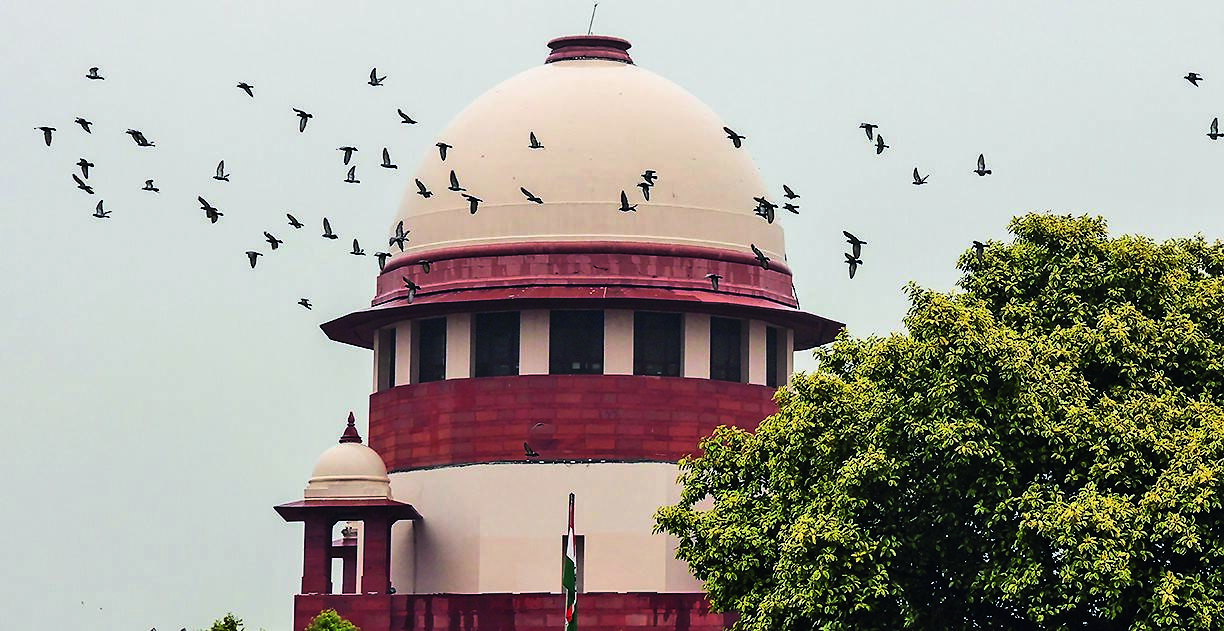
NEW DELHI: In an important clarification on the ban on use of video clips of court proceedings, Supreme Court on Wednesday said if such footage was uploaded on social media, an aggrieved person could approach the authorities under the Information and Technology Act to seek a “takedown” order of the content.This clarification came from a bench of CJI Surya Kant and Justices Joymalya Bagchi and V Mohana while hearing a petition filed by an advocate whose arguments on July 1 before one of the SC benches on behalf of his father, accused of jumping bail, went viral on social media.Counsel for the advocate said unauthorised circulation of the proceedings on social media platforms had violated his right to life, liberty, dignity and privacy. “Continuous availability of the impugned videos on social media platforms, even after express judicial orders prohibiting such dissemination, constitutes an ongoing and irreparable injury to the petitioner’s fundamental rights,” he said.The bench said the SC had passed the ban order on July 24, and the lawyer could approach authorities under the IT Act and seek takedown orders against digital and social media platforms for deleting the alleged offensive content being circulated despite a ban imposed by the top court.CJI Kant said there was an efficacious remedy available to the advocate and he must avail that. However, he clarified that if any social media or digital platform used footage from livestreaming of court proceedings and either added a narrative or exhibited clips selectively to convey a different meaning, it would be viewed very seriously and may amount to contempt of court.
“If someone adds something to what the court observed or presents the proceedings in such a manner to generate controversy, we will take a very serious view of such acts,” the CJI said.The bench advised the lawyer to move the authorities under Section 69A of the IT Act or directly send a legal notice to digital and social media platforms to take down the offensive content. If the intermediaries or authorities did not respond to the request and the grievance remained unresolved, he could file a petition in the SC, it said.Frowning upon edited clips of live-streamed judicial proceedings accompanied by biased commentary flooding social media, the SC on July 24 had banned uploading, sharing and circulation of audiovisual excerpts of court hearings on social media and digital platforms and said any online posting of such clips would require mandatory prior approval from the SC or jurisdictional HCs.
Contains information related to marketing campaigns of the user. These are shared with Google AdWords / Google Ads when the Google Ads and Google Analytics accounts are linked together.
90 days
__utma
ID used to identify users and sessions
2 years after last activity
__utmt
Used to monitor number of Google Analytics server requests
10 minutes
__utmb
Used to distinguish new sessions and visits. This cookie is set when the GA.js javascript library is loaded and there is no existing __utmb cookie. The cookie is updated every time data is sent to the Google Analytics server.
30 minutes after last activity
__utmc
Used only with old Urchin versions of Google Analytics and not with GA.js. Was used to distinguish between new sessions and visits at the end of a session.
End of session (browser)
__utmz
Contains information about the traffic source or campaign that directed user to the website. The cookie is set when the GA.js javascript is loaded and updated when data is sent to the Google Anaytics server
6 months after last activity
__utmv
Contains custom information set by the web developer via the _setCustomVar method in Google Analytics. This cookie is updated every time new data is sent to the Google Analytics server.
2 years after last activity
__utmx
Used to determine whether a user is included in an A / B or Multivariate test.
18 months
_ga
ID used to identify users
2 years
_gali
Used by Google Analytics to determine which links on a page are being clicked
30 seconds
_ga_
ID used to identify users
2 years
_gid
ID used to identify users for 24 hours after last activity
24 hours
_gat
Used to monitor number of Google Analytics server requests when using Google Tag Manager