





A Seattle shipbuilder sold his company for a reported $3.5 million in 1906 and built an Orcas Island estate; 15 years later he donated more than 2,700 acres to Washington to create Moran State Park
When former Seattle mayor and shipbuilding businessman Robert Moran was told by doctors in 1905 that he had only a few months to live because of a failing heart, he decided to spend his remaining time building a peaceful home on Orcas Island in the Pacific Northwest. That diagnosis turned out to be wrong. Moran lived for another 38 years and left behind one of the largest gifts of private land in Washington State.
Rise of a Seattle titan
Moran arrived in Seattle in 1875 at age 18, with almost nothing. He worked his way up from ship engineer to master mechanic. He later joined his brothers to create Moran Brothers Company, a marine repair business that grew quickly as shipping expanded across the region. His role in Seattle’s public life also grew. Moran was elected mayor in 1888 and served two terms, helping lead the city as it rebuilt after the Great Seattle Fire of 1889. The high point of his business career came in 1904, when his shipyard launched the USS Nebraska, the only battleship built in Washington state. According to historical records published by HistoryLink, the ship helped establish Moran as one of the leading shipbuilders in the Pacific Northwest. In 1906, after years of intense work and serious exhaustion, Moran sold the shipbuilding company to a New York group for a reported $3.5 million and retired.
Retreat to Orcas Island
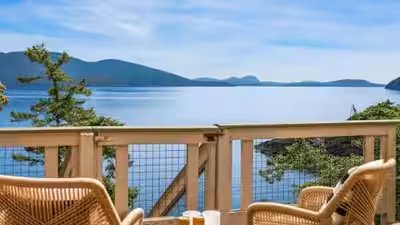
Looking for a quieter life, Moran bought thousands of acres on Orcas Island, the largest island in the San Juan Archipelago. Between 1906 and 1909, he oversaw the building of Rosario, a 54-room Arts and Crafts style mansion overlooking East Sound. The family moved into the house on June 21, 1909. The estate had advanced features for its time. Moran built a hydroelectric system to provide electricity, along with workshops where skilled craftsmen made many of the home’s features. Shipbuilders and machinists who had worked for Moran Brothers Company helped build the mansion. Its materials included teak, mahogany, and large Belgian glass windows. The island climate appeared to agree with Moran. His health improved, and his attention gradually turned to protecting the forests, lakes, and mountains around his home. He did not allow logging or hunting on his property and began thinking about how the land could one day be preserved for public use.
Creating a public park
By the early 1910s, Moran was concerned about protecting the forests around Mount Constitution, the highest point in the San Juan Islands. He first considered giving the state a small piece of land near the summit. In 1911, he offered about 3,000 acres, including most of the mountain, if the state would also buy some nearby land. The state did not accept the offer at first. Washington had no properly funded agency able to take on and manage such a large park. Moran later reduced the proposed gift to 2,731 acres and removed his conditions. In 1921, the state finally accepted his offer. On April 21, 1921, the State Parks Committee formally accepted nearly 2,700 acres from Moran to create Moran State Park. Washington State Parks records confirm that Moran’s gift created one of the state’s first major state parks and gave the new state park system a large public land base. Moran wanted the land to be available for public enjoyment. He continued supporting the park after the donation, spending his own money on roads, trails, bridges, and other improvements. Moran also pushed for better access to Mount Constitution. He supported replacing the rough road to the summit with a road suitable for automobiles, helping make it easier for visitors to reach the mountain and its views.
Legacy during the Great Depression
During the 1930s, Moran State Park became an important work site for the Civilian Conservation Corps, part of President Franklin D. Roosevelt’s New Deal. A CCC camp opened at the park in June 1933. Crews built roads, trails, bridges, picnic shelters, and other structures using local materials. The CCC also built the stone observation tower at the top of Mount Constitution. Designed by Seattle architect Ellsworth Storey, the tower was completed in 1936 and stands 53 feet high. From the summit, visitors can see wide views across the San Juan Islands, Puget Sound, Mount Baker, and surrounding mountains. Moran died in 1943 at age 86, nearly four decades after doctors had warned him that he had only months to live. Today, Moran State Park covers more than 5,000 acres and includes five freshwater lakes and more than 30 miles of hiking trails. It is the fourth-largest state park in Washington and remains one of the major public recreation areas in the San Juan Islands. The park protects the forests, lakes, and mountain landscape that Moran began working to preserve more than a century ago.