






Are dinosaurs younger than we thought? Crocodile study challenges long-held age estimates |
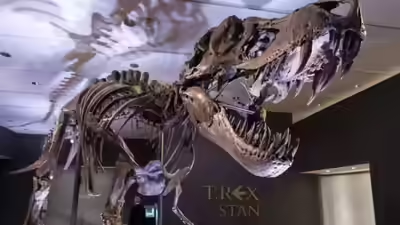
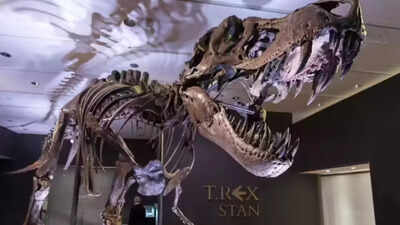
Palaeontologists have historically used the ‘one ring per year’ rule to determine the age of ancient animal life forms, similar to counting tree rings to determine tree age; however, discoveries regarding the growth of present-day reptiles may create great change in how to calculate the ages of ancient reptiles. Researchers measured the growth rates of crocodiles whose growth cycles fluctuate with environmental temperature and the food supply available at any given time.The flexibility of biological systems, as shown in research published in the Journal of Morphology, has led to a shift from the long-held belief that an ‘annual’ ring would be found in a dinosaur’s bones to the conclusion that the ‘annual’ ring might actually represent a seasonally growing cycle in a dinosaur. If dinosaurs were capable of having flexible growth cycles, then the Tyrannosaurus, the most well-known dinosaur, could be significantly younger than previously thought.
How crocodile growth cycles redefine dinosaur longevity
New information is challenging previously accepted ideas about how quickly dinosaurs grow as compared to their descendants. Research indicates that the Lines of Arrested Growth (LAGs) used to establish dinosaur age are more flexible than previously understood and are subject to many more factors than our current understanding suggests. In addition, scientists have provided evidence that if crocodiles can have multiple ‘growth’ rings in one year, we may be overestimating how old the world’s most famous ancient predators were when they died.
Science of ‘false’ annual rings
According to the study, the formation of these skeletal markers is far more sensitive to environmental changes than previously believed:
- Metabolic Spikes: When crocodiles experience an abundance of food or a spike in seasonal temperatures, their metabolism accelerates, laying down a new layer of bone tissue.
- Environmental Triggers: The research indicates that a single year with two distinct wet or warm seasons can result in two separate LAGs. As noted in foundational biological records, reptile growth is highly plastic, meaning it stretches and contracts based on external conditions rather than a fixed internal clock.
- The Dino-Impact: Applying this ‘extra cycle’ theory to palaeontology suggests that a dinosaur fossil with 30 rings might only be 15 to 20 years old. This implies that dinosaurs were likely fast-growing machines that reached massive sizes in half the time once estimated.
How younger dinosaurs changed the food chain
When we consider the possible corrections to age estimates, we must realise that the entire model of the ‘Mesozoic family tree’ may be altered. This could affect how we define behaviour in dinosaurs.
- Rapid population turnover: Under the assumption that Tyrannosaurus reproduce after 8 years, rather than after 18 years, populations of Tyrannosaurus would turn over significantly more quickly than populations of other dinosaurs (due to being fully developed sooner). This explains why dinosaurs were able to recover their numbers so quickly after small mass extinction events prior to the major extinction event.
- Juvenile prevalence: In an ecosystem where dinosaurs matured at such an accelerated rate (10 years), there will be an abundance of ‘teenage’ dinosaurs near the size of adult dinosaurs, yet they will display different hunting behaviours than adult dinosaurs. Thus, it would be expected that ‘younger’ dinosaurs would occupy entirely different niches in the food web than have been modelled thus far.