




How Trump’s ‘careless’ Pearl Harbour joke in Oval Office shook eighty years of US-Japan diplomacy | World News
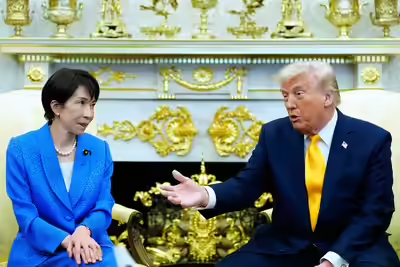
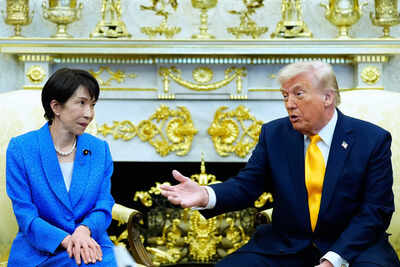
In the Oval Office on Thursday, Donald Trump made a joke about Pearl Harbour to the Japanese prime minister’s face. It lasted seconds. It undid decades.Sanae Takaichi had come to Washington having done everything the moment required. She had flown from Tokyo, taken her seat in the Oval Office, and told Donald Trump she believed he was the only person on earth capable of achieving world peace. She had previously offered to nominate him for the Nobel Prize. The meeting was, by all accounts, congenial, shaped by careful flattery, patient diplomacy, and the management of a bilateral relationship that matters enormously to Japan and that, under this president, requires a certain amount of performance alongside the substance.
Then a Japanese reporter asked Trump why he had given no advance warning to allies, including Japan, before launching military operations against Iran. Trump’s answer began reasonably enough. “One thing you don’t want to signal too much,” he said. “When we go in, we went in very hard and we didn’t tell anybody about it because we wanted surprise.” He paused, evidently pleased with where this was going, added: “Who knows better about surprise than Japan, OK? Why didn’t you tell me about Pearl Harbor, OK? Right?”There was laughter in the room. Trump pressed on. “You believe in surprise, I think, much more so than us.”Across the room, Takaichi widened her eyes and appeared to take a deep breath. She kept her arms crossed in her lap. She did not speak, which was, given the circumstances, the only possible response and also the most revealing one.
The history that both countries spent decades learning not to mention
On the morning of 7 December 1941, the Imperial Japanese Navy sent more than 350 aircraft over the American naval base at Pearl Harbour, Hawaii, in two waves. It was a Sunday. The attack lasted under two hours. Eight US battleships were hit, four of them sunk. Around 2,400 Americans were killed. President Franklin D. Roosevelt went before Congress the following day and called it “a date which will live in infamy,” a phrase that entered the language so completely that it no longer needs its source. The United States declared war on Japan within hours, ending two decades of studied American reluctance to involve itself in the world’s conflicts.
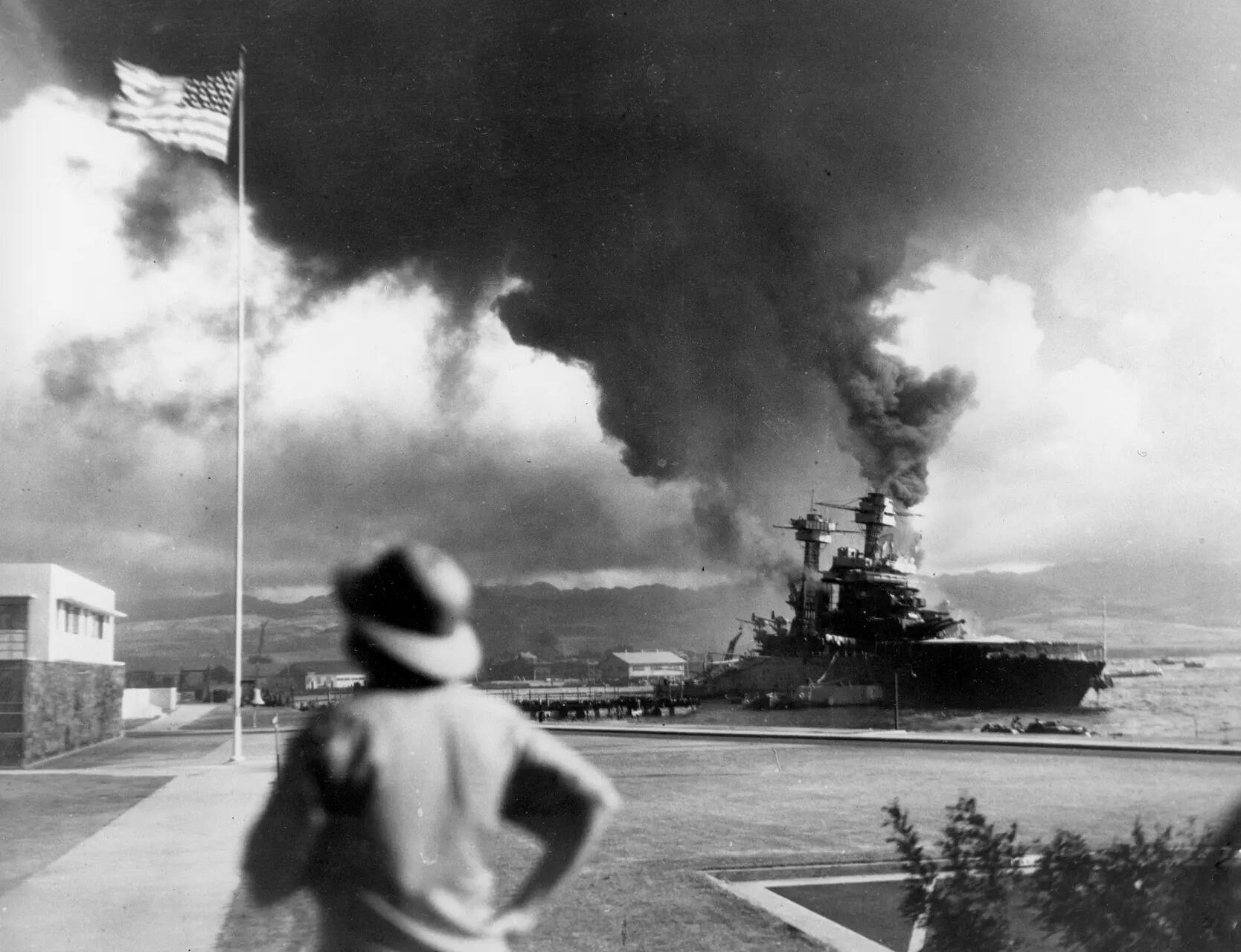
FILE – American ships burn during the Japanese attack on Pearl Harbor, Hawaii, Dec. 7, 1941. (AP Photo, File)
What followed across the next four years was a Pacific war of extraordinary brutality, ending only in August 1945, days after atomic bombs fell on Hiroshima and Nagasaki and killed, in those two moments alone, somewhere between 130,000 and 220,000 people, the vast majority of them civilians. Japan surrendered. General Douglas MacArthur oversaw the occupation. The United States dissolved the Imperial Army and Navy, wrote Japan a new constitution, and extended its nuclear umbrella over a country it had spent four years fighting.
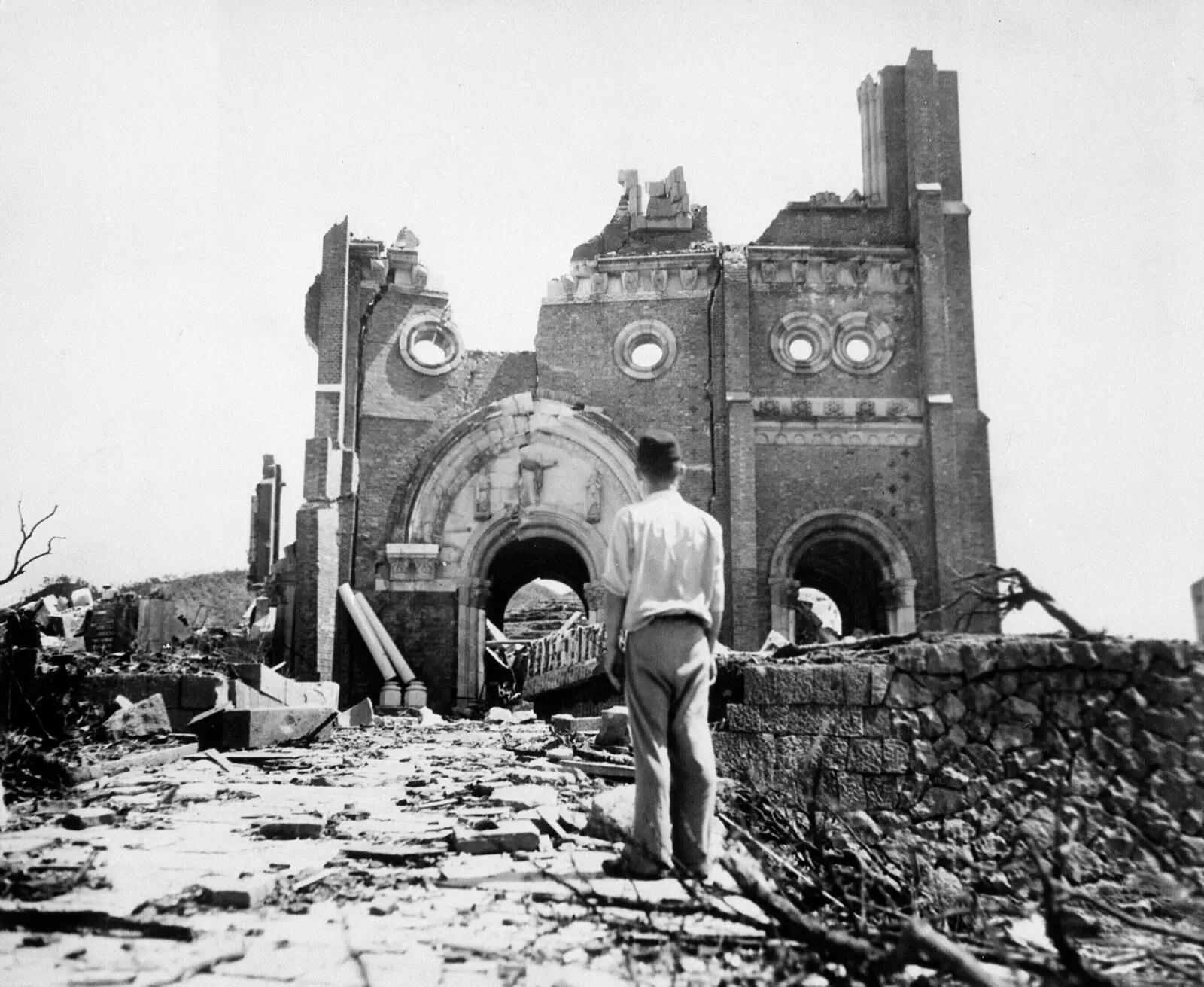
FILE – In this Sept. 13, 1945, file photo, the Urakami Catholic Cathedral in Nagasaki, Japan, stands waste in the aftermath of the detonation of the atom bomb over a month ago over this city. (AP Photo/Stanley Troutman, Pool, File)
Article 9 of that 1947 constitution, drafted by Americans, which conservative Japanese still find galling, legally prohibits Japan from maintaining war potential or resolving disputes by force, a clause that remains in place today and that shapes every conversation about what Japan can and cannot do militarily, including the conversation Takaichi was having with Trump on Thursday about the Strait of Hormuz.In the immediate post-war years, the United States had used Pearl Harbour as justification for remaking Japanese society entirely. But as communism spread through Asia during the Cold War, Washington’s official framing shifted. Pearl Harbour became, in the language of American statecraft, a historical tragedy rather than an indictment, because keeping Japan as an ally mattered more than keeping the wound open. It is, by any measure, one of the more complex bilateral histories in the modern world. Both nations have spent eighty years choosing, with great deliberateness, not to weaponise it in each other’s presence.By 2016, the process had reached a moment that would have been difficult to imagine in 1945: President Barack Obama visited the Pearl Harbour memorial alongside Shinzo Abe, then Japan’s prime minister, who offered condolences “to the souls of those who lost their lives here.” Both men laid wreaths of white peace lilies. Obama described the events of that morning in detail, spoke of American heroism, and said the visit “reminds us of what is possible between nations and between peoples.” It was the kind of scene that does not happen accidentally. It was the product of eighty years of sustained, deliberate work.
What the joke cost, and what it was worth
The diplomatic convention Trump discarded on Thursday was not an affectation. American presidents avoided speaking harshly about Pearl Harbour in the presence of Japanese leaders because the relationship that replaced that history, the alliance, the security guarantee, the web of economic and strategic interdependence, was worth more than the satisfaction of saying it. These conventions were developed because the relationships they protect are genuinely load-bearing.That calculation held across administrations of both parties, across eight decades, across presidents who disagreed about almost everything else. It held because the people making it understood that Japan is constitutionally prevented from projecting military force abroad, depends on the American nuclear umbrella for its security, and sits at the geographic centre of every serious Indo-Pacific calculation at the precise moment that China’s military ambitions have made the Pacific the defining theatre of great power competition. The leverage in that relationship belongs largely to Washington. There is no obvious strategic return on spending it for a laugh.Trump has complained repeatedly this week that allies including Japan failed to heed his request to help safeguard the Strait of Hormuz after he launched operations against Iran. “It’s appropriate that people step up,” he said on Thursday, the same afternoon he made the joke. Takaichi, whose composure throughout the exchange was its own kind of statement, told reporters afterward that she had given Trump a detailed explanation of what Japan’s constitution does and does not permit. She said they agreed on the importance of the Strait. She did not mention Pearl Harbour.Trump’s son Eric posted on X that the exchange was “one of the great responses to a reporter in history.” Others were less certain. Journalist Mehdi Hasan struck a more mixed note: “I’m sorry, but this is legit hilarious. If only he weren’t the president and just a character on TV, we could laugh our heads off without any sense of unease, dread, or embarrassment.”
The pattern, and what it reveals
It was not Trump’s first venture into this territory either. When German Chancellor Friedrich Merz mentioned 6 June, D-Day, in conversation last year, Trump observed that it was “not a pleasant day” for the chancellor. Merz replied with admirable patience: “Well, in the long run, Mr President, this was the liberation of my country from Nazi dictatorship.”
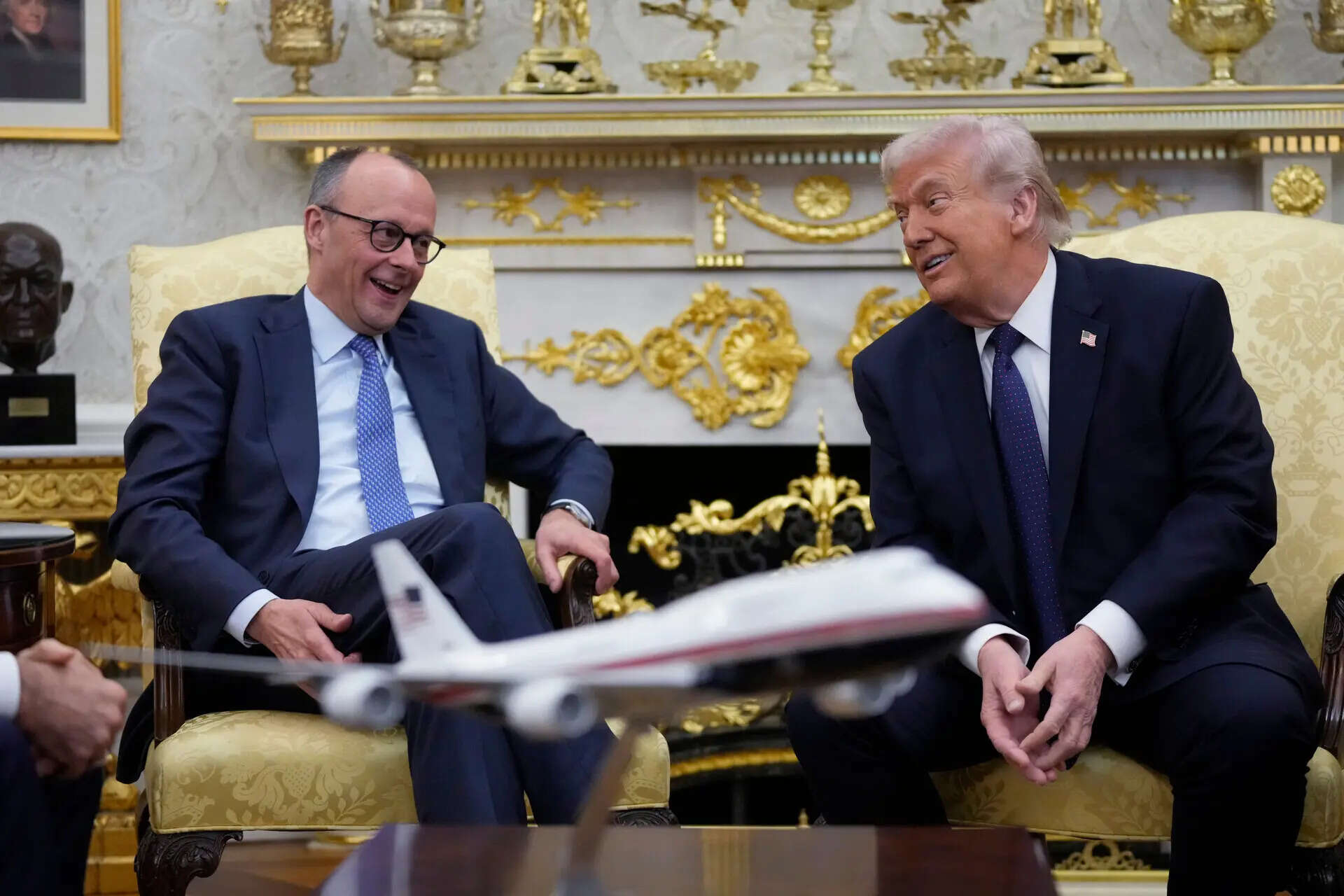
President Donald Trump meets with German Chancellor Friedrich Merz in the Oval Office at the White House, Tuesday, March 3, 2026, in Washington. (AP Photo/Mark Schiefelbein)
The pattern is consistent enough by now that it would be a mistake to read each instance as an aberration. These are not gaffes in the conventional sense, moments of unintended revelation, quickly walked back. Trump does not walk things back. What they are, more accurately, is a governing style in which the norms that previous administrations treated as structural, the careful management of historical grievance, the diplomatic grammar that makes difficult relationships function, are treated instead as optional, as performances of weakness, as exactly the kind of nicety that lesser politicians observe and serious ones dispense with.Takaichi smiled her way through it and recovered quickly. She had already demonstrated, across several meetings with Trump, a talent for absorbing his energy and redirecting it without visible friction, a skill that has become something of a prerequisite for any foreign leader who needs something from this White House. She left Washington having secured what she came for: a meeting, a photo, a communiqué, the continued functioning of an alliance that Japan cannot afford to let deteriorate. She will go home and say the visit went well. It largely did, despite the brief, uncomfortable optics that have dominated headlines. The alliance will continue, too important, and Japan too dependent on American security guarantees, for one afternoon in the Oval Office to unravel what eighty years of patient construction produced.