





LPG crisis in India: State-wise impact of the Iran war and Strait of Hormuz disruption
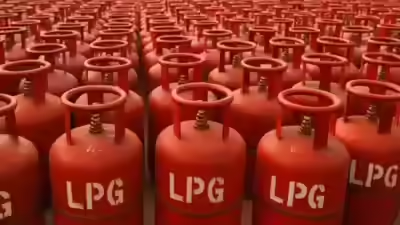
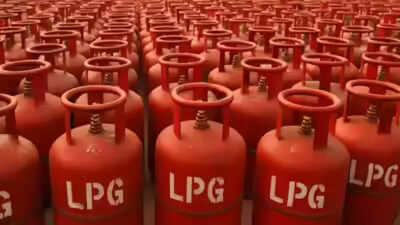
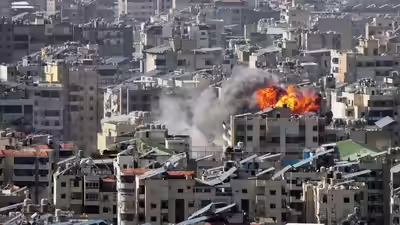
NEW DELHI: Fears of LPG shortage have begun spreading across the country as the escalating conflict in Middle East disrupts global energy supply chains. The closure of the Strait of Hormuz following Iranian retaliation against US–Israel strikes has triggered panic buying, long queues at LPG agencies and petrol pumps, and forced restaurants and small businesses to switch to alternative cooking methods.While the Centre has assured that domestic LPG supplies remain adequate, disruptions in commercial cylinder distribution and reports of shortages have created anxiety across multiple states.
Panic buying, long queues in West Bengal
Scenes of long queues outside LPG agencies and fuel stations were reported from many parts of the country as consumers rushed to secure cooking gas and fuel.In Kolkata and several districts of West Bengal, auto-rickshaw drivers and domestic consumers were seen waiting for hours at LPG dispensing stations and gas agencies. Some drivers said they had been waiting since the previous night to refill their cylinders.Many consumers also visited distributor offices directly after online booking systems crashed due to heavy traffic.“This is panic buying,” Bijan Biswas, spokesperson for the Indane LPG Distributors’ Association in Bengal told PTI. “Many people are afraid they might not get another cylinder soon, and that has led to this crisis,” he added.Distributors said daily bookings for Indane LPG cylinders in the state have nearly doubled to around two lakh from about one lakh earlier.
Restaurants switch to alternatives in Bhopal
The reported shortage of commercial LPG cylinders has begun affecting hotels and restaurants in Bhopal, forcing many operators to turn to alternative cooking methods such as induction stoves. A few establishments have also been compelled to temporarily shut operations due to the lack of fuel.The disruption is also being felt by residents, with long queues reported outside several gas agencies across the city as households rush to secure domestic LPG cylinders.Amid the shortage, a major fast-food chain operating in the city has shifted to induction-based cooking to keep its kitchens running.While some restaurants have moved to induction systems, others have turned to traditional firewood to continue preparing food as they wait for gas supplies to normalise.Restaurant owner Dolraj Gaire in Bhopal said businesses are trying to adapt. “We are not alone facing the problem about the shortage of commercial cylinders, but the entire nation. We are trying to make it work through induction cooking,” he told ANI.“We have already shifted 60% of our work to induction, and the remaining 10-20% will be solved in a couple of days once we get induction. We will make sure to prepare at least 80% of the food items, if not all,” he added.
Forced to switch to firewood in Hyderabad
In Hyderabad, restaurant owner Nadeem Quadri said many eateries were forced to switch to firewood.“Today, due to the shortage of gas, we are cooking on wood. Almost all hotels in Telangana have already closed down because of the gas shortage,” he told ANI.“There is such a severe shortage that black market gas is happening, and besides gas, wood has also become very expensive.”
Tamil Nadu eateries hit
The hospitality sector has been particularly affected in Tamil Nadu. The Tamil Nadu Hotels Association said thousands of small and medium-sized restaurants have been hit as commercial LPG supplies remain disrupted.Many eateries in Chennai have stopped serving fuel-intensive dishes such as dosa and fried rice to conserve gas.In several neighbourhoods, restaurants have displayed boards announcing temporary closures due to the non-availability of commercial cylinders.The crisis has also spread to the transport sector, particularly affecting gas-run auto-rickshaws. Nearly a quarter of Chennai’s auto fleet remained off the roads as drivers spent hours waiting at the limited number of operational LPG dispensing stations. Those still operating have reportedly raised fares to offset the long waiting times for refuelling.
Panic buying at fuel stations in Puducherry
Rumours of shortages also triggered panic buying at petrol pumps in parts of the country. In Puducherry, two-wheeler riders and also car owners queued up at fuel stations despite government assurances that petrol and diesel supplies remain normal.“With the spread of rumours that there was a shortage of petrol and diesel in the wake of the Middle East war, the vehicle owners, out of panic, have been making a beeline to purchase the fuel” a petrol dealer told PTI.“We have sufficient stock and the truckers were also bringing the fuel as usual. There is no need for any panic and I would only appeal to the vehicle owners not to fall prey to baseless rumours that there would be a shortage of fuel,” he added.
Surge in demand for induction in New Delhi
Sales of electric cooking appliances such as induction cooktops and kettles have surged across New Delhi as households look for alternatives amid concerns over LPG supply disruptions.Croma, owned by Tata Group, said demand for induction cooktops has jumped significantly in recent days.“At Croma, we have observed a sharp and immediate uptick in demand for induction cooktops over the past few days. Our average daily run rate has surged significantly,” Infiniti Retail Ltd (Croma) CEO & MD Shibashish Royrrold PTI.While he did not disclose the exact numbers, Roy added, “Our average daily run rate has surged to nearly three times the usual levels.”He also pointed to a shift in consumer behaviour. “Interestingly, we are also seeing customers purchase multiple units at a time, which was not common earlier, indicating some precautionary buying.”
Online platforms see massive spike in Mumbai & Bengaluru
Online marketplaces are witnessing an even sharper rise in demand. A spokesperson for Amazon India said that, “Over the last two days, sales of induction cooktops have increased 30X, while rice cookers and electric pressure cookers are seeing a 4X increase. Air fryers and multi-use kettles are also seeing a 2X increase in sales over a regular day.”“Customers are using Amazon Now to get similar products within minutes in parts of Delhi-NCR, Mumbai and Bengaluru,” the spokesperson added.
Karnataka power generation may be affected
Meanwhile, the impact of the fuel shortage may also extend to the power sector. Power generation in Karnataka could face disruption after the Centre prioritised natural gas allocation to critical sectors amid nationwide supply constraints linked to the Middle East conflict.Under the revised priority order, domestic consumption has been placed at the top, followed by sectors such as transport and fertiliser, while power generation has been given the lowest priority.Gas Authority of India Limited has completely stopped gas supply to the Yelahanka gas-based power plant from March 12, 6:00 am.The 370 MW facility, operated by Karnataka Power Corporation Limited, is the state’s only gas-based power plant and primarily supplies electricity to Bengaluru.Officials said the plant has been running continuously since December last year to meet peak electricity demand in the city.Karnataka’s daily power demand currently stands at around 355 million units, which is being met through thermal and hydel plants, renewable sources such as solar and wind, and power drawn from the central grid.However, continued disruption in gas supply could lead to minor power supply issues if alternative sources are not scaled up.
Panic buying in Uttar Pradesh
Meanwhile, panic buying triggered by rumours of a price hike led to chaotic scenes in parts of Uttar Pradesh. Long queues were reported outside the Mahagauri Gas Agency in Basti district early Thursday morning as consumers rushed to collect cylinders.Locals said many people began queuing as early as 4 am.When the agency opened at 7 am, a large crowd rushed inside to collect cylinders, with several consumers seen carrying them on their heads and shoulders, creating near-stampede-like conditions.However, District Supply Officer Vimal Kumar Shukla said there was no shortage of LPG cylinders in the district and urged residents not to panic.
Government steps in
The Union government has invoked the Essential Commodities Act to prioritise LPG supply for households and essential services such as hospitals and educational institutions.Domestic LPG production has also been increased by around 25% , with the entire output being directed towards household consumption.At the same time, states have been asked to monitor supply chains and crack down on hoarding and black marketing.Union Home Secretary Govind Mohan earlier chaired a meeting with state officials, directing authorities to ensure adequate LPG supply and prevent illegal diversion of cylinders. Authorities have urged consumers not to panic or indulge in hoarding.
Bihar to check black marketing of fuel
People queued up outside cooking gas agencies in several districts of Bihar, including Patna, Kaimur, Motihari and Darbhanga, to buy LPG cylinders as rumours of supply shortages triggered panic buying. Distributors said a large number of customers turned up amid fears of a possible shortage.Sanghamitra Mukherjee, assistant manager of the Hotel and Restaurant Association of Eastern India, said the organisation has written to the central government highlighting the impact of LPG supply disruptions on eateries.“We have to wait and watch for some time. The association has sent a letter to the concerned ministry of the central government, but we are yet to receive a response,” she told PTI.Meanwhile, Bihar deputy Chief Minister Samrat Choudhary on Wednesday said that efforts were being made by the Centre and the state government to ensure adequate supply of LPG cylinders to the people.Amid the nationwide constraint in the supply of cooking gas in view of the Middle East crisis, he asserted that the Bihar government is taking action to check black marketing of the fuel.
Opposition reaction
Amid growing concerns over energy supply disruptions, Congress leader Rahul Gandhi criticised the Centre’s preparedness and warned of risks to India’s energy security.“A flawed foreign policy has created this problem. Now, what we have to do is to prepare. You have some time. The government and the prime minister must immediately start the preparations because otherwise crores of people will suffer massive losses,” he said.Speaking to reporters in the Parliament House complex, Rahul said the Prime Minister must ensure that people are protected and that India’s energy security is safeguarded.“It is a bigger issue than Iran allowing oil and not allowing oil. This war is fundamentally about the current world order…We are going into an unstable time. When you are going into an unstable time you have to change your mindset, you cannot have the same mindset,” he said.“I am not making any political statement. I am just saying that I can see that a big problem is coming and if this is resolved at the level of Iran then also this problem will not go away because the world is changing, its structure is changing and we have to change our mindset,” he added.Meanwhile, M K Stalin, chief minister of Tamil Nadu, wrote to the Centre on March 11 seeking urgent intervention to stabilise the fuel supply chain disrupted by tensions in Middle East .In West Bengal, chief minister Mamata Banerjee directed oil marketing companies to immediately restore LPG booking servers and prioritise households whose cylinders have run out or are about to.The state government has also asked companies to ensure uninterrupted LPG supply to hospitals, ICDS centres, mid-day meal kitchens, hostels and small restaurants, and to continue partial supply where full delivery is not possible.
Why the crisis is emerging now
India consumes about 31.3 million tonnes of LPG annually, with nearly 87% used by households and the rest by commercial establishments such as restaurants.Around 62% of the country’s LPG demand is met through imports. With the Strait of Hormuz a key shipping route for oil and gas, disrupted by the ongoing conflict, global energy supplies have come under pressure.India imports nearly 85–90% of its LPG from Middle East n countries such as Saudi Arabia and Qatar through this route. While the government maintains that domestic cooking gas supplies remain secure, the disruption has already begun affecting commercial LPG distribution and fueling fears of a wider energy crunch across the country.