






Was Britain’s Queen Charlotte black? Netflix’s Bridgerton star insists ‘she was a woman of colour’ |
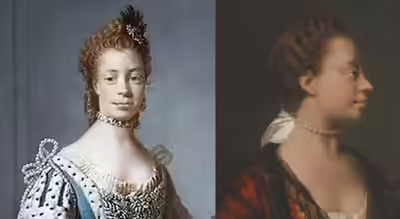
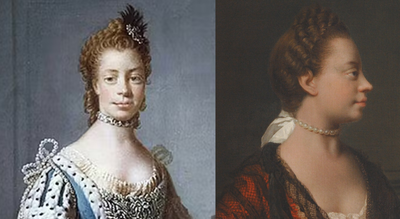
For generations, historians and genealogists have argued over an unusual question in British royal history: could Queen Charlotte, the German-born wife of King George III, have had African ancestry? The debate, once largely confined to academic circles, has resurfaced in popular culture through Netflix’s Regency drama Bridgerton, whose reimagining of the royal court places Charlotte at its centre as a Black queen. The idea did not originate with the series, however. It draws on an older historical argument that has circulated for decades, intriguing to some scholars, dismissed by others, and still unresolved.
A modern TV drama revives an old historical argument
The latest spark came during a public discussion at the SCAD TV Fest, where Bridgerton actress Adjoa Andoh, who plays Lady Danbury in Netflix’s Regency-era drama, appeared alongside Golda Rosheuvel, the actress who portrays Queen Charlotte. Speaking about the series’ depiction of a Black queen in Georgian Britain, Andoh insisted the idea was rooted in historical claims rather than simply creative casting, telling the audience that Queen Charlotte “was a woman of colour.” “Queen Charlotte wasn’t fictionalised as a woman of colour, she was a woman of colour. You just have to do your historical research,” she said.She also referred to descriptions that, she said, appeared in historical accounts of the young queen’s arrival at the English court.“They complained when she came to the English court. They complained about her ugly, thick lips and her ugly, wide nose and her mulatto skin, and they powdered her down when they painted her.”Adjoa Andoh argues that the casting matters beyond the series. Even though Bridgerton is fictional, she suggests it allows audiences to imagine history in new ways.“What you’re seeing is a version of history that is a more realistic version of history, although it’s a fiction, it’s not documentary, and it gives us an opportunity to play these characters of status, and it gives the audience… an opportunity for us to see ourselves in the historical drama in a different way.”Her comments brought renewed attention to the long-running debate about the real Charlotte of Mecklenburg-Strelitz, the German-born princess who became queen of Great Britain and Ireland after marrying King George III in the eighteenth century.
The debate was already circulating before Bridgerton
The theory itself predates the television series. Long before Bridgerton brought it into mainstream pop culture, some historians and genealogists had already speculated about Queen Charlotte’s possible African ancestry. The discussion resurfaced again in 2023, when Bridgerton creator Shonda Rhimes addressed the idea while speaking about the Netflix prequel Queen Charlotte: A Bridgerton Story. Rhimes said she found the reaction to the possibility itself revealing. She told an audience that some historians had raised questions about the queen’s ancestry after the show depicted her as Black, adding that it struck her as curious how strongly some people rejected the idea. “I found it very interesting how people are working so hard to ensure that she couldn’t possibly be brown.” Rhimes then posed a broader question to the audience: “Why does it matter? Think about that.”
Who the real Queen Charlotte was
The historical Charlotte was born in 1744 in Mecklenburg-Strelitz, a small German duchy in what is now northern Germany. Her upbringing was largely unremarkable by royal standards; the territory was considered relatively minor among Europe’s aristocratic states. Her life changed suddenly in 1760, when the young George III became king following the death of his grandfather, George II. The new monarch urgently needed a Protestant wife to produce an heir. Charlotte was selected partly because she had no strong political alliances that might complicate British diplomacy. As one account notes, advisers believed she would have “no idea of meddling in public affairs.”
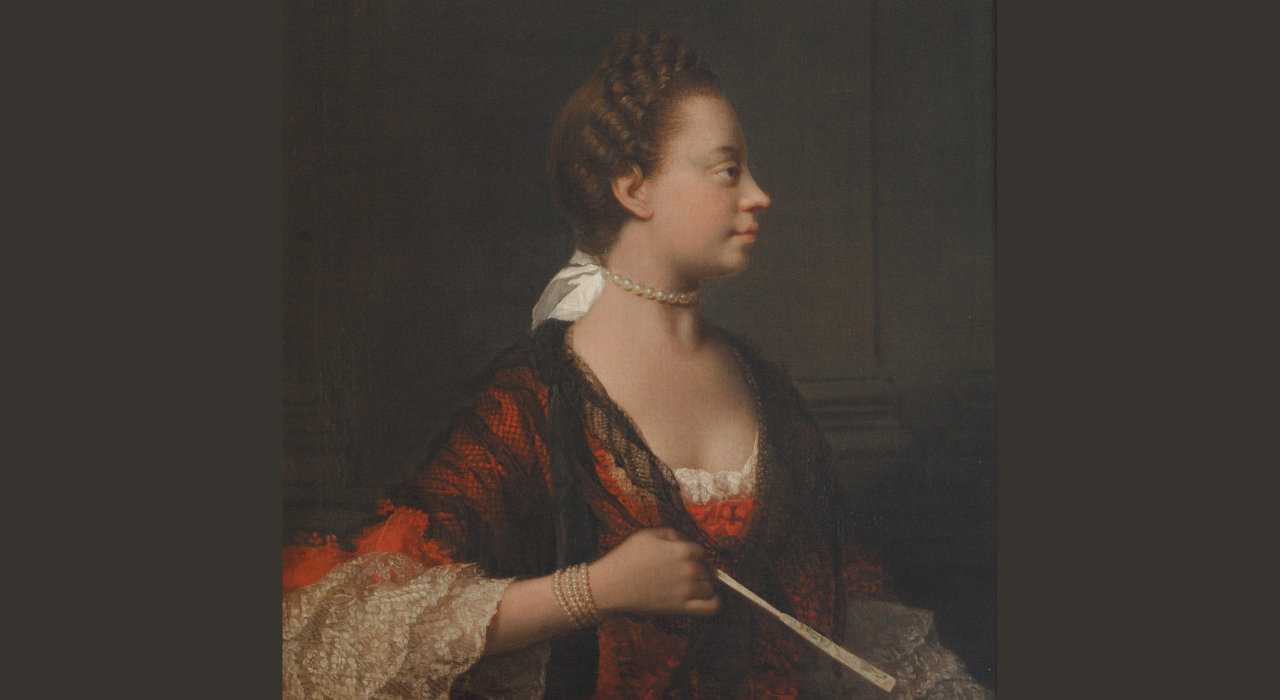
Allan Ramsay’s portrait of Queen Charlotte Sophia, painted soon after her marriage to George III in 1761/ Image credit: St John’s College, University of Oxford
The match was arranged quickly. Charlotte arrived in Britain in 1761, having never met George and speaking no English. The couple married just hours after her arrival in London, and she became Queen of Great Britain and Ireland the same day. The marriage endured for decades, and Charlotte eventually gave birth to 15 children.
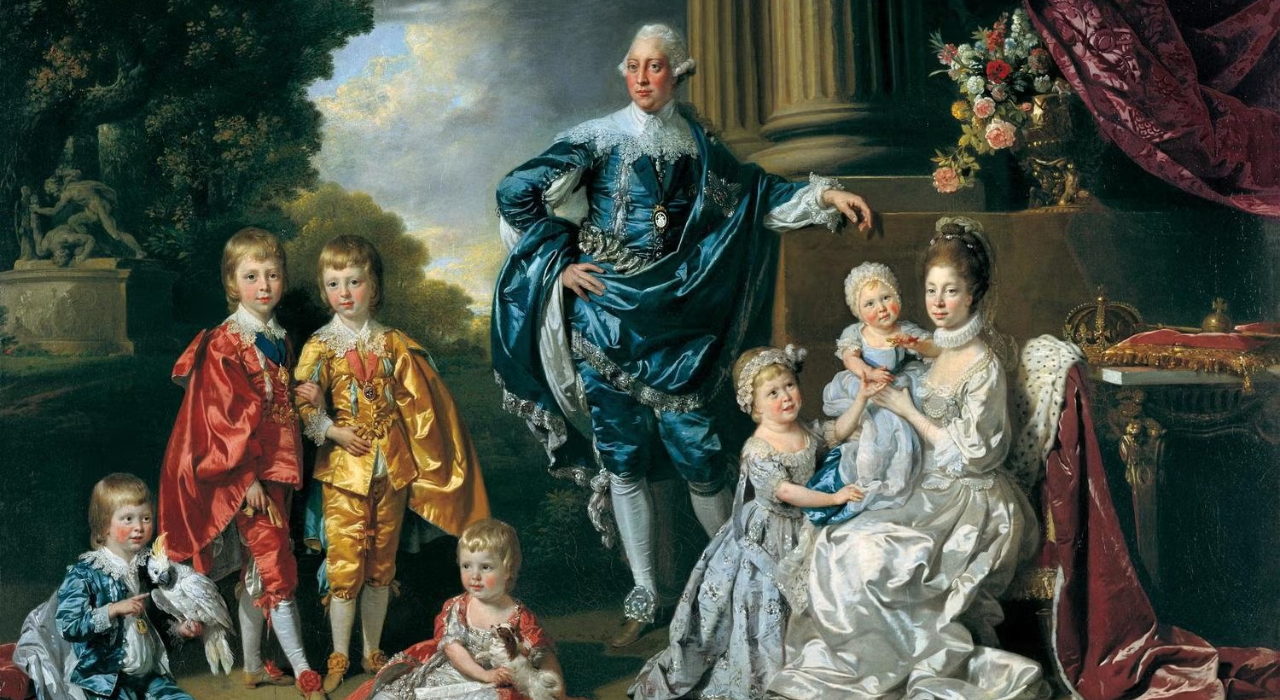
George III (1738-1820), Queen Charlotte (1744-1818) and their Six Eldest Children/ Zoffany Royal Collection Trust
Despite her royal status, contemporary descriptions of Charlotte’s appearance were often unflattering. In the opening of Charles Dickens’s novel A Tale of Two Cities, she is dismissed simply as “a queen with a plain face”. Historian John H. Plumb later described her as “plain and undesirable”. Even Baron Christian Friedrich Stockmar, a physician who later served the royal family, reportedly referred to the ageing queen as “small and crooked, with a true mulatto face.” It is remarks like these that have fuelled later speculation about her ancestry.
Where the theory of African ancestry comes from
The modern discussion largely traces back to the work of Mario de Valdes y Cocom, a historian and genealogist who specialises in the African diaspora. In a 1997 PBS Frontline documentary, Valdes argued that Queen Charlotte may have had African ancestry through a distant Portuguese lineage. According to his research, Charlotte was descended from Margarita de Castro e Sousa, a 15th-century Portuguese noblewoman whose family tree traces back to King Alfonso III of Portugal and his mistress Madragana. Madragana is sometimes described in historical sources as a Moor, a term used in medieval Europe for Muslim peoples from North Africa who ruled parts of the Iberian Peninsula for centuries. The Moors, a mix of Berber and Arab Muslim populations, had conquered large parts of modern-day Spain and Portugal in 711 CE and ruled sections of the region for nearly 800 years before the final Christian reconquests in 1492. Valdes argued that this lineage meant Charlotte inherited African ancestry through a chain of descendants stretching across centuries. He also suggested that Charlotte’s ancestry could be traced through Inês de Valladares, the wife of Martim Afonso Chichorro, an illegitimate son of Alfonso III and Madragana. Through these genealogical links, Valdes claimed the queen possessed “African Islamic ancestry.” According to his calculations, there are hundreds of lines of descent linking Charlotte back to this Portuguese noble family.
Portraits and the argument about appearance
Supporters of the theory often point to portraits of the queen painted by Sir Allan Ramsay, the Scottish artist who produced many of the official royal portraits during George III’s reign. Valdes argued that Ramsay’s paintings emphasise what he described as “conspicuously African” features. He wrote: “Artists of that period were expected to play down, soften or even obliterate undesirable features in a subject’s face. But Sir Allan Ramsay was the artist responsible for the majority of the paintings of the queen, and his representations of her were the most decidedly African of all her portraits.” Some historians have also speculated that Ramsay’s anti-slavery sympathies may have influenced the way he depicted the queen.
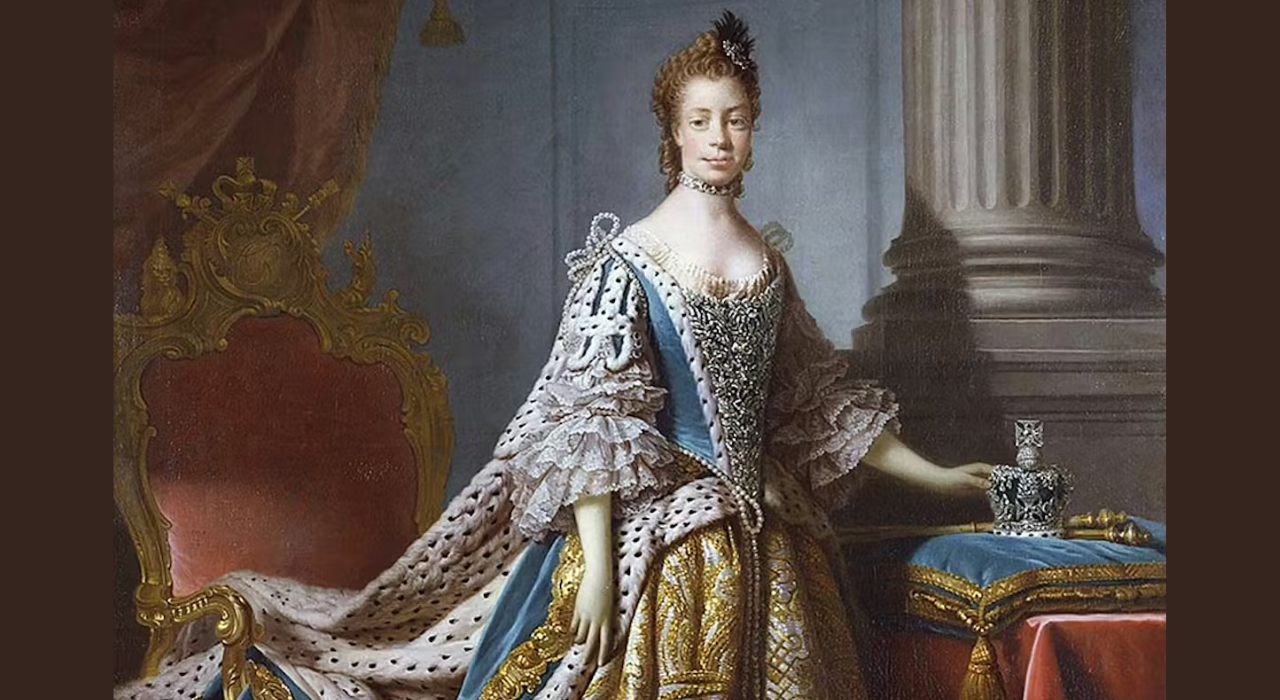
Sir Allan Ramsay’s 1762 portrait of Queen Charlotte in the Mint Museum in Charlotte, North Carolina
Ramsay was connected by marriage to Lord Mansfield, the British judge whose 1772 ruling in the Somerset case was a landmark decision against slavery in England. Mansfield’s household also included Dido Elizabeth Belle, a mixed-race relative whose life has been widely studied by historians.
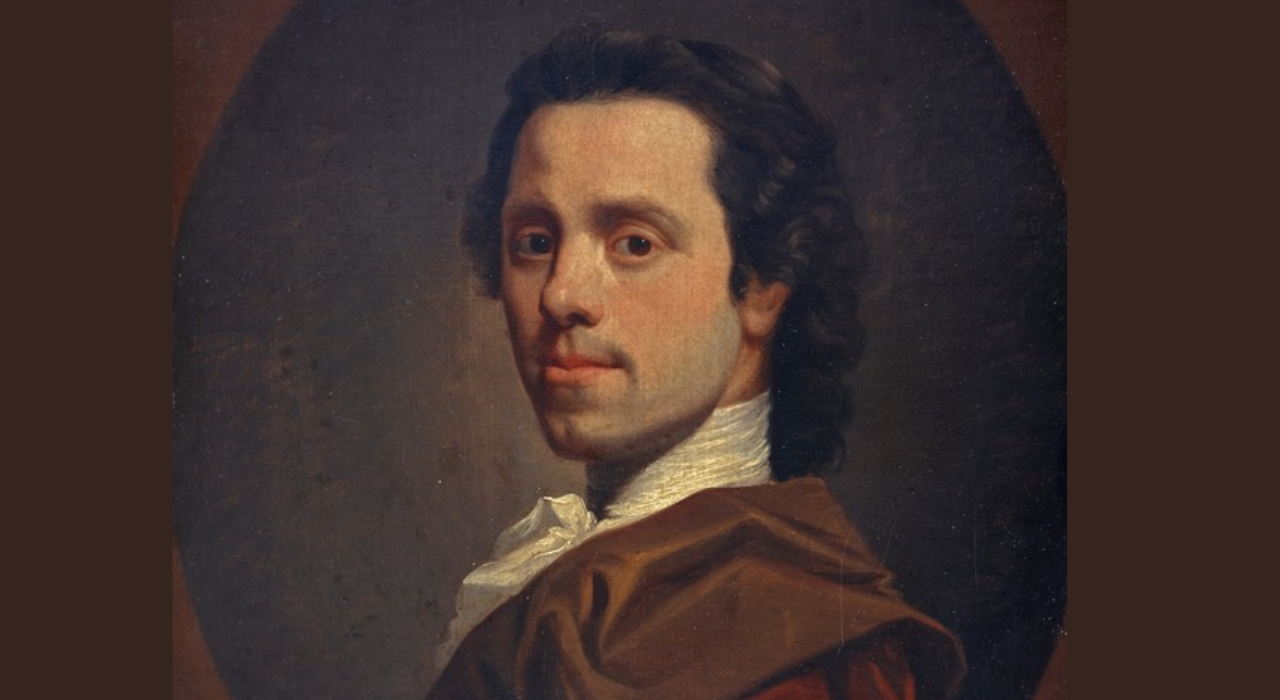
Allan Ramsay, 1713 – 1784. Artist (Self-portrait)/ National Galleries of Scotland
Because of these social connections, some researchers argue Ramsay may have been sympathetic to emphasising any African ancestry.One of the more curious references often cited in discussions of Charlotte’s appearance comes from a poem written to mark the occasion of her marriage to King George III and the coronation celebrations that followed. The verses, composed as part of the festivities surrounding the royal union, have sometimes been interpreted by modern commentators as containing allusions to southern or African imagery.Descended from the warlike Vandal race,She still preserves that title in her face.Tho’ shone their triumphs o’er Numidia’s plain,And Alusian fields their name retain;They but subdued the southern world with arms,She conquers still with her triumphant charms,O! born for rule, — to whose victorious browThe greatest monarch of the north must bow.Some modern commentators read Boswell’s references to “Numidia’s plain” and the idea of a queen of the south as allusions to Africa or to the biblical figure of the Queen of Sheba, though interpretations of the poem vary and historians caution against reading too much into poetic language written for ceremonial celebration.
Why many historians remain sceptical
Despite the intriguing genealogy, most mainstream historians remain cautious. One reason is the enormous distance between Charlotte and the ancestor identified in the theory. If the link runs through Madragana in the 13th century, it places the supposed African ancestor roughly 500 years, or about 15 generations, before Charlotte’s birth. Critics argue that even if Madragana had been of African descent, the genetic contribution after so many generations would be extremely small. Another complication lies in the meaning of the word “Moor.” In medieval Europe it could refer broadly to Muslim populations from North Africa or Iberia, many of whom were Berber or Arab, not necessarily sub-Saharan African. Art historians have also questioned whether Charlotte’s portraits actually display African features. Desmond Shawe-Taylor, a curator at the Royal Collection, has said he has examined the paintings closely without seeing such characteristics. “I look at it pretty often and it’s never occurred to me that she’s got African features of any kind.” Shawe-Taylor added that caricatures of Charlotte preserved in the British Museum do not depict her as African either, something critics of the theory say would likely have happened if such features were widely recognised at the time.
The debate that may never be settled
The question of Charlotte’s ancestry ultimately remains unresolved. Physical evidence is limited, and interpretations of portraits and genealogy vary widely among scholars. But the discussion continues to fascinate historians, partly because of the wider implications. Historian Kate Williams has noted that if Charlotte were considered to have African ancestry, even distantly, the genealogical consequences would be remarkable. “If we class Charlotte as black, then ergo Queen Victoria and our entire royal family, [down] to Prince Harry, are also black … a very interesting concept.” For now, the theory sits somewhere between genealogy, interpretation and cultural debate, a historical puzzle revived by a television series but rooted in questions historians have been exploring for years.As Julie Andrews, who voices the unseen narrator Lady Whistledown, reminds viewers at the beginning of Bridgerton: “It is fiction inspired by fact.”