






You should never store tomatoes in the fridge and reason might surprise you |
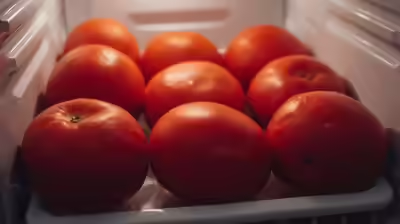
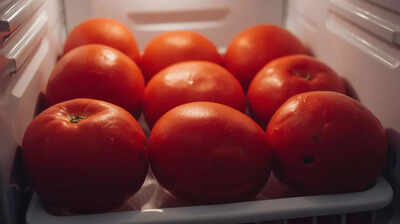
Tomatoes sit on kitchen counters across the world, handled without much thought. They are sliced, salted, forgotten, and bought again. Yet flavour complaints have become common, even when tomatoes look perfect. Something is being lost somewhere between the farm and the plate. The fridge is often blamed, though it feels harmless, even sensible. Cold keeps food fresh, after all. But tomatoes behave differently. They are living fruit, still active after harvest, still changing. What happens to them in cold air is quiet and slow, not dramatic. There is no visible spoilage, no warning smell. Only a dullness that creeps in. A sweetness that fades. A smell that never quite comes back, even when the tomato warms again on the counter.
Fridge’s cold temperatures quietly ruin tomato flavour
Tomato flavour is not just sugar or acidity. It depends on hundreds of tiny aroma compounds that rise into the nose as you eat. Research has shown that many of these compounds drop sharply when tomatoes are stored at low temperatures. The fridge slows down the chemical pathways that create smell. Some of them shut off entirely. Studies comparing room temperature storage to fridge storage found that ripe tomatoes kept at around 4 degrees Celsius lost much of their volatile profile. Even when the fruit looked fine, people could taste the difference. The cold does not ruin everything at once. It simply presses pause on the processes that make tomatoes smell like tomatoes.
Tomatoes might not recover after being chilled
This is where things become uncertain. A study published on Frontiers suggests a short fridge stay can be partially undone. Tomatoes stored cold for less than a week sometimes regained some aroma after a day at room temperature. But the recovery was incomplete. Certain compounds did not return. Others came back unevenly. The result was a flatter flavour, not entirely bad, but thinner. The longer tomatoes stayed cold, the less they recovered. Once the aroma pathways were disrupted for too long, warming did little. This is why a tomato taken from the fridge can look ripe and still taste hollow. The damage is subtle, but it lingers.
Tomato variety may make a difference
Not all tomatoes respond the same way. Heirloom varieties often contain higher levels of sugars and aroma compounds to begin with. That gives them more to lose. Modern commercial varieties are bred for size and shelf life, not flavour, so their baseline aroma is already lower. Research comparing dozens of cultivars found massive differences in volatile content. Some varieties lost more than others when chilled. Some barely improved even at room temperature. This helps explain why supermarket tomatoes disappoint so often. Cold storage meets genetics already stripped for convenience. The fridge does not help, but it is rarely the only problem.
Where should tomatoes actually be kept
For ripe tomatoes, room temperature is usually best. Around 20 degrees Celsius allows aroma compounds to remain active. A bowl on the counter works. Out of direct sunlight is enough. Unripe tomatoes can also stay out, where they continue to develop flavour as they soften. The fridge may make sense only in narrow cases, such as slowing spoilage when fruit is already overripe and about to be wasted. Even then, it is a trade-off. You gain time, but you lose taste. Tomatoes are forgiving in appearance, not in chemistry. Once the cold takes hold, the flavour rarely fully returns.