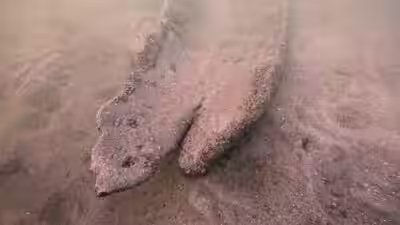






19th-century ships accidentally brought mice to islands 30 miles off San Francisco; they later reached densities of 1,270 per hectare and began reshaping the seabird ecosystem


Accidentally brought to the Farallon Islands by ships in the 19th century, non-native house mice have reached extremely high numbers, with densities of up to 1,270 mice per hectare. The rodents are disrupting the fragile ecosystem of the islands, located about 30 miles off the coast of San Francisco. Research published in Ecosphere by the Ecological Society of America, along with conservation reports from Point Blue Conservation Science and the San Francisco Bay Wildlife Society, describes how invasive house mice (Mus musculus) have changed the food web on the South Farallon Islands. The Farallon Islands National Wildlife Refuge contains the largest seabird nesting colony in the contiguous United States. More than 300,000 breeding birds from 13 species live there. However, the accidental arrival of mice during the maritime trade era created a long-term environmental problem that continues to affect native wildlife.
Huge mouse populations create indirect predation
Research published in Ecosphere shows that mouse numbers rise sharply each autumn. At their peak, there can be about 1,270 mice per hectare, or roughly 500 mice per acre. This is among the highest recorded densities of house mice on an island anywhere in the world. The population explosion is largely linked to the island’s non-native vegetation and seasonal food supplies. In late summer and autumn, when plant seeds become less available, mice turn to other food sources, including the endemic Farallon camel cricket (Farallonophilus steindachneri). The huge increase in mice then creates another ecological problem involving burrowing owls (Athene cunicularia). Migrating burrowing owls arrive on the islands during autumn and feed heavily on the abundant mice. But when mouse numbers suddenly fall during winter, the owls switch to other prey. One of their targets is the Ashy storm-petrel (Hydrobates homochroa), a globally vulnerable seabird that nests in rocky cracks and crevices across the islands.
Threat to storm-petrels and other native wildlife
Point Blue Conservation Science has studied the Farallon Islands continuously since 1968 in partnership with the U.S. Fish and Wildlife Service. Its research shows that owls can cause significant adult deaths among Ashy storm-petrels during winter. The Farallon Islands are home to about half of the world’s breeding population of Ashy storm-petrels. The species is especially vulnerable because it reproduces slowly, with females laying only one egg each year. Even a small increase in adult deaths can therefore cause serious population declines over time. The mice also affect other parts of the ecosystem. They eat large quantities of native plant seeds and compete with native species, including endemic salamanders, for food. By consuming native seeds, mice can also help invasive plants such as maritime goldfields spread. This can reduce native vegetation that provides important soil protection and nesting habitat.
Plans to remove the invasive mice
To address the problem, the U.S. Fish and Wildlife Service, with support from Point Blue Conservation Science and other conservation groups, developed the South Farallon Islands Invasive House Mouse Eradication Project. The plan involves spreading rodenticide bait from helicopters during late autumn. The timing is designed to coincide with the period when mouse numbers naturally begin to decline and seabird numbers on the island are at their lowest. The rodenticide planned for the project is Brodifacoum-25D Conservation. Similar rodent removal projects have been carried out on more than 700 islands around the world. In many cases, removing invasive rodents has allowed native ecosystems and seabird populations to recover. The Farallon project went through years of environmental review. In December 2021, the California Coastal Commission approved the plan, concluding that the long-term ecological benefits of removing the mice outweighed the short-term risks of the operation.
Measures to protect other wildlife
Because rodenticide can also affect animals that are not the intended target, conservation teams have developed several safety measures. Gulls, birds of prey and marine mammals could be exposed to the poison either directly or by eating contaminated animals. Resident burrowing owls are therefore planned to be captured and temporarily moved to the mainland until the bait residue has broken down. Wildlife managers also plan to keep Western Gulls away from the island during bait application. Proposed methods include pyrotechnics, sound-based deterrents and trained falcons. According to Point Blue Conservation Science, removing the mice could end the cycle in which exploding mouse populations attract owls that later prey on storm-petrels. Researchers also expect mouse removal to improve the spread of native plant seeds and help native invertebrate and reptile populations recover. Field teams continue to monitor storm-petrel nesting sites and vegetation on South Farallon Island as preparations for the final eradication phase continue.