





7 easy ways to remove excess oil from cooked food without losing flavour |
A little extra oil can transform a perfectly cooked dish into something that feels heavy, greasy, and difficult to digest. Whether it is a curry with a thick layer of oil on top, fried vegetables that have absorbed too much fat, or a rich gravy that has become excessively greasy, there is no need to throw the food away or start again. Several simple kitchen tricks can help remove visible excess oil without significantly changing the flavour of the dish.The best method depends on whether the oil is floating on the surface, mixed into a sauce, or absorbed into fried food. Some techniques work while the food is hot, while others are more effective after it has cooled. From carefully skimming oil from curries to chilling food so the fat separates, these easy methods can help rescue an overly greasy meal and make it more enjoyable to eat.
How to remove excess oil from cooked food with 7 easy kitchen tips
1. Skim the oil from the surface
If you have made a curry, soup, or gravy and can see oil floating on top, the simplest solution is to skim it off. Let the dish sit undisturbed for a few minutes so the oil rises to the surface. Use a shallow spoon to gently collect the oil from the top without removing too much of the sauce underneath. This works particularly well with dishes that contain a noticeable layer of oil.
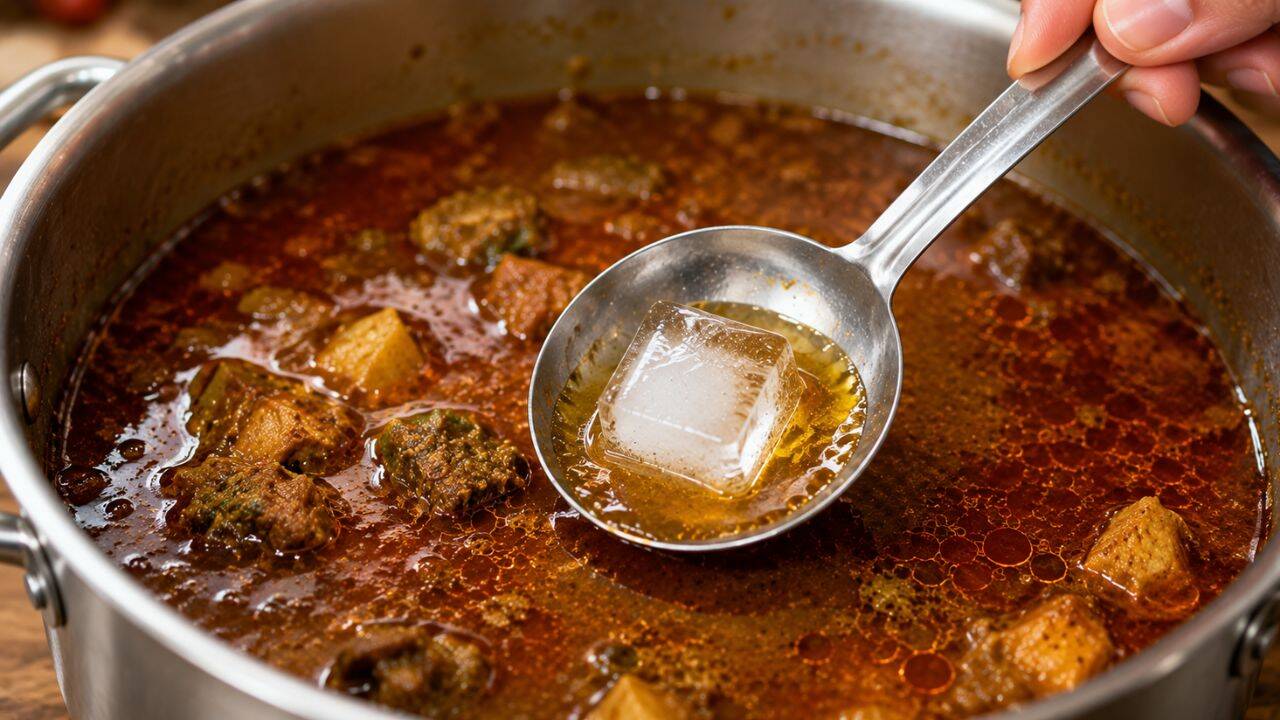
2. Use a few ice cubes
Ice can help collect some of the excess fat from a hot dish. Place a few ice cubes in a clean spoon and gently move the cold surface across the top of the food. The fat can cling to the chilled surface, allowing you to wipe it away before repeating the process. Do not leave the ice in the dish for long, as melting ice can dilute the flavour.
PC: AI Generated
3. Let the dish cool
For gravies and curries, cooling can make excess oil much easier to remove. Allow the food to cool safely, then refrigerate it. As the dish becomes cold, much of the fat will solidify or form a visible layer on the surface. You can then lift it off with a spoon before reheating the food. This method can be particularly useful when there is a large amount of excess fat.
4. Use a paper towel for oily or fried food
Fried foods often retain oil on their surface even after cooking. Place the food briefly on a plate lined with kitchen paper or a clean paper towel. Gently pat the surface to absorb some of the oil. Avoid pressing the food too hard, especially if it is delicate, as this can make it lose its crisp texture.
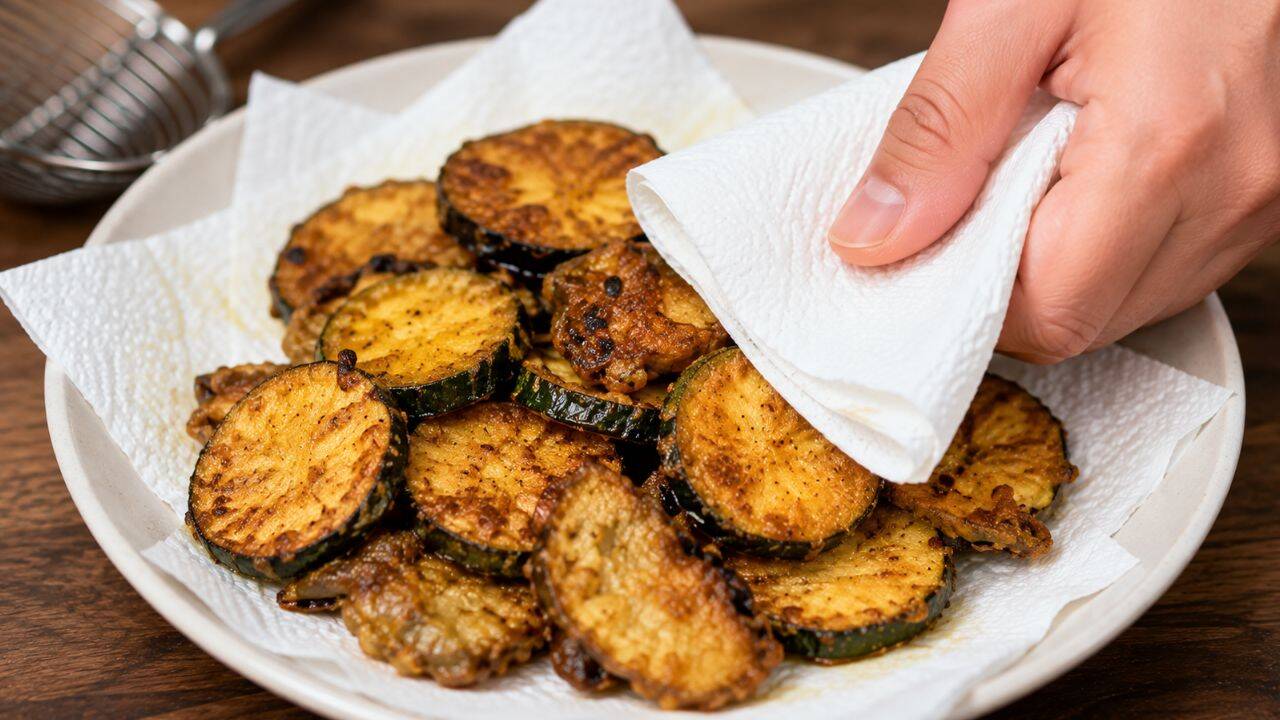
PC: AI Generated
5. Transfer the food carefully
Sometimes the easiest way to reduce oil is to separate the food from the oily liquid. For dishes such as vegetables, meat or paneer cooked in excess oil, use a spoon to transfer the solid ingredients to another dish. Leave as much of the oil behind as possible. This simple step can make a noticeable difference without altering the seasoning.
6. Use a fat separator for soups and gravies
A fat separator can be useful when you regularly prepare soups, stocks, gravies, or stews. Pour the liquid into the separator and allow it to stand briefly. The oil and fat rise to the top, while the heavier liquid remains underneath. The design of the separator then allows you to pour out the liquid while leaving much of the fat behind. It is especially useful when dealing with a larger quantity of oily liquid.
7. Add more of the main ingredients
If a dish contains too much oil but the oil cannot be easily separated, increasing the amount of the other ingredients can help balance it. For example, adding more cooked vegetables, lentils or other suitable ingredients can spread the oil across a larger quantity of food. You may need to adjust the seasoning afterwards to maintain the taste.
What to avoid when removing excess oil from cooked food
1. Do not add large amounts of water
Adding water may appear to dilute an oily curry or gravy, but it can also weaken the flavour and change the consistency.If you need to adjust the texture, add liquid gradually and correct the seasoning afterwards.
2. Do not use too much flour to absorb the oil
Adding flour directly to a finished dish can make the gravy thick, lumpy or floury. It may also change the texture more than you intended. If the dish needs thickening, use an appropriate thickening method separately rather than adding flour simply to deal with excess oil.
3. Do not reheat the dish unnecessarily
Repeated heating will not remove the oil and can affect the texture of the other ingredients. Remove as much visible excess oil as possible first, then reheat the food only until it is properly hot.
4. Do not use tissue paper directly in hot food
Kitchen paper designed for food use is preferable when draining fried food. Avoid using unsuitable tissues, printed paper, or materials that can break apart or transfer ink or other substances to the food.
5. Do not remove all the oil blindly
Oil also carries flavour and contributes to the texture of many dishes. The aim is to remove excess oil, not necessarily every trace of fat. Taste the dish again before making further adjustments.