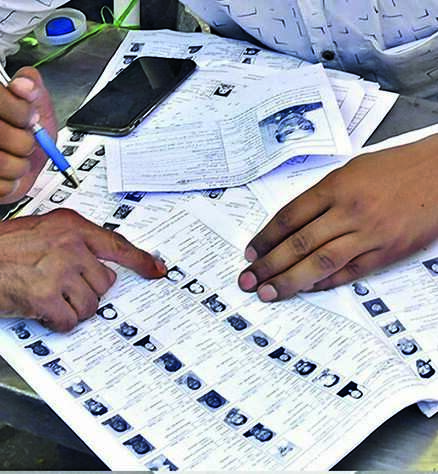
NEW DELHI: Around 93% of those whose cases have been decided so far over not being able to vote in the West Bengal polls this year because of doubts raised about their eligibility during Election Commission’s SIR drive have won their appeals and have been included in the electoral roll. However, 8,649 of 1.2 lakh lost their appeal and will be deleted.The numbers, mentioned in an annexure to an affidavit filed by EC in Supreme Court, showed that 1,13,943 could satisfy the tribunals that the commission’s decision to exclude them from the roll was incorrect, and this may intensify criticism of the poll panel.Curiously, while the affidavit – filed to counter the claim of TMC and its MP, Derek O’Brien, that the exclusions cost them 31 assembly seats – puts the number of cases decided until Sept 16 at 1,26,194, the annexure stated that 1,22,592 were decided by the 24 tribunals until Sept 10.EC sources, however, said the number of disposed of cases was too low to be seen as representative of the final outcome of all cases. They also said the results might favour inclusion because cases where citizens had documentary proof were decided first.The annexure also mentioned district-wise filing of appeals by voters and disposal of cases. The appellate tribunals were set up on SC’s direction that panels comprising former HC chief justices and judges would hear appeals against exclusions in the roll revision process. A person whose claim for inclusion was rejected could approach the tribunals, which had started hearing appeals in April.Claiming that O’Brien had misled the court, EC said, “It is pertinent to note that the applicant has conspicuously ignored the other side of the very same data relied upon by it. As disclosed in the applicant’s own application, in as many as 21 constituencies, the number of deletions under adjudication exceeds the margin of victory of the candidates belonging to the applicant’s own party.”The affidavit said that applying the very same test and reasoning propounded by the applicant, “the applicant would, therefore, equally have to seek setting aside of the election results in those constituencies won by its own party candidates”.
“The selective and inconsistent application of an inherently flawed and speculative yardstick, therefore, exposes the self-serving and mala fide nature of the present application,” it said.EC said the attempt to portray all deletions as “effective disenfranchisement” was wholly incorrect and misleading. “It is humbly submitted that even assuming, without admitting, the correctness of the figures relied upon by the applicant, once the removals pertaining to ineligible ASDD (absent, shifted, duplicate/dead, and demoted/displaced) entries are excluded, the applicant’s own data demonstrates that in several constituencies, the number of adjud-icated deletions is lower than the margin of defeat,” it said.This data, therefore, “completely demolished” the “speculative theory that the adjudication exercise altered the electoral outcome,” the affidavit said.
Contains information related to marketing campaigns of the user. These are shared with Google AdWords / Google Ads when the Google Ads and Google Analytics accounts are linked together.
90 days
__utma
ID used to identify users and sessions
2 years after last activity
__utmt
Used to monitor number of Google Analytics server requests
10 minutes
__utmb
Used to distinguish new sessions and visits. This cookie is set when the GA.js javascript library is loaded and there is no existing __utmb cookie. The cookie is updated every time data is sent to the Google Analytics server.
30 minutes after last activity
__utmc
Used only with old Urchin versions of Google Analytics and not with GA.js. Was used to distinguish between new sessions and visits at the end of a session.
End of session (browser)
__utmz
Contains information about the traffic source or campaign that directed user to the website. The cookie is set when the GA.js javascript is loaded and updated when data is sent to the Google Anaytics server
6 months after last activity
__utmv
Contains custom information set by the web developer via the _setCustomVar method in Google Analytics. This cookie is updated every time new data is sent to the Google Analytics server.
2 years after last activity
__utmx
Used to determine whether a user is included in an A / B or Multivariate test.
18 months
_ga
ID used to identify users
2 years
_gali
Used by Google Analytics to determine which links on a page are being clicked
30 seconds
_ga_
ID used to identify users
2 years
_gid
ID used to identify users for 24 hours after last activity
24 hours
_gat
Used to monitor number of Google Analytics server requests when using Google Tag Manager