





Self-Medication In India: Can India break its habit of self-medication? | India News
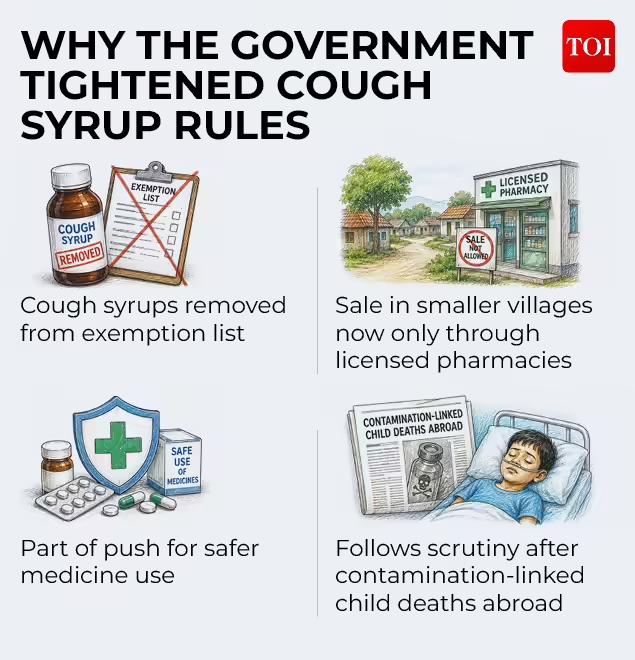
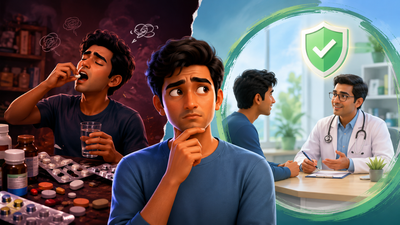
It is a familiar scene in millions of Indian households.A mild fever, a sore throat or a headache rarely prompts an immediate visit to the doctor. Instead, many people reach into a medicine drawer, ask a neighbourhood pharmacist for a familiar tablet, take a leftover antibiotic from a previous illness or rely on a friend’s recommendation.For many, self-medication has become the first line of treatment rather than the last resort.The practice is so common that it has almost become part of India’s healthcare culture.But as antimicrobial resistance (AMR) rises and drug misuse becomes an increasingly serious public health challenge, experts are asking whether India can break its dependence on self-medication without making healthcare less accessible.The question has gained fresh urgency after the Centre tightened rules governing the sale of cough syrups. Earlier this month, the government removed cough syrups from the list of medicines that could be sold by certain restricted retail licence holders in smaller villages, meaning they can now be dispensed only through licensed pharmaciesWhile the new rules primarily affect rural areas, they also signal a broader push towards safer medicine use and stricter regulation of drugs that are often self-medicated.
The issue is not straightforward. Responsible self-care using approved over-the-counter (OTC) medicines has long been encouraged worldwide for minor ailments. The problem begins when prescription medicines, especially antibiotics, steroids and powerful painkillers, are consumed without medical supervision, often in incorrect doses or for illnesses they cannot treat.
A habit that cuts across age and income
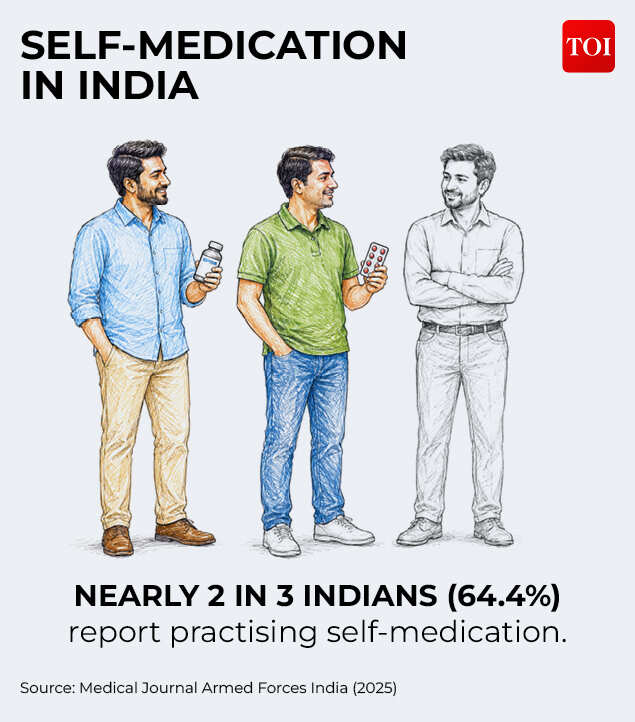
Self-medication is neither a rural nor an urban phenomenon. It cuts across income groups, education levels and age categories, making it one of India’s most widespread health behaviours.The World Health Organisation (WHO) defines self-medication as the selection and use of medicines by individuals to treat self-recognised illnesses or symptoms without consulting a healthcare professional.This can include the responsible use of approved over-the-counter (OTC) medicines, but also extends to the unsupervised use of prescription drugs, reuse of old prescriptions and consumption of leftover medicines.The latest evidence suggests the practice is even more widespread than previously estimated.A 2025 systematic review and meta-analysis published in the Medical Journal Armed Forces India, which analysed 66 studies involving 29,873 participants, found that the pooled prevalence of self-medication in India stood at 64.4%. In simple terms, nearly two out of every three Indians reported practising self-medication.
Researchers also found notable regional differences. Northern India recorded the highest prevalence at 81.9%, although self-medication remained common across all parts of the country.Among different population groups, the highest prevalence was observed among students from non-healthcare backgrounds (86.1%), followed by healthcare students (79%) and the general population (59.7%), suggesting that education alone does not necessarily discourage self-medication.The Covid-19 pandemic further normalised the practice. During the pandemic, people became accustomed to searching symptoms online, stocking medicines at home and relying on previous prescriptions. While this improved awareness of health in some cases, it also increased unsupervised medicine use.
Why do Indians self-medicate?
The reasons extend well beyond convenience.Healthcare access remains uneven across much of the country. In many districts, particularly rural areas, specialist doctors are scarce and waiting times can be long. For low-income families, consultation fees, travel costs and loss of daily wages make visiting a doctor expensive even before medicines are purchased.Community pharmacies often become the first point of contact because they are nearby, inexpensive and immediately accessible.The 2025 Medical Journal Armed Forces India review found remarkably consistent reasons across dozens of studies. Most respondents considered their illness too minor to warrant a doctor’s visit.Others cited time constraints, financial limitations and previous experience with similar symptoms.Many respondents also said they had successfully used the same medicine for similar symptoms in the past, making them feel a doctor’s consultation was unnecessary.Pharmacists, old prescriptions, and advice from friends or family emerged as the most common sources of information, while fever, headache, coughs and colds were the ailments most frequently treated through self-medication.
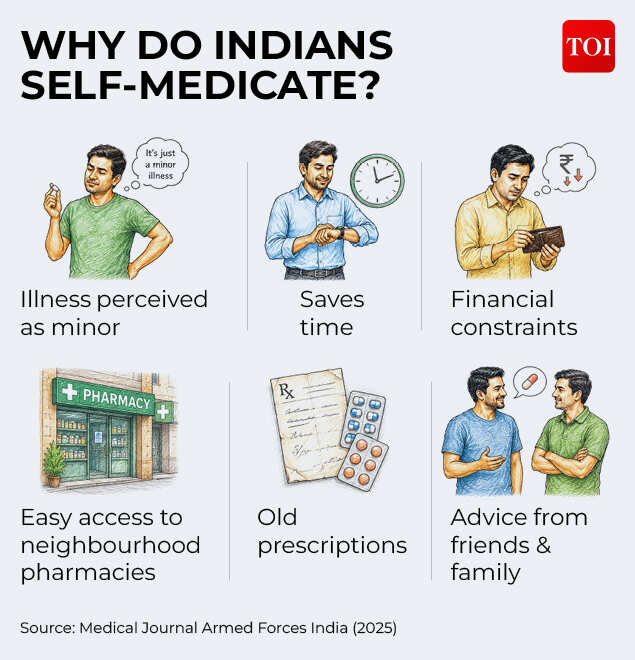
For minor illnesses, many patients believe they already know what treatment works.Unfortunately, symptoms that appear similar can have entirely different causes.A sore throat may be viral or bacterial. A fever may indicate anything from influenza to dengue. A headache could simply be stress—or something much more serious.Without proper diagnosis, medicines may relieve symptoms temporarily while delaying treatment of the underlying illness.Researchers warn that self-diagnosis can also result in incorrect drug selection, inappropriate dosages or unnecessarily prolonged treatment. Even when individuals correctly identify an illness, they may not know which medicine is most appropriate or whether it could interact with other drugs they are already taking.This often reflects a fundamental misunderstanding of how medicines work, said Dr Prachi Mehtani, a recent MBBS graduate from AIIMS Rishikesh. “One of the biggest myths is that ‘If a medicine worked once, it will work again for the same symptom,’ or that medicines are harmless simply because they are easily available without a prescription.”She said doctors frequently see patients who have already taken multiple medicines before seeking medical care. “In medicine, we treat the underlying cause of the disease—not just the symptom—and that is where self-medication often goes wrong,” she said, adding that delayed medical consultation can allow illnesses to progress while also making diagnosis more difficult.Also, different brand names containing the same active ingredient further increase the risk of accidental overdosing.
When self-care becomes self-medication
Health experts make an important distinction.Health experts draw an important distinction between responsible self-care and unsafe self-medication. While using approved OTC medicines according to labelled instructions for minor ailments can reduce pressure on hospitals and clinics, the problem arises when prescription medicines are used without prescriptions.According to the 2025 review, analgesics, antipyretics, antibiotics and cough-and-cold medicines were the four most commonly self-medicated drug categories in India.
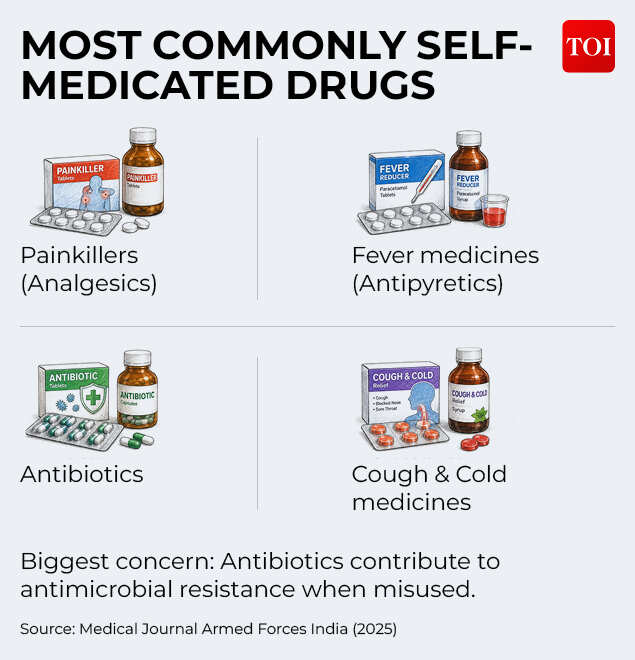
Antibiotics are the biggest concern.Unlike painkillers or antacids, antibiotics only work against bacterial infections. They have no effect on viral illnesses such as the common cold, influenza or most sore throats.Yet antibiotics are frequently taken for exactly these conditions.Even more concerning is the tendency to stop treatment once symptoms improve rather than completing the prescribed course, where medically indicated, or to reuse leftover antibiotics from previous illnesses.Another common practice is sharing medicines between family members.As Dr Mehtani puts it, “Medicine is always prescribed for the patient in front of us—not for the symptom alone.”A medicine prescribed for one person may be inappropriate or even unsafe for someone else because of differences in age, allergies, underlying illnesses or other medications being taken.These practices allow bacteria to survive, adapt and eventually become resistant.Certain groups deserve particular attention. A 2024 systematic review published in Pharmacoepidemiology and Drug Safety found that 19.3% of pregnant women in India reported practising self-medication. Researchers found that convenience, perceptions of minor illness and advice from family members or pharmacists were major drivers.
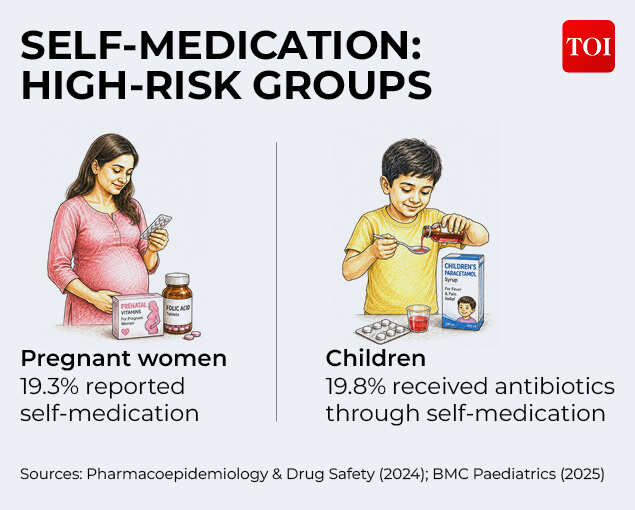
Children present another area of concern. A 2025 systematic review published in BMC Paediatrics estimated that nearly one in five Indian children (19.8%) had received antibiotics through self-medication. Local pharmacies, leftover medicines and family members were the primary sources of antibiotics, while the average duration of antibiotic use was only 2.5 days, far shorter than recommended treatment courses and a practice that could contribute to antimicrobial resistance.
India’s growing antimicrobial resistance challenge
India is already among the countries carrying one of the world’s largest burdens of antimicrobial resistance.The WHO has repeatedly identified AMR as one of the biggest global public health threats, warning that misuse and overuse of antibiotics are major drivers of resistance.The issue has also received attention at the highest political level. In his December 2025 Mann Ki Baat address, Prime Minister Narendra Modi warned against the indiscriminate use of antibiotics, saying they were “not medicines that should be taken mindlessly.”Referring to findings from the Indian Council of Medical Research (ICMR), he cautioned that growing antibiotic resistance was making common infections such as pneumonia and urinary tract infections increasingly difficult to treat, and urged people to avoid self-medication and use antibiotics only on medical advice.ICMR’s Antimicrobial Resistance Surveillance and Research Network documented rising resistance among several common disease-causing bacteria, making routine infections increasingly difficult to treat.The consequences extend far beyond individual patients.When antibiotics lose effectiveness, common infections become harder to treat and the risk of mortality increases. As a result, healthcare spending also rises because resistant infections often require more expensive medicines, additional laboratory tests and prolonged hospital care.In other words, today’s misuse reduces tomorrow’s treatment options.
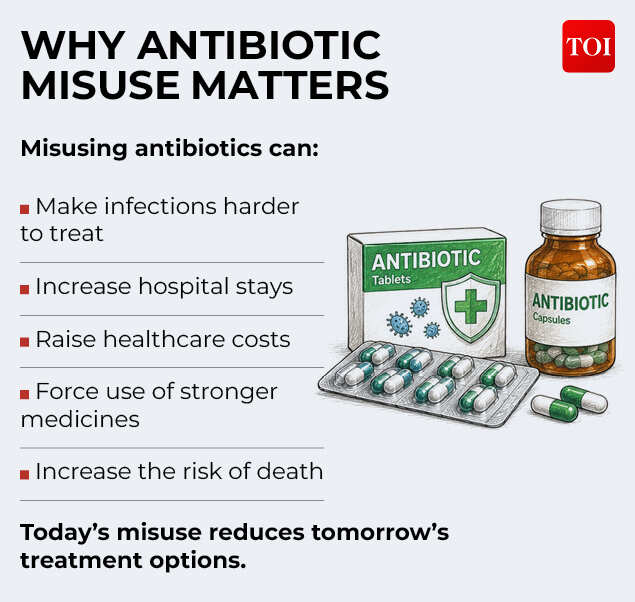
Dr Mehtani said the consequences are no longer theoretical. She recalled treating young patients who routinely took antibiotics on their own whenever they developed a fever or a sore throat, often based on internet searches or previous prescriptions.“Antibiotic resistance is one of the biggest public health challenges we face today,” she said.In one case, she said, a patient later developed a severe infection requiring intensive care, but the bacteria were resistant to almost all commonly used antibiotics, leaving doctors with very limited treatment options.“They are lifesaving medicines but only when used judiciously,” she added.
Regulation exists—but enforcement remains difficult
India already has legal restrictions on antibiotic sales.Many antibiotics fall under Schedule H1 of the Drugs and Cosmetics Rules, meaning they should only be sold against a valid prescription, with pharmacies maintaining detailed sales records.The policy was specifically introduced to curb indiscriminate antibiotic use and slow antimicrobial resistance.However, implementation remains inconsistent.The National Academy of Medical Sciences has observed that OTC antibiotic sales remain common despite existing regulations, with both commonly used and higher-end antibiotics often dispensed for viral illnesses such as coughs, colds and sore throats.Several recent local studies continue to report widespread non-prescription antibiotic purchases, suggesting that enforcement gaps persist.This reflects a broader structural challenge.Many pharmacists operate as primary healthcare providers in communities where formal medical access remains limited. They are also often caught between legal obligations and patient demand, especially in areas where they are the first and sometimes the only available healthcare professional.Hence, simply tightening regulations without improving healthcare accessibility could unintentionally reduce access to essential treatment.Dr Mehtani said the Centre’s recent decision to tighten cough syrup sales was a positive step but should be seen as part of a broader strategy rather than a standalone solution.“Stricter regulations are a welcome step, but they are only part of the solution. We also need better public awareness, responsible dispensing by pharmacies, and easier access to qualified healthcare. Unless people understand the risks of self-medication, regulations alone will have limited impact,” she said.
Digital age has changed the problem
The internet has transformed self-medication.Search engines, health influencers, short videos and AI-powered symptom checkers have made medical information more accessible than ever.Unfortunately, not all online advice is accurate.People often diagnose themselves after reading about symptoms online, while social media platforms continue to circulate unverified claims about miracle cures, antibiotics and supplements.Generative AI tools can provide useful health information but cannot replace physical examination, medical history or diagnostic testing required for many illnesses.This has contributed to a growing culture of “doctor Google”, where internet searches increasingly substitute professional consultation.Experts argue that improving health literacy—not merely restricting information—is essential.People need to understand not only what medicine treats a disease, but when medicine is unnecessary.
Self-medication isn’t always harmful
Not every instance of self-medication is unsafe.Taking paracetamol for a mild fever, oral rehydration solution for diarrhoea or antacids for occasional acidity is widely accepted when used according to instructions.Many developed healthcare systems actively encourage responsible self-care for minor illnesses to reduce unnecessary medical consultations.The authors of the Medical Journal Armed Forces India review also caution against portraying all self-medication as inherently unsafe. They note that responsible use of approved OTC medicines can reduce pressure on healthcare systems, lower treatment costs and improve access to care, particularly in regions with limited medical infrastructure.The challenge lies in encouraging informed self-care while discouraging the unsupervised use of prescription medicines.
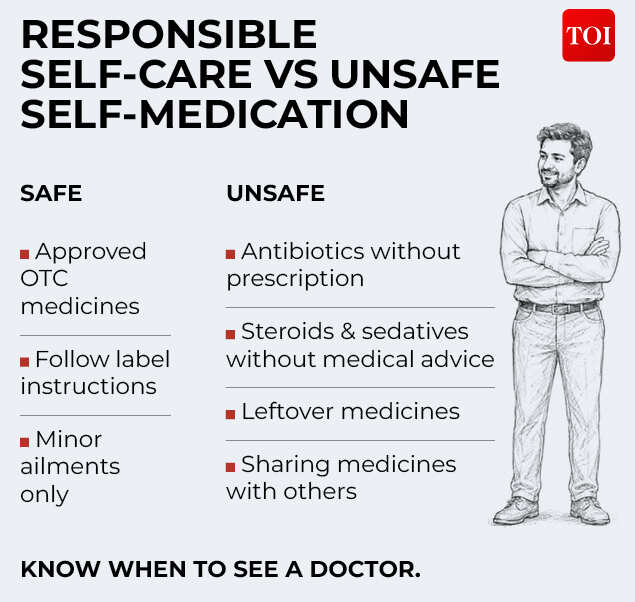
The distinction lies in the type of medicine.OTC medicines intended for self-use are very different from antibiotics, steroids, sedatives or prescription painkillers that require professional supervision.Experts, therefore, increasingly argue that the objective should not be eliminating self-medication altogether but promoting responsible self-medication.
What needs to change?
Breaking India’s habit of unsafe self-medication will require more than stricter policing of pharmacies.The underlying incentives must also change.Experts say changing behaviour will require making responsible healthcare choices easier than unsafe ones. Dr Mehtani said responsible self-care should focus on rest, hydration, proper nutrition and the appropriate use of approved OTC medicines for short-term relief of minor ailments.However, she stressed that antibiotics and other prescription medicines should never be taken without medical advice.“A simple rule to remember is: treat minor symptoms at home, but never ignore persistent or worsening symptoms—they deserve a proper medical evaluation,” she said.
- Improve primary healthcare access: If consultations remain expensive or inaccessible, people will continue bypassing doctors.
- Strengthen enforcement: Existing prescription regulations need more consistent implementation, particularly for antibiotics.
- Improve pharmacy stewardship: Pharmacists can play a greater role in educating patients rather than simply dispensing medicines.
- Increase public awareness: Campaigns should explain why antibiotics do not treat viral infections and why misuse affects society as a whole.
- Expand digital health literacy: As more Indians seek medical information online, they need reliable, evidence-based sources.
- Promote antimicrobial stewardship: Hospitals, clinics and healthcare providers should continue encouraging rational prescribing practices while avoiding unnecessary antibiotic prescriptions themselves.
Can India change?
Changing a deeply embedded healthcare behaviour will not happen overnight.Self-medication has evolved because it often appears to solve immediate problems: it saves money, reduces waiting time and provides quick relief.But the long-term costs are becoming increasingly visible.As antibiotic resistance grows and common infections become harder to treat, what appears to be a personal decision increasingly becomes a public health issue.India’s challenge, therefore, is not to discourage responsible self-care but to redefine it.The goal is a healthcare system where people can confidently manage minor ailments with safe OTC medicines, while recognising when professional medical advice is essential—and where prescription medicines remain exactly that: medicines prescribed by qualified healthcare professionals.India’s dependence on unsafe self-medication did not develop overnight, and it will not disappear overnight either.Whether it can break its dependence on unsafe self-medication will ultimately depend not only on stronger regulation but also on building a healthcare system that is affordable, accessible and trusted enough that people no longer feel compelled to diagnose and treat themselves first.Only then can self-care remain a convenience without becoming a public health risk.