



Quote of the day by Agatha Christie: “If you place your head in a lion’s mouth, then you cannot…” – a sharp lesson on risk, responsibility and thinking before you act | World News
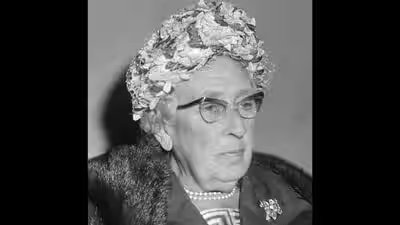
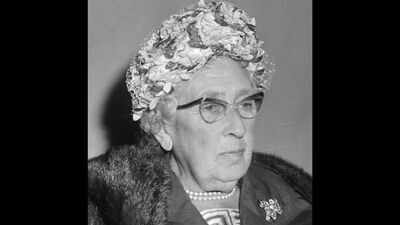
Life often involves genuine risk, but not every risk is actually worth taking. Some decisions place someone in a situation where the possible consequences were obvious from the very beginning. Agatha Christie captured that exact idea in one vivid image. “If you place your head in a lion’s mouth, then you cannot complain one day if he happens to bite it off,” she wrote. It is an extreme picture used to make a genuinely simple point about responsibility, one that has stayed with readers far longer than the specific story it was originally written for, appearing right at the very start of her long and remarkable writing career.
Quote of the day by Agatha Christie
“If you place your head in a lion’s mouth, then you cannot complain one day if he happens to bite it off”
Where this quote actually comes from
This line appears in The Mysterious Affair at Styles, published in 1920, Christie’s very first novel and the book that introduced her most famous detective, Hercule Poirot, to the world. It would go on to launch one of the most successful writing careers in publishing history, and this particular line, tucked inside her debut, has outlived the specific plot it appeared in, circulating today as a piece of standalone wisdom about consequences.
What the quote by Agatha Christie is actually saying
The “lion’s mouth” stands for a genuinely dangerous situation, and deliberately placing your head inside it represents knowingly taking on a serious risk. Christie is not really arguing that people should avoid every form of risk. Progress often genuinely requires courage and real uncertainty. The point is narrower than that, that people should actually recognise the risks they are accepting before taking the action in the first place. If a consequence was reasonably foreseeable from the start, complaining about it afterward does not change the fact that the original decision was a conscious choice.
Why understanding consequences actually matters
Every decision carries consequences, even when they are not immediately visible at the time. A choice can feel convenient or exciting in the moment, without much thought given to what might happen later. Once the consequences eventually do appear, the original decision can look very different in hindsight. Thinking ahead never guarantees everything will go exactly to plan, but it does help someone tell the difference between a genuinely calculated risk and one that was simply unnecessary.
The real difference between courage and recklessness
One useful lesson buried inside the quote is the distinction between taking a risk for a genuinely meaningful reason and taking one without really considering the consequences at all. Courage means recognising a risk clearly and deciding the potential benefit still justifies it. Recklessness means ignoring or underestimating the actual danger involved. Someone starting a business or changing careers faces real uncertainty, and that kind of risk can still be worthwhile when it has actually been thought through. Knowingly ignoring an obvious warning sign is a different matter entirely.
Why people sometimes ignore obvious warning signs
Decisions are rarely made on pure logic alone. Excitement, ambition, pressure or simple fear of missing an opportunity can all quietly influence someone’s judgement. A person can focus so heavily on the potential reward that the actual risk becomes an afterthought, and by the time the consequences finally arrive, it can be tempting to blame circumstances rather than the original choice. Christie’s image is really encouraging people to pause before that particular step is actually taken.
Taking real responsibility for a choice
Personal responsibility was never about accepting blame for absolutely everything that happens. Genuinely unexpected events occur even when someone has acted carefully, and circumstances can shift in ways nobody could have predicted. The lesson here is more specific than that. When someone knowingly chooses a genuinely risky course of action, they should also be willing to acknowledge that the eventual outcome was always part of that same choice.
How this idea applies to ordinary, everyday situations
The message clearly applies far beyond dramatic scenarios. Someone who repeatedly ignores real financial warnings may eventually run into serious money problems. A person who keeps damaging a relationship without addressing their own behaviour may eventually lose someone’s trust entirely. None of this is really about living in fear. It is about genuinely understanding what a decision actually involves before making it.
Why calculated risks are not the same thing as mistakes
Not every risk is a mistake waiting to happen. Plenty of important achievements require stepping outside a comfort zone entirely. Entrepreneurs invest in businesses that might genuinely fail. Athletes push themselves despite a real risk of injury. The real difference lies in preparation and awareness. A calculated risk involves genuinely understanding the possible outcomes and deciding the potential reward still justifies them, which is considerably different from simply ignoring an obvious danger and hoping nothing happens.
Other memorable quotes by Agatha Christie
- “The impossible could not have happened, therefore the impossible must be possible in spite of appearances.”
- “Very few of us are what we seem.”
- “Good advice is always certain to be ignored, but that’s no reason not to give it.”
- “An archaeologist is the best husband a woman can have. The older she gets, the more interested he is in her.”
Why this quote remains relevant today
The strength of Christie’s image comes from exactly how simple it actually is. Nobody needs to understand any complicated philosophy to picture someone voluntarily placing their head near a lion’s mouth. Choices and consequences are usually connected far more closely than people would like to admit, and taking a genuine risk is sometimes necessary, provided the risk itself has actually been understood first. Occasionally the bravest decision really is to take that risk. Just as often, the wiser decision is simply knowing exactly when not to put your head anywhere near the lion’s mouth in the first place.