






“A saree became our lifeline”: How 21 Tamil Nadu pilgrims escaped Nepal’s deadly flash flood
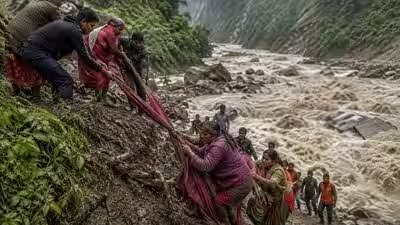
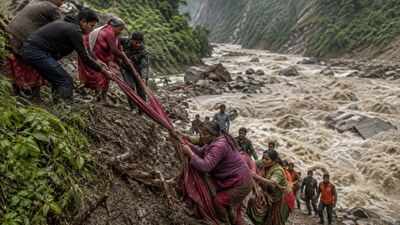
Call it faith, call it luck, call it a miracle, but a group of 21 pilgrims from South India’s Tamil Nadu survived the deadly Nepal floods with the help of a saree. They all had travelled to the Himalayas in search of god to undertake a pilgrimage to Mount Kailash and Mansarovar. But soon they found themselves running for their lives as a wall of water, mud and boulders came crashing towards them.Now this is a group largely made up of older travellers. For them, climbing a mountain or running is not a regular thing but the next few minutes became a fight for survival. There was no road, just mud to climb, no rescue team within reach and no time to think.And then there was a saree which became their god, their saviour.Saree to the rescue

నేపాల్ వరదల నుంచి తప్పించుకుని స్వదేశానికి చేరుకున్న 21 మంది యాత్రికులు
Who would have thought that the ordinary piece of clothing will become an improvised lifeline for them. The saree saved the pilgrims by pulling one another up a muddy embankment — and, ultimately, escaping a disaster that has left hundreds dead and thousands missing across the Himalayan region.The dramatic account was shared by survivors after the 21 pilgrims finally reached Chennai following their evacuation from flood-hit Nepal. Their story, reported by BBC, is among those rare survival stories in which something as simple as a piece of clothing suddenly becomes the difference between life and death.For the pilgrims, there was no time to understand what had caused it.They simply had to get out and ‘Run upwards’. Their Nepalese driver recognised the danger before it was too late and told the passengers to leave the bus and run uphill as soon as possible.The pilgrims got out through the driver’s side as mud rose around their feet. Behind them, the road was disappearing beneath the torrent. Escaping was a challenge. The survivors now had to climb a muddy rise roughly the height of a one-storey building.The slope was treacherous. The pilgrims from Tamil Nadu were a combination of men and women. While men were able to reach the tops, women were having difficulties. They would climb a few feet only to slide backwards. Mud clung to their feet, rocks made the ascent unstable.For many of the older pilgrims, it was an almost impossible task
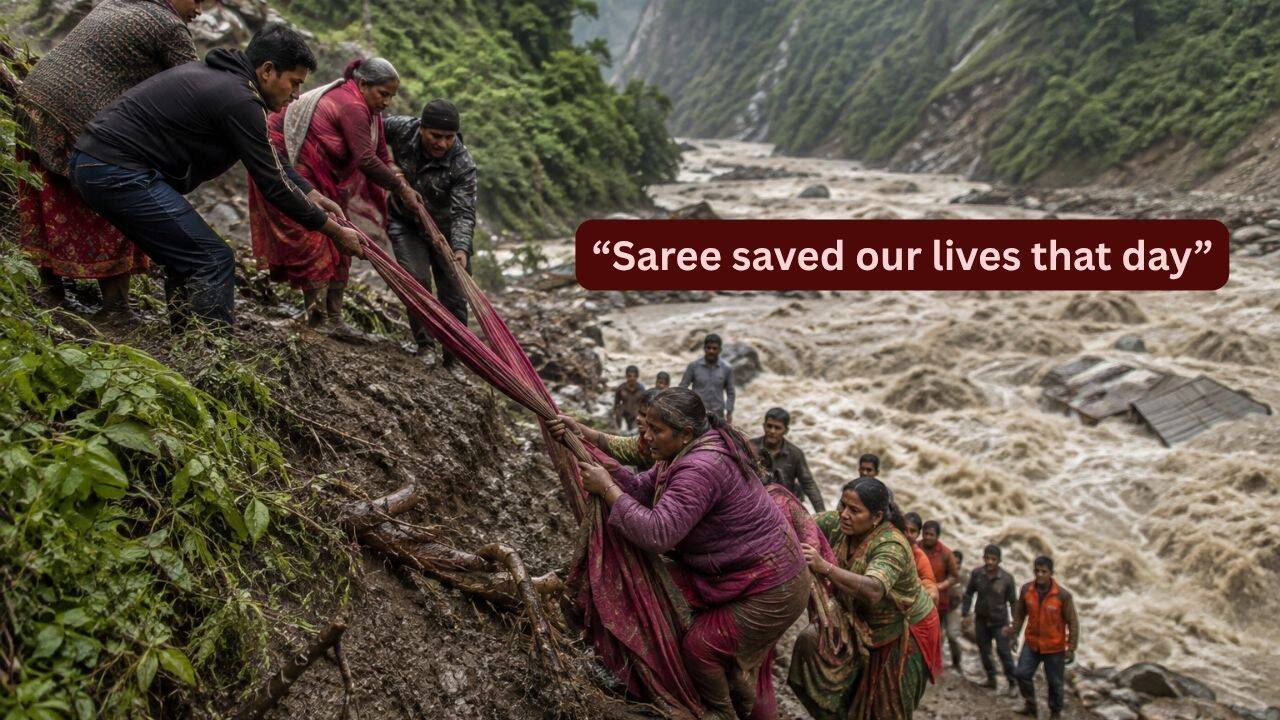
“Saree saved our lives that day” AI-Image
Then one woman who had managed to reach the top thought of something that could help.Her name was Poongodi. She removed her saree and wore a sweater. She lowered it towards the others. The long piece of fabric became a makeshift climbing rope.Those below held onto the saree as well as a cable that was available at the site, using both to haul themselves towards higher ground.As per one survivor, they all managed to climb up in an hour and half. At one point, one woman was simply unable to make the climb. The others told her to tie the saree around her waist. The group above then pulled her up.And that’s how a garment normally associated with weddings, temples and everyday life had become survival equipment.Once they reached higher ground, the 21 pilgrims made their way to an Armed Police Force camp, where they were given water and biscuits.A routine pilgrimage turns terrifying
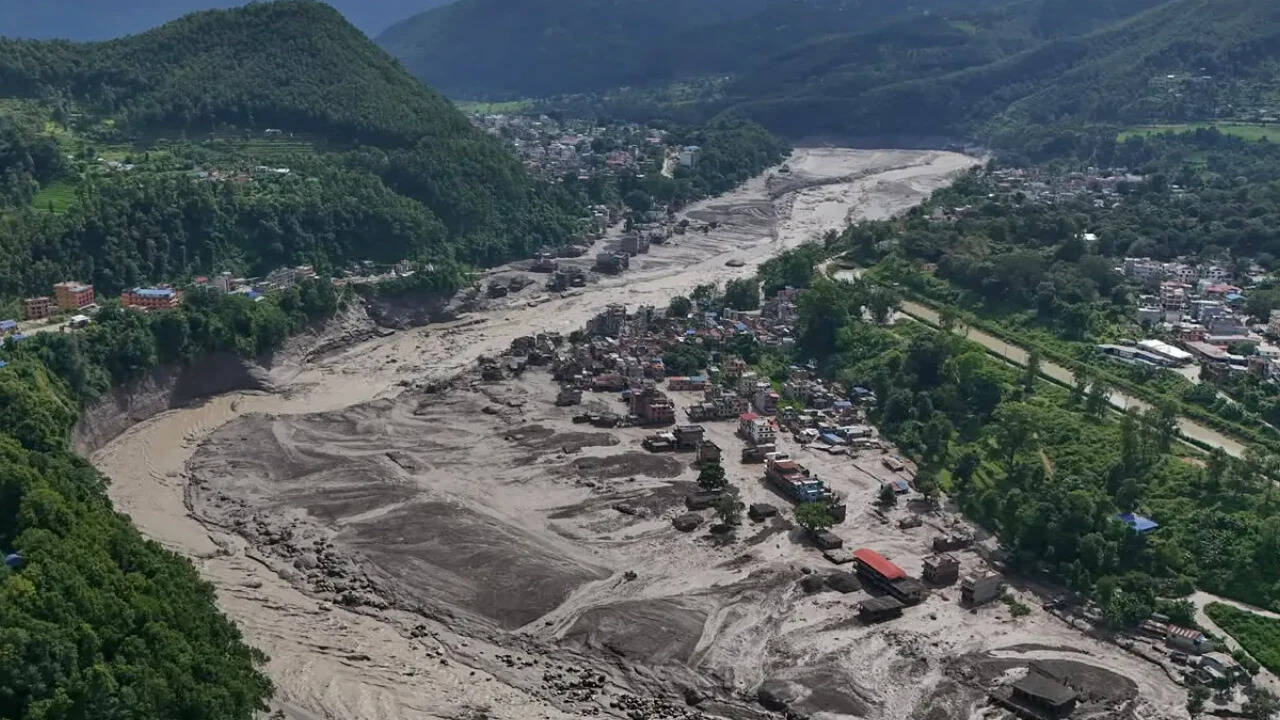
Devastating flash floods in Nepal have left many pilgrims from Tamil Nadu and Puducherry unaccounted for after their Mount Kailash pilgrimage
The pilgrims were part of a 57-member group travelling in three buses through Rasuwa district towards the Nepal-China border. Their journey was part of a Kailash Manasarovar pilgrimage arranged by a Kumbakonam-based travel agency.On August 26, the group was travelling from Syabrubesi towards the Chinese immigration point when the landscape suddenly changed.At first, some passengers thought they were seeing a cloud of dust. But then there was a terrifying sound.One survivor described hearing something resembling a bomb explosion and rocks started falling around their vehicle. Moments later, floodwater surged through the valley with frightening speed.The flash flood disaster
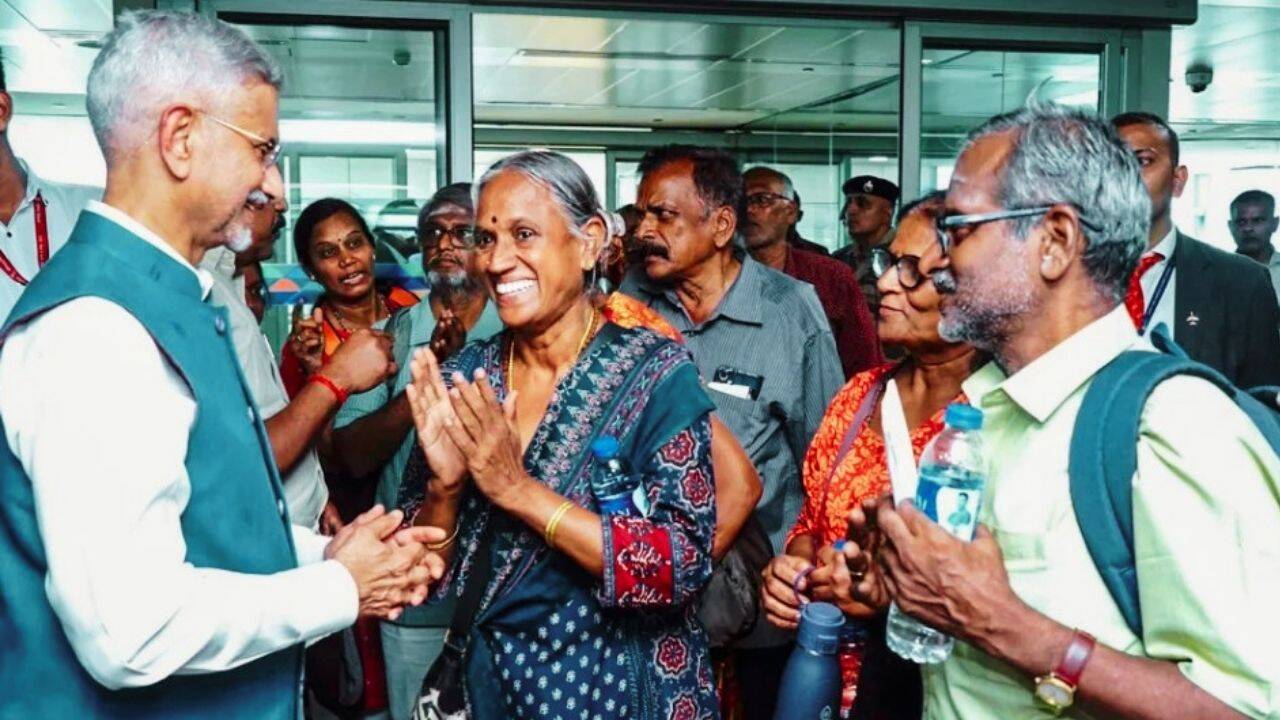
The survivors (PC: X)
On August 26, a massive flash flood struck the Rasuwa region along the Bhote Koshi and Trishuli river systems. As per the International Centre for Integrated Mountain Development (ICIMOD), water levels in parts of the Trishuli system rose dramatically within minutes.But they were still far from safety.The group had to wait and navigate a landscape transformed by the disaster. Communication was patchy, and many of the pilgrims had no idea what had happened to the others travelling with them.At one point, they saw a man trapped in mud and alerted rescuers, who later managed to save him.The following day brought another exhausting journey.The pilgrims walked for around three hours through thorny bushes and along a narrow mountain trail to reach a helicopter evacuation point. The path was so dangerous that a wrong step could have sent someone down the mountainside.A Nepalese man helped guide them back. The group had to descend and then find another route upwards — something the survivors later said was even harder than the climb itself.Eventually, helicopters arrived and they were flown to safety. The 21 survivors eventually returned to Chennai, where relatives waited for them with relief, tears and embraces.Many are still missingThe 21 were part of a 57-member group. Thirty-six people from that contingent were still unreachable when the survivors returned. Another group of 49 pilgrims from Chennai was also reported unaccounted for after being in the Gyirong Port area near the Chinese side of the border when the disaster struck.Tamil Nadu authorities said more than 400 people from the state had travelled to Nepal and that dozens remained unreachable, prompting coordinated efforts involving the state government, the Indian Embassy and other authorities.For them, the journey had ended. But for many, it’s the beginning of a new chapter.