









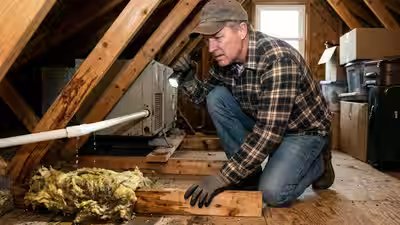
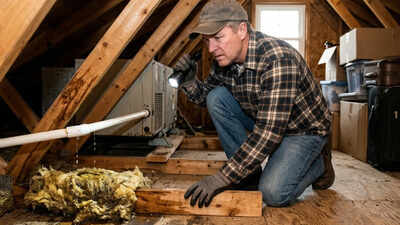
A Georgia homeowner who returned from a two-week trip to find an attic leak has lost his lawsuit against his insurer. Torry Hull demanded more than $112,000 for repairs after Safeco Insurance Company of Indiana paid him about $13,844. On November 4, the US Court of Appeals for the Eleventh Circuit upheld a lower court’s ruling in favour of the insurer.According to the judgment, Hull discovered a leak from a condenser line in his attic and filed an insurance claim. Safeco sent an adjuster to inspect the property, who assessed the damage at $17,187.02. After deductions, the company paid Hull $13,843.85.Unhappy with the payment, Hull sought an independent estimate from Leading Public Adjuster Inc. It valued the repairs at $112,401.23 on a replacement-cost basis and $104,187.45 on an actual-cost basis.Hull demanded $112,401.23 from Safeco and threatened legal action if it refused. The insurer stood by its original payment. Hull then sued, alleging breach of contract and bad faith.
Why the homeowner’s lawsuit failed
Safeco argued that Hull had not provided admissible evidence linking the additional repairs to the attic leak. It said he could not establish that the disputed expenses were covered by his policy.Hull relied on the estimate and his testimony. He also sought to introduce evidence from Carlos Martorell, a public adjuster who helped prepare the estimate. However, he disclosed Martorell as an expert only after discovery had ended.Hull blamed the delay on a “clerical placement error”. He argued that Safeco already knew about the estimate and had communicated with Martorell’s employer.Safeco objected, saying it had lost the opportunity to question Martorell during discovery. The district court excluded his affidavit, ruling that the late disclosure was neither justified nor harmless.The court also found that the estimate did not connect the additional repairs to the leak. It lacked a “causation analysis, methodology, or other basis” to help a jury determine whether the expenses were covered.Hull’s testimony was also insufficient. He lacked personal knowledge of the cause, scope and necessity of the repairs. The district court consequently ruled in Safeco’s favour on both claims.
Appeals court upholds exclusion of expert evidence
Hull challenged the decision before the Eleventh Circuit. He argued that the district court should have accepted Martorell’s affidavit and that the estimate and his deposition testimony established a genuine dispute over the damage.The appeals court examined Rule 37 of the Federal Rules of Civil Procedure. It allows courts to exclude an expert’s evidence if a party fails to disclose the witness during discovery, unless the failure was substantially justified or harmless.The court considered three factors: the importance of the testimony, the reason for the late disclosure and the prejudice caused to the opposing party.Only the first factor favoured Hull. Martorell’s testimony was important because it could have helped establish that the additional repairs resulted from the leak.However, Hull failed to explain the late disclosure beyond calling it a “clerical placement error”. The court said he was responsible for meeting his discovery obligations.The late disclosure also seriously affected Safeco. Since discovery had closed, the insurer had no opportunity to question Martorell about the estimate and the methods used to prepare it.The appeals court rejected Hull’s argument that Safeco already had the estimate and knew about Martorell’s employer. It said the insurer was not required to track down and question an undisclosed witness in case Hull later relied on that person’s evidence. The court found no error in excluding Martorell’s affidavit.
Court finds no link between repairs and leak
The Eleventh Circuit then examined whether Hull could prove his claims without the affidavit. It found that the estimate merely listed repairs and their costs without explaining how they resulted from the attic leak. As an example, the court pointed to a $3,000 charge for tree removal. The estimate did not explain how the work was connected to the leak.Hull’s deposition testimony did not help either. He admitted he was “not the estimator” and had neither prepared the estimate nor been involved in the construction work. He said he “just relied on what other people estimate”.The court said he could not establish that the additional repairs were necessary or caused by the covered leak by relying on other people’s estimates. It therefore upheld the decision on the breach-of-contract claim.The appeals court also rejected Hull’s bad-faith claim. Under Georgia law, he had to establish that the additional damage was covered by the policy, that he demanded payment before filing the lawsuit and that Safeco refused payment in bad faith. The court found insufficient evidence that the additional repairs resulted from a covered loss.It also said Safeco had a reasonable basis for rejecting the demand. Its adjuster had inspected the home and concluded that the additional repairs were unrelated to the leak. Hull offered no evidence that this assessment was unfounded or unreasonable. The Eleventh Circuit affirmed the ruling in Safeco’s favour on both claims.