






An 80-ton boulder that had hung above visitors at New Hampshire’s Polar Caves since the park opened in 1922 collapsed on the final day of the 2026 season, smashing a walkway but injuring no one
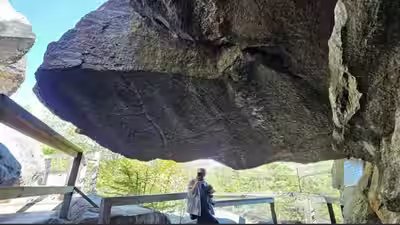
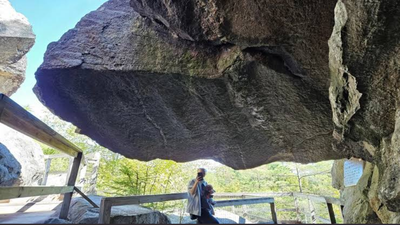
An 80-ton granite boulder known as the Mysterious Hanging Boulder collapsed at Polar Caves Park in Rumney, New Hampshire, crushing a wooden walkway on the final day of the park’s 2026 operating season. The huge rock had stuck out from a granite wall since the park first opened in 1922. It fell on 18 October, but no one was injured. The collapse happened on the day the attraction was due to close for the season, avoiding the risk to thousands of tourists who usually walk beneath the landmark during the busy months. Park managers confirmed that the falling boulder smashed part of a wooden walkway and its safety railings along the main hiking trail. The damage has blocked access to part of the path.
A century of precarious balance
The boulder was one of the main attractions at the privately owned park, which opened 104 years ago after glacial caves formed during the last ice age were discovered. For generations, visitors had used the rock as a popular background for photographs. It hung directly above a footbridge and provided shade for hikers walking beneath it as they made their way through narrow granite passages and fields of boulders. Although the rock looked as if it could fall at any moment, it had stayed firmly wedged in place since guided tours at the site began in the early 1920s.
Geological factors behind the collapse
Geologists examining the collapse have pointed to several possible natural causes. These include gravity, the gradual wearing away of the rock and repeated freezing and thawing caused by the weather in northern New England. In mountain areas with changing temperatures, water can seep into tiny cracks in rock faces. When the water freezes, it expands and puts pressure on the surrounding stone. Over many years, this process can widen the cracks and weaken large rock formations. The balance between the boulder’s weight and the granite shelf supporting it may have gradually weakened until the rock finally broke free. Park officials told The Boston Globe that visitor safety remains their main concern. Engineers and ground crews are checking the surrounding granite walls and the area covered by fallen debris. They will use the results to decide how the hiking trail can be changed safely. The collapse is similar to another major loss of a natural landmark in New Hampshire. In May 2003, the Old Man of the Mountain, a famous granite formation on Cannon Mountain in Franconia Notch, collapsed after thousands of years of exposure to the weather.
Reassessing trail infrastructure
The boulder fell as the park was preparing to close for the winter. This gave maintenance crews the chance to secure the damaged area without interrupting visits from the public. The damage was limited to the trail structures directly beneath the falling rock. The impact crushed the wooden frame of the raised walkway and broke the nearby protective railings. Park managers said inspections of the nearby cliffs would continue throughout the winter closure. The planned work includes clearing the damaged section of the trail, repairing the destroyed footbridges and checking that the surrounding rock faces are stable. Officials intend to complete the safety checks and repairs before the park reopens to visitors for the 2027 spring season.