






An Iowa company thought it was paying legitimate vendor invoices and transferred more than $800,000 to a scammer-controlled account; four years later, the US government has recovered about $375,000

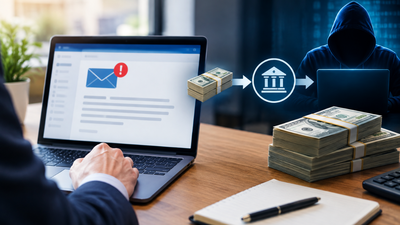
An Iowa company that believed it was paying legitimate vendor invoices instead transferred more than $800,000 to a bank account controlled by a scammer in 2022. About four years later, the US government has recovered roughly $375,000 of the fraud proceeds through a federal forfeiture case. The US Department of Justice (DOJ), in an announcement from the US Attorney’s Office for the Northern District of Iowa, said the money had been moved through other accounts after the original payments were made. The case highlights how business email compromise scams can exploit routine payment processes and how stolen funds can be difficult to trace once they are moved between accounts.
How the Iowa company was tricked
The fraud involved a business email compromise scheme, a type of scam in which criminals impersonate trusted individuals or organisations to persuade employees to transfer money or take another action. The impersonation can involve company executives, vendors or other familiar contacts. In this case, the scammer posed as vendors of the Iowa company and instructed an employee to send payments to a different bank account. The company believed the instructions were legitimate and, during the middle of 2022, sent payments totalling more than $800,000 to the scammer-controlled account. The fraud did not involve a single small transaction. Instead, the payments were connected to what appeared to be genuine vendor invoices, allowing the scammer to exploit an ordinary business process.Once the money reached the scammer’s account, it was transferred to other bank accounts. According to the DOJ, the movement of the money was intended to make the stolen funds more difficult to trace. The company reported the fraud to the FBI’s Internet Crime Complaint Center, known as IC3.
Where part of the stolen money ended up
Investigators eventually traced part of the fraud proceeds to a Wells Fargo account belonging to Manuel and Ibrahim Hazim. The United States seized $372,583.77 from the account as part of its efforts to recover the money. The DOJ said the fraud proceeds had been deposited into the account through a series of checks. The memo lines on those checks referred to transactions including a “Mack Truck,” “procurement” and “payment.”The Hazims said they were unaware that the money was connected to fraud and argued that they were the rightful owners of the funds. According to the DOJ, they said the money came from a currency-exchange arrangement in which an unknown source would deposit US dollars into their account, after which they would wire Nigerian currency to a Nigerian broker. However, the investigation found that the Hazims did not own or sell a Mack Truck and had not carried out another legitimate business transaction with the person who deposited the money.
Court orders roughly $375,000 forfeited
The dispute over the funds ultimately went before the US District Court for the Northern District of Iowa. The court determined that the money was involved in a crime and was therefore subject to forfeiture. It also found that the Hazims had not sworn to the truth of their claims as required by law and therefore could not establish that they were innocent owners of the funds.The court ordered the money to be paid to the United States. The amount recovered is slightly more than the $372,583.77 seized from the Wells Fargo account, with the DOJ describing the overall recovery as roughly $375,000. That means the government has recovered only part of the more than $800,000 that the Iowa company transferred in the original scam.
Why business email scams remain a threat
The case illustrates how convincing an email can lead to a major financial loss when payment instructions are changed without additional verification. According to the DOJ, criminals frequently use altered email headers or addresses that look deceptively similar to legitimate ones to make employees believe a message has come from a trusted source. The FBI has reported that business email compromise scams caused more than $55 billion in losses from 2013 through 2023. US Attorney Leif Olson urged businesses to carefully examine email addresses and independently verify requests, particularly when an email asks for a change in payment details. The DOJ also advised companies targeted by such scams to notify their bank, law enforcement and the FBI’s Internet Crime Complaint Center.The Iowa case shows that recovering stolen money can take years and may require investigators to follow funds through multiple accounts. Although the government recovered about $375,000 in this case, the original fraud involved more than $800,000, underscoring the financial impact that a single compromised payment process can have on a business.