





An Oregon wheat-farming couple had 13 wind turbines placed on their land; while crops continued around them, they said the operating turbines were bringing in about $100,000 a year
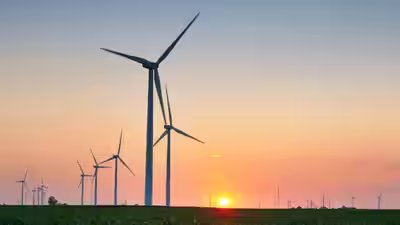
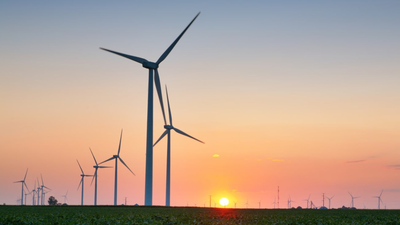
In the dry, rolling hills of Sherman County, Oregon, farming continues alongside huge green energy projects. For one local wheat-growing family, having wind turbines on their land has changed their yearly finances without stopping their traditional harvest. According to a report by The Oregonian/OregonLive, Kevin McCullough and his wife, Kathryn McCullough, grow wheat on land that contains about half of the Biglow Canyon wind farm. Thirteen of the huge industrial turbines stand directly on their property, turning above fields that are still used to grow crops. The money from the turbines has made a major difference for the family business. It provides a valuable second source of income while the family continues farming. “We were ecstatic,” Kathryn McCullough told The Oregonian/OregonLive when talking about the arrival of the turbines. “What’s not to like? When these things are turning, we’re making $100,000 a year.”
Dual income on working land
The arrangement shows how rural landowners and energy companies are increasingly working together across North America. Portland General Electric (PGE) opened the Biglow Canyon wind farm 15 years ago as part of a statewide effort to increase renewable energy production. Unlike some energy projects that require large areas to be cleared, wind turbines leave most farmland available for other uses. The concrete bases and access roads cover only a very small part of the total land. That allows farming families like the McCulloughs to keep using combines and planting wheat right up to the bases of the giant towers. Using land for both farming and wind power gives farmers some protection against the changing crop prices and weather problems that come with dryland wheat farming.
Safety concerns amidst turbine malfunction
Although payments from wind projects can provide steady income, farming next to large energy equipment also brings its own risks and challenges. Safety at the facility came under close attention after a major equipment failure at the Biglow Canyon project. In late January, a delivery driver noticed broken bolts near the base of turbine 71. Just days later, on 1 February, the turbine suffered a serious structural failure. An eight-tonne, 11-story-tall blade was thrown into a nearby wheat field. The spinning blade cut a trench about four feet deep through the crop stubble. The trench was roughly a football field from the turbine base. Heavy mounting bolts were scattered across the surrounding land. The accident immediately raised concerns for farming families working the fields beneath the turbines. After the accident, Kathryn McCullough told The Oregonian/OregonLive about the possible danger to people working nearby. “Someone could have been killed or badly injured,” she said. After the blade broke free, PGE took temporary safety steps. The company shut down all 217 turbines at the Biglow Canyon facility. Engineers carried out full inspections and tested the bolts before the turbines were slowly returned to operation.
Rural economic backbone
Despite the risks shown by equipment failures, payments from wind leases remain an important source of money for landowners in Sherman County and throughout the Columbia River Gorge. Wind projects also bring millions of dollars in local tax revenue in addition to direct lease payments to property owners. That money helps pay for emergency services, public roads, and rural school districts across eastern Oregon. For farming families dealing with uncertain harvests, combining traditional farming with yearly turbine payments provides a steady source of income. That predictable money can help families keep their agricultural land financially sustainable from one generation to the next.