



Billionaire Larry Ellison once struggled to pay his electricity bills to keep his computer running. Now, the Oracle co-founder has written a $300 million cheque to buy a Hawaiian island three times the size of San Francisco
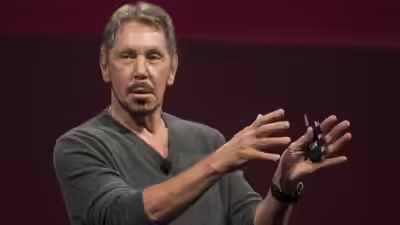
Tech billionaire Larry Ellison once struggled so much to pay the utility bills that kept his workshop running that he had to ask energy companies for extra time. Decades later, the business tycoon had no trouble writing a $300 million cheque to buy 98 per cent of a Hawaiian island that is three times the size of San Francisco.The Oracle Corporation co-founder, who is now worth an estimated $256 billion, spent the early years of his career in the 1970s working from a small garage. Money was always tight, forcing him to make a deal with power companies to pay just 10 per cent of his bill upfront so the electricity in his home would not be cut off.For Ellison, keeping the power on had nothing to do with heating, lights, or household comfort. Electricity was essential because it powered his computer, the one machine that stored all of his early software projects.“Without electricity, my computer wouldn’t work,” Ellison recalled.
A garage startup refused by investors
Ellison’s journey to becoming one of the richest people in the world began with an unstable childhood. He was raised by his aunt and uncle in modest circumstances after a difficult adoption and he later dropped out of the University of Chicago.During his early years as an entrepreneur, he spent hours waiting outside the offices of venture capital firms, hoping to secure funding. According to a historical account on Disprz, investors completely ignored his early business pitches.“I couldn’t even get them to say no because nobody even met me!” Ellison said.His fortunes changed after he took a programming job at Ampex, where he worked on a database project for the CIA. The intelligence project had the internal code name “Oracle.” Ellison later used that name to launch his own software company with several engineering colleagues.
From unpaid bills to a Hawaiian Island
By 2012, Ellison had become wealthy enough to buy 87,000 acres of Lānaʻi, purchasing almost the entire 141-square-mile Hawaiian island for $300 million. The deal effectively made the tech billionaire the main landlord of a community with no traffic lights. Ellison became the owner of the island’s only petrol station, its main grocery store, and even its local newspaper.He moved to Lānaʻi full-time in 2020, starting a private plan to turn the island into a 100 per cent green community and a luxury wellness destination.This level of control over an entire island is very different from how Ellison has handled luxury purchases on the mainland. The billionaire once fought a determined two-year legal battle against the city of San Jose just to secure a midnight landing slot for his private jet. Supported by a team of lawyers, he took the case all the way to a US federal court so he could land his $38 million Gulfstream V after the airport’s nighttime noise restrictions had begun.
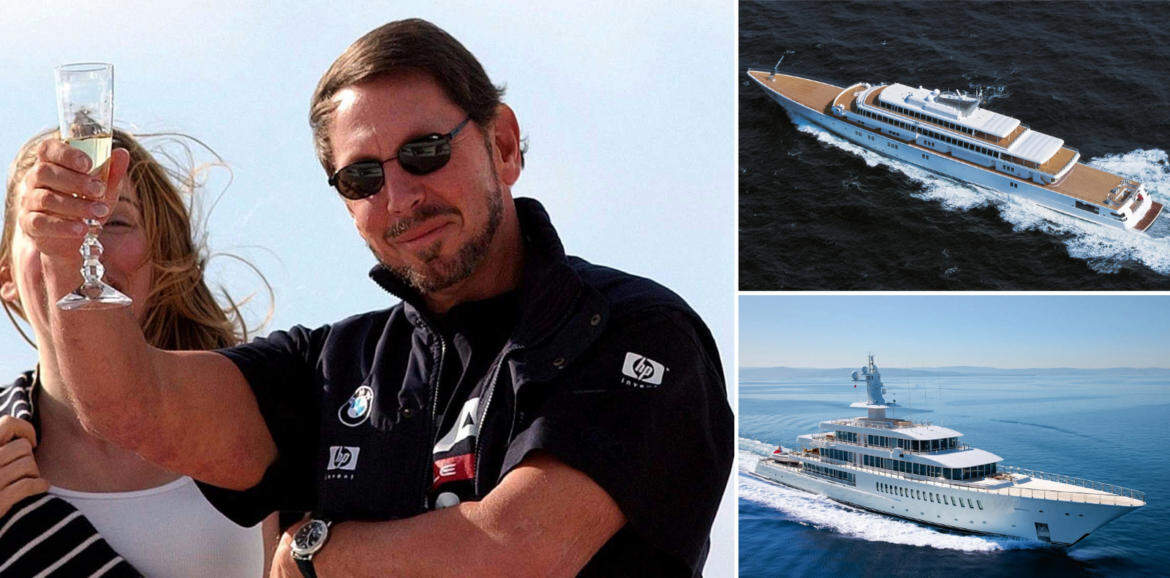
billionaire Larry Ellison commissioned $400 million Rising Sun yacht in 2007.
Millions spent on floating palaces
Ellison took a very different approach when buying superyachts, often avoiding complex business deals. When he decided to build the Rising Sun, a 454-foot luxury yacht that cost $490 million, he completed the deal without using a single lawyer.Instead, the entire multi-million-pound agreement was completed with famous British designer Jon Bannenberg over a few lattes in London and an exchange of only two emails.Bannenberg created the first designs for the 7,841 gross tonnage yacht in an office that did not use computer-aided design software. Delivered in 2004, the yacht featured a suspended walkway through the engine room so guests could watch the engines running at speeds of 30 knots. It also included a double-height cinema, a wine cellar, a basketball court, a swimming pool, and a private deck reserved only for Ellison.Although the yacht was extended during construction to make it 47 feet longer than Paul Allen’s yacht, Octopus, Ellison eventually decided it was too large. He later chose a simpler approach to luxury and sold his remaining share in the yacht to media billionaire David Geffen by 2010.Ellison reduced the size of his fleet by buying the smaller 288-foot Musashi for $130 million. He later admitted that he sometimes regretted selling an even smaller 244-foot yacht called Katana, which his close friend Steve Jobs had once described as being “just about perfect.”
Market shocks and technical backlogs
Ellison’s changing luxury lifestyle comes as his personal wealth continues to rise and fall with the stock market. According to Forbes’ Real-Time Billionaires List, his net worth recently dropped from about $296 billion to around $249.7 billion in less than a week.The $47.3 billion decline happened because global investors pulled money out of technology and artificial intelligence stocks. Since Ellison owns a 41 per cent stake in Oracle, a 4 per cent fall in the company’s share price erased $10.4 billion from his fortune in a single day, pushing him behind Elon Musk, Jeff Bezos, Sergey Brin, and Larry Page in the global billionaire rankings.
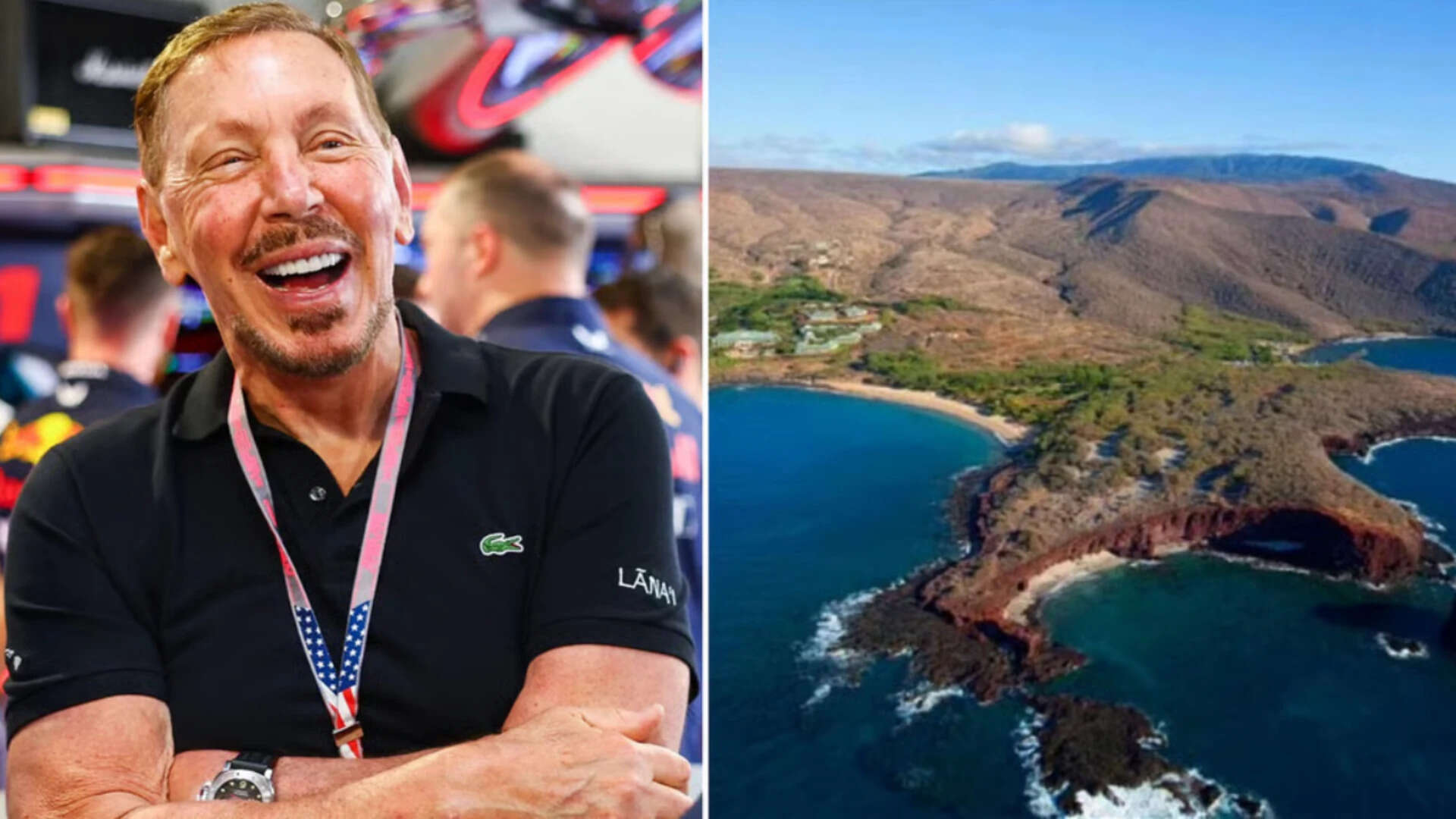
Ellison signed the Giving Pledge in 2010 and promised to give away 95% of his wealth.
Despite the sharp fall, Oracle’s core business remains extremely strong, supported by the continued growth of its cloud computing operations. Wall Street analysts expect the company to report quarterly earnings of $1.96 per share on revenue of $19.1 billion.Oracle’s total order backlog has increased from $553 billion to a projected $661 billion. That backlog is now larger than the total yearly economic output of several small countries, as well as Oracle’s own current market value.