





Delhi-Varanasi in less than 4 hours, Mumbai-Pune in 48 minutes, Chennai-Bengaluru in over 1 hour: Indian Railways bets on seven new bullet train corridors in Rs 16 lakh crore high-speed push
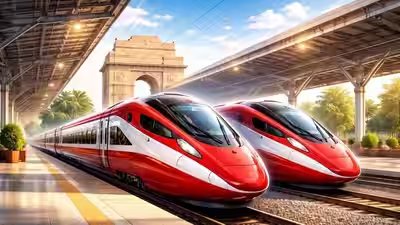
Imagine travelling from Delhi to Varanasi by train in less than 4 hours, or even covering the distance between Mumbai and Pune in less than an hour! In the coming years, Indian Railways is looking to make that a reality with seven new bullet train corridors in the works.Earlier this year, Finance Minister Nirmala Sitharaman announced seven new high-speed rail corridors in her Union Budget speech.The announcement comes as Indian Railways is already seeking to transform overnight travel with the introduction of Vande Bharat sleeper trains, designed to provide faster journeys with a more world-class, passenger-centric experience.While presenting the Budget, the Finance Minister announced, “In order to promote environmentally sustainable passenger systems, we will develop seven High-Speed Rail corridors between cities as ‘growth connectors.”Also Read | Second Vande Bharat sleeper set to launch this month between Bengaluru and Mumbai; cutting travel time from 24 hours to under 16 hours, 30 year wait for faster connectivity between two cities to endWhat will make these train corridors special is that India is taking a manufacturing leap as well by making its own bullet trains for the first time.So, which seven routes have been selected for the new high-speed rail corridors, and how much could journey times be reduced?
Seven New High-Speed Rail Corridors: Key Details
Delhi-Varanasi: The proposed corridor will connect the national capital with eastern Uttar Pradesh, reducing the journey to around 3 hours 50 minutes.It is intended to improve tourism connectivity, connect secondary cities and support the development of an economic belt extending across Delhi, Uttar Pradesh, Bihar and West Bengal.Mumbai-Pune: The flagship corridor in the western region will connect two major urban centres, bringing the journey time down to just 48 minutes.Along with upgrades to congested trunk routes and suburban rail services, the project is aimed at meeting the state’s rising passenger and freight requirements.Pune-Hyderabad: The corridor will connect Maharashtra and Telangana, with the journey expected to take about 1 hour 55 minutes.It will form part of a broader high-speed connection across western and southern India, offering passengers faster and more dependable connectivity while supporting regional economies.Hyderabad-Bengaluru: This route is part of the emerging southern high-speed rail “diamond” and is expected to cut travel time to around 2 hours.The faster connection will improve mobility between major IT, manufacturing and service centres in Karnataka and Telangana.Hyderabad-Chennai: The journey between these two southern economic centres is expected to take approximately 2 hours 55 minutes.The corridor is expected to support business activity, movement of talent and inter-state commuting across Andhra Pradesh, Telangana, Tamil Nadu, Kerala and Puducherry.Chennai-Bengaluru: The corridor is expected to bring travel time down to about 1 hour 13 minutes. It will further expand the high-speed rail network in southern India while strengthening connectivity between major cities and the regions around them.Varanasi-Siliguri: Travel between Varanasi and Siliguri via Patna is expected to take around 2 hours 55 minutes.The corridor will connect important religious, educational and medical centres across Uttar Pradesh, Bihar and West Bengal. It will also mark the first high-speed rail service in eastern India, widening opportunities for trade, services and inter-regional mobility.Also Read | Vande Bharat crosses world’s highest Chenab and first cable-stayed Anji bridges at 100 kmph in historic milestone as Katra-Banihal speed limit rises over a year after inauguration
India’s first bullet train
India is also developing its first bullet train corridor between Ahmedabad and Mumbai, with the initial section expected to become operational in the coming years. Bullet trains typically operate at speeds of around 300 kmph, while some definitions of high-speed rail cover services operating at around 220-250 kmph.Indian Railways is looking to open a section of its first bullet train corridor. While the entire Mumbai-Ahmedabad stretch will still take a few more years, a small stretch in Gujarat is likely to be thrown open by August 2027.Two high-speed trains are currently being manufactured by BEML and are expected to roll out for testing in the first half of 2027.