








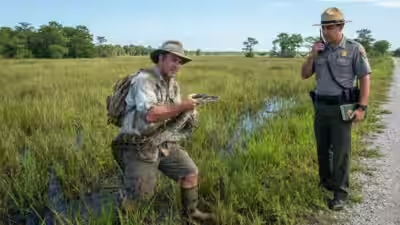
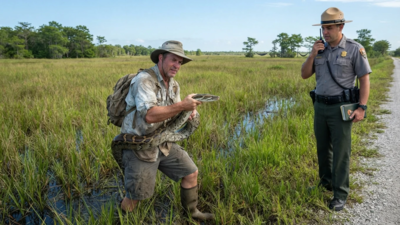
A trip through Everglades National Park took an unexpected turn for Yatir Nitzany when he came across an invasive Burmese python and decided to catch it himself. The encounter, which was recorded on camera, later brought him into conflict with federal park regulations. Although Florida authorities have encouraged efforts to remove invasive species, handling wildlife inside a national park comes with different restrictions. According to NBC6 South Florida, Nitzany received a $180 citation from a park ranger for taking hold of the snake. Months of uncertainty over the penalty eventually led him to federal court, where the case was dismissed on Friday. The decision, however, left him without a clear explanation of why the citation had been withdrawn.
The growing problem of Burmese pythons in the Everglades
Nitzany said he had not set out on a dedicated python-hunting trip when he encountered the snake. It crossed his path during his visit to Everglades National Park, prompting him to intervene. He argued that Burmese pythons pose a serious threat to the area’s wildlife and that removing one from the environment was the right thing to do.The invasive snakes have become a major concern in South Florida, where their presence has affected native animal populations. Burmese pythons are non-native predators that feed on a wide range of mammals and birds. Their ability to establish themselves in the Everglades has made controlling their numbers a continuing challenge for wildlife authorities.Speaking about his decision to grab the animal, Nitzany pointed to the damage he believed the species was causing. He said the snakes had become dominant predators in the ecosystem, affecting the natural balance between native species.
The $180 fine that sparked a legal dispute
Nitzany’s attempt to handle the python brought him into contact with federal park regulations. A ranger issued him a citation carrying a $180 penalty for handling wildlife on federal land without authorisation.The distinction between removing an invasive animal and handling wildlife inside a national park became central to the dispute. Florida has programmes that allow trained participants and members of the public to help remove invasive pythons from designated areas. Those arrangements do not automatically extend to national parks, where separate federal rules govern interactions with wildlife.Nitzany disputed the penalty, saying he did not believe his actions amounted to wrongdoing. He questioned why someone attempting to remove an invasive species should face a fine, particularly when the animal was considered harmful to the surrounding environment.
Wildlife advocate Ron Magill joined him in court
When the matter reached federal court, Nitzany was accompanied by wildlife advocate Ron Magill. The two were prepared to challenge the citation and explain the environmental problems associated with Burmese pythons in the Everglades.The hearing ended with the citation being dismissed. However, Nitzany said he and Magill were not given a detailed account of the grounds for the decision. According to Nitzany, they were simply told that the citation had been written incorrectly.The dismissal brought an end to the immediate dispute over the $180 penalty, but it did not settle the wider question of whether members of the public should be allowed to intervene when they encounter invasive species inside federal parks.
Nitzany recounts ranger warnings ahead of federal court hearing
Nitzany also described receiving text messages and voicemail recordings from park rangers during the period before the court appearance. He said the communications made him uncomfortable, particularly because they referred to the possibility of a federal bench warrant if he failed to appear.In one recorded message, a ranger warned that the matter could be taken before a judge and that a warrant might be requested if Nitzany did not attend court. He interpreted the warning as pressure to settle the citation by paying the fine.Asked whether the communication had felt threatening, Nitzany said he was concerned by the possibility of facing further legal consequences over a penalty he believed was unjustified. The issue became another part of his account of how the citation had been handled.
Wildlife advocate wants exception for removing invasive pythons
Magill said the case had drawn attention to a difference between Florida’s approach to invasive species and the restrictions operating on federal land. While state-level initiatives encourage the removal of Burmese pythons in authorised circumstances, national park regulations place limits on what visitors can do when they encounter wildlife. He said he wanted to push for a change that would allow an exception for people attempting to remove invasive animals, rather than penalising them for intervening. His proposed change would need to account for the particular rules governing national parks and ensure that any removal activity could be carried out safely and appropriately.The National Park Service and the US Attorney’s Office were contacted by NBC6 for comment. The broadcaster sought clarification about the reason for the dismissal and whether park rangers routinely contact people who receive citations. Neither office had responded at the time of its report. For Nitzany, the court’s decision meant he no longer had to contest the $180 penalty. The broader disagreement over how visitors should respond to invasive pythons on federal land, however, remained unresolved.