



From books to exam scribes: How a Vadodara student is supporting visually impaired learners
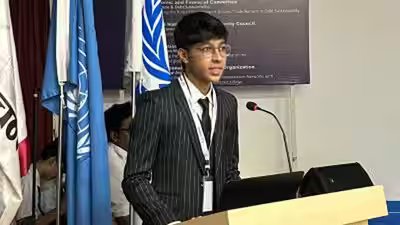
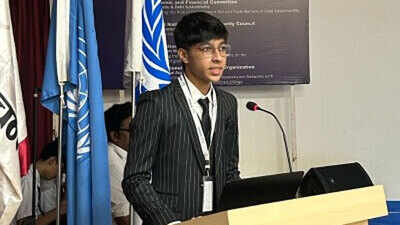
Through Project Eklavya and Project Saksham, Vadodara student Zeus Lalani is working to make learning resources more accessible and examination support easier to find for visually impaired students.For many students, preparing for an examination means revising notes, solving sample papers and hoping for a good result. For visually impaired students, however, the challenges can begin much earlier: finding accessible study materials, navigating learning resources and securing someone to write their examination answers.Zeus Lalani, a Class 12 student at Navrachana International School in Vadodara, Gujarat, believes these barriers deserve more attention. His response has been to build two initiatives that address different aspects of the same problem.Project Eklavya focuses on making education more accessible, while Project Saksham connects visually impaired students with volunteer scribes for examinations.
From learning resources to examination support
Project Eklavya provides tactile learning materials, books, small libraries and workshops for parents. The initiative has reached more than 500 people across three districts of Gujarat, helping address the resource and information gaps that students and their families may encounter.But Lalani recognised that access to learning materials does not automatically translate into access to examinations. Even a well-prepared student may struggle if a suitable scribe cannot be found when needed.This led to Project Saksham, which has built a network of more than 50 volunteer scribes and over 100 users. The initiative has also been tested with some national non-governmental organisations.Lalani has proposed training and certification for scribes, recognising that volunteering alone may not be enough. Students need dependable assistance from people who understand their responsibilities and are prepared for the examination setting.Together, the projects address a simple but important question: what does educational inclusion mean if students cannot access the resources they need to learn or demonstrate their knowledge?
Taking the conversation beyond the classroom
Lalani’s work also reflects an interest in the policies and institutions that shape educational opportunities.In July 2026, he attended Yale Young Global Scholars, where he explored politics, law and economics through seminars, debates and simulations. His learning included discussions on educational rights and constitutional law, alongside exercises in parliamentary debate and international diplomacy.The programme brought together around 650 students from more than 150 countries, exposing him to different political systems and perspectives.An earlier experience at the University of California, Berkeley, in April 2024, introduced him to entrepreneurship and technology. Invited to present his project at the Sutardja Center for Entrepreneurship & Technology, Lalani received feedback from academics and professionals on developing ideas into sustainable ventures.These experiences complement his work on inclusive education, particularly the challenge of building initiatives that can grow beyond their initial communities.His research has also examined inclusive education in Gujarat. A previous study on the challenges faced by visually impaired students received a CREST Gold Award, and he published another study on inclusive education in August 2026.
Making inclusion work in practice
India’s inclusive education ambitions depend on more than policies or accessible infrastructure. Students may also need appropriate learning resources, special educators and reliable examination support.Lalani hopes to study economics and public policy, fields that could help him understand how institutions allocate resources and how social initiatives can become sustainable.His projects are still evolving, and their long-term success will depend on partnerships, consistent coordination and wider reach.Yet their starting point is meaningful: students should not have to repeatedly search for support simply to participate in education.For Lalani, inclusion is not merely about opening classroom doors. It is about ensuring that students have the tools, people and systems they need once they walk through them.Disclaimer: This article is based on information shared by Zeus Lalani and details available on his LinkedIn profile; project figures, achievements and claims have not been independently verified by TOI.