






From one glass of milk to a 35-year legacy: How one Bihar tea seller’s kindness to babies became a family mission that lives on
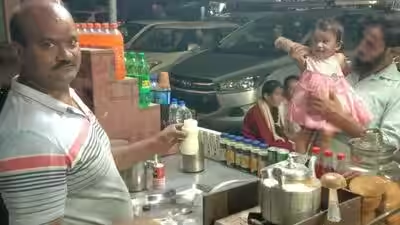
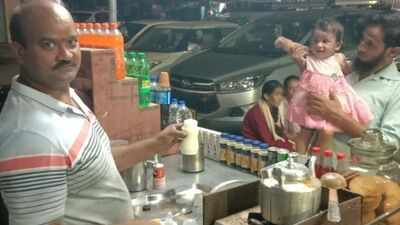
At a small tea stall near the Rajgir Bus Stand in Bihar’s Nalanda district, a simple sign carries a message that has quietly touched thousands of lives: children from birth to 18 months can get milk for free. What began as one tea seller’s response to a mother struggling to feed her baby has continued for more than three decades. The story began in 1990, when Shravan Kumar was running his tea shop in Rajgir. According to reports by Hindustan and ETV Bharat, he noticed that some families visiting the area struggled to arrange milk for their young children. Instead of simply feeling sorry for them, Shravan decided to do something himself. He began providing milk to infants without asking their families for payment.
A small tea stall with a big promise
Shravan’s decision was simple: if a baby needed milk, the family could come to his shop and get it without worrying about the cost. According to Hindustan, the tea stall eventually became known for providing free milk to children up to 18 months old. The service was not presented as a temporary campaign or a publicity exercise. It became part of the shop’s identity. A board outside the stall informed people that milk was available free of cost for babies from birth to 18 months. ETV Bharat’s report gives a more personal account of how the initiative began. It says Shravan once heard a baby crying near his shop and realised the child was hungry. He gave the mother a glass of milk for the baby. When the child stopped crying after drinking it, the experience stayed with him. He then decided to continue providing milk to young children who needed it.What makes the story especially striking is that Shravan reportedly did not want others to finance the initiative. Oneindia, which also reported on the tea stall, says people offered donations after learning about his work, but Shravan chose to continue the service himself. For him, helping a hungry child was not something that needed recognition.
After Shravan’s death, his brother kept the promise alive
Shravan died in 2000, but the service did not end with him. His younger brother, Ranjit Kumar, popularly known as Tunna Baba, took responsibility for the tea stall and continued the tradition started by his brother. Hindustan reported in November 2023 that Ranjit had been providing free milk to children for 33 years, counting the years since Shravan first started the initiative in 1990. The story is therefore not simply about one generous tea seller. It is also about a family choosing to preserve an act of kindness long after the person who started it was gone. According to Nalanda Live, Ranjit said he distributes around 3 to 4 litres of milk every day, while the requirement can rise to around 10 to 15 litres during busy periods such as the Malmas Mela, when Rajgir sees a large number of visitors. The report also said that the family finances the service through its own earnings rather than relying on outside donations.
“What will I take with me?”
Perhaps the most powerful part of Ranjit’s story is his attitude towards money. Speaking to Nalanda Live, Ranjit reportedly said that he spends part of the tea shop’s earnings on the milk and does not feel the need to accumulate everything for himself. The report quoted him expressing the belief that material wealth cannot be taken along after death, while the blessings of people can bring a different kind of satisfaction. That philosophy has turned an ordinary tea shop into an unexpected place of support for families. The stall is located near the Rajgir Bus Stand, an area frequented by local residents, travellers and tourists. People who notice the sign can approach the shop when their young children need milk. Hindustan reported that visitors have also praised Ranjit’s work and shared pictures and posts about the initiative on social media.
A legacy built one glass at a time
There are many stories of charity that begin with large donations, organisations or fundraising campaigns. Shravan Kumar’s story began with something much smaller: a glass of milk. He saw a problem in front of him and chose to respond with whatever he could offer. His contribution may have appeared modest, but repeating that small act every day turned it into a decades-long tradition. Today, the Shravan Tea Stall carries the name of the man who started the initiative, while Ranjit continues to keep his brother’s promise alive. The story is a reminder that social service does not always require wealth, influence or a large organisation.Sometimes, it begins when an ordinary person notices someone else’s need and decides not to look away. More than 30 years after Shravan first offered milk to a hungry child, his family continues to serve young children at the same tea stall in Rajgir. And perhaps that is the most meaningful part of the story: his kindness did not end with him. It became a tradition.