





Fur traders introduced Arctic foxes across Alaska’s Aleutian Islands to produce pelts; by killing seabirds, the foxes helped turn lush grasslands into tundra

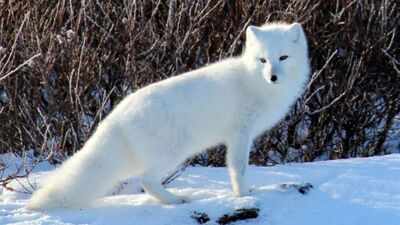
Arctic foxes introduced to more than 400 Alaskan islands for fur changed far more than the local wildlife. According to a study published in journal Science, by preying on seabirds, they disrupted the flow of nutrients from the ocean to land and helped turn some of the Aleutian Islands from grasslands into maritime tundra.The foxes were introduced after the maritime fur trade collapsed in the late 19th and early 20th centuries. They were brought to the islands as an additional source of fur. But while foxes spread across many islands, some remained fox-free because introductions failed or were never attempted.The study compared 18 islands in the Aleutian archipelago, nine with foxes and nine without them. Researchers examined seabird numbers, soil nutrients and plant communities to understand how the introduction of the predators had affected the wider ecosystem.
Seabird population disrupted
The biggest change was in seabird numbers. Breeding seabird densities were almost 100 times higher on fox-free islands than on islands with foxes. Researchers estimated that annual seabird guano input fell from a median of 361.9 grams per square metre on fox-free islands to just 5.7 grams on fox-infested islands.That loss had a major effect on soil fertility. Seabirds bring nutrients from the ocean to land through their guano. On the fox-free islands, total soil phosphorus was more than three times higher than on islands with foxes.
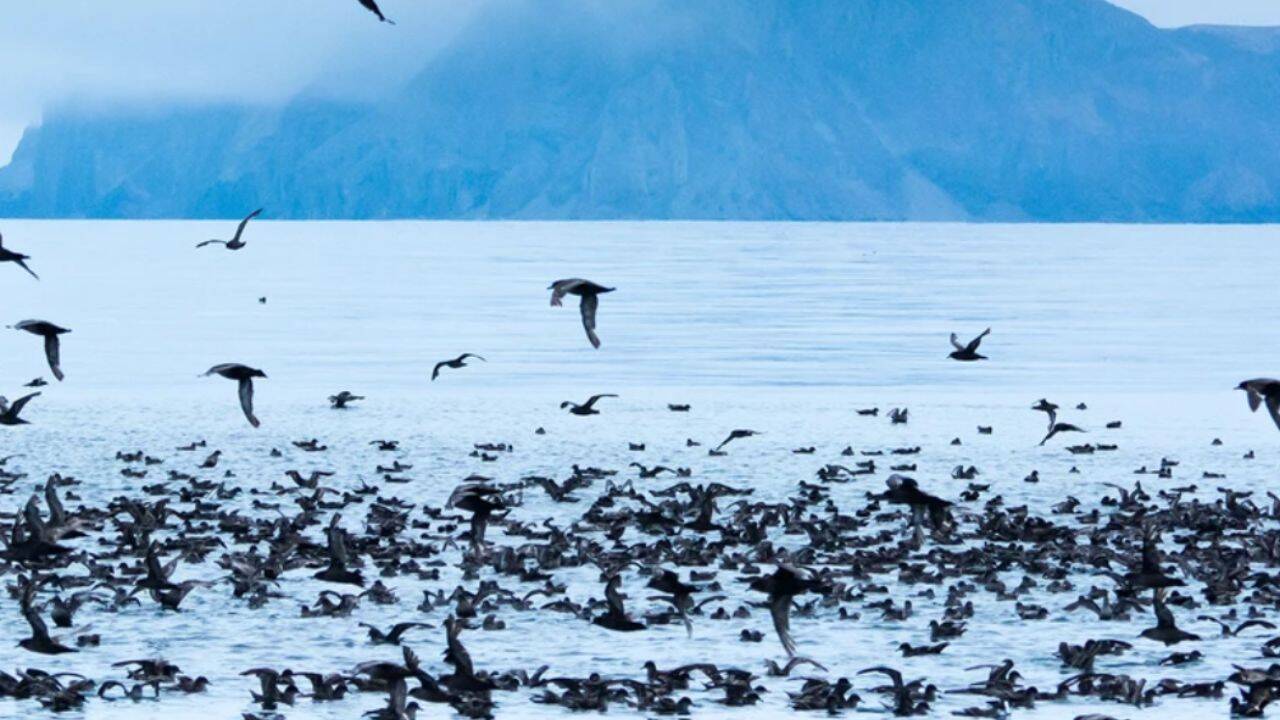
Seabirds gather around Aleutian Islands (Picture: National Audubon Society)
The difference could also be seen in the vegetation. Grass biomass was almost three times higher on fox-free islands, while shrub biomass was about 10 times lower. The nitrogen content of grasses and forbs was also higher on the fox-free islands. These islands were largely dominated by grasses and other graminoids, while fox-infested islands had a more even mix of grasses, shrubs and forbs.This showed that the foxes were affecting plants without directly feeding on them. Their impact moved through the ecosystem. By reducing seabirds, they reduced the amount of marine-derived nutrients reaching the soil. The poorer soil then favoured plants that needed fewer nutrients.
Testing nutrient link
Scientists also carried out a fertilisation experiment on a large fox-infested island. They wanted to see whether adding nutrients could produce the kind of plant community found on fox-free islands.Over three years, fertilised plots recorded a 24-fold increase in grass biomass compared with control plots. Grass quickly became dominant in the fertilised areas. Its share of total plant biomass rose from about 22% to 96%. In the control plots, grass levels barely changed.The experiment provided strong evidence that nutrient availability was driving the difference between the island ecosystems. The researchers concluded that the nutrients supplied by seabird guano were enough to explain the contrasting plant communities.Measurements of nitrogen isotopes provided further evidence. Soils, plants and several terrestrial animals on fox-free islands showed stronger signs of receiving nitrogen from marine sources. This indicated that the seabird colonies were helping move nutrients from the ocean into the island ecosystem.The researchers concluded that the introduction of Arctic foxes transformed parts of the Aleutian archipelago from grasslands to maritime tundra. The foxes reduced seabird populations, which meant less nutrient-rich guano reached the islands. This reduced soil fertility and eventually changed the plant communities, with grasses giving way to more shrubs and forbs.The impact of the foxes has also led to restoration efforts in the Aleutian Island. According to the US Fish and Wildlife Service, Arctic foxes have been removed from most islands within the Alaska Maritime National Wildlife Refuge.