


He quit school at 12 to bag peanuts; 22 years later, he runs a Texas farm with organic crops and a 16-acre vineyard | World News
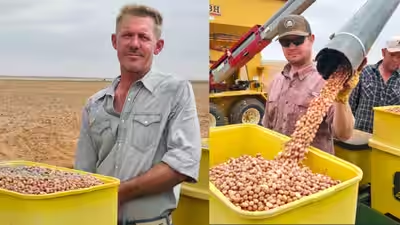
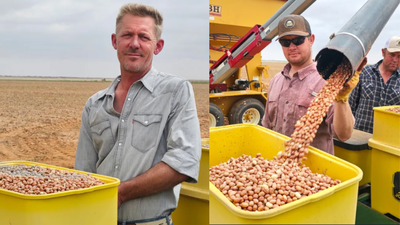
Henry Froese was told he couldn’t farm without family ties, couldn’t grow organic crops in Gaines County’s sandy soils, and certainly couldn’t grow grapes there. His answer was always “Why not?” According to Farm Progress, Froese quit school at 12 to bag peanuts for a local farmer, later leased his own land, and over the past 22 years built an operation that now spans organic and conventional peanuts, cotton, livestock and a 16-acre vineyard, earning him the 2026 Peanut Efficiency Award for the Southwest.
From bagging peanuts as a boy to running his own operation
Henry’s history in farming began at age 12, when he quit school to load “50-pound bags of peanuts” for a local farmer, simply because all he wanted to do was work. “Not much has changed,” he told Farm Progress. “I’m still doing the same thing today,” except now he loads his own planter on his own land. In 2004, farm boss Brett Woods leased him land and equipment, land Henry owns today. By 2012, he produced his first organic peanut crop, yielding nearly 5,000 pounds per acre, setting the course for everything that followed.
Building Y Knot Farms and a 16-acre vineyard from marginal ground
Today, Henry and his wife, Marie, run “Y Knot Farms” and “Y Knot Vineyard” near Seagraves, Texas. In 2022, the couple planted a vineyard on 5 acres of marginal cropland; it has since grown to 16 acres across five grape varieties. Alongside organic Spanish and conventional Virginia peanuts, Henry grows cotton, sorghum, sunflowers, wheat and rye, and the family raises Red Angus cattle, Dorper sheep, horses and Kunekune pigs. Marie leads the vineyard and handles the operation’s extensive organic paperwork, while also raising their four children and running the family’s event venue.
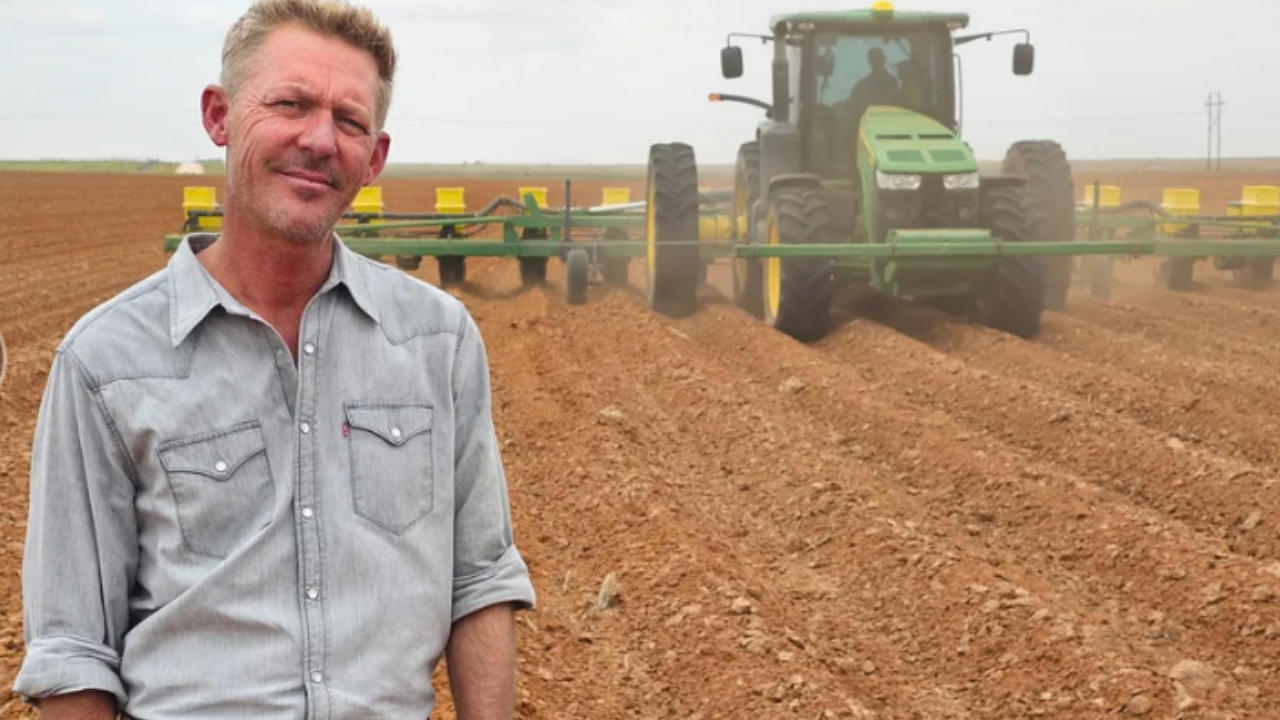
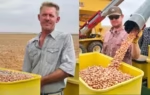
Henry Froese, Y Knot Farms, Gaines County, Texas, is the Southwest’s 2026 Peanut Efficiency Award winner. (Image: Shelley E. Huguley)
Farming with sustainability, water conservation and soil health in mind
Henry makes every production decision with the future in mind, calling long-term sustainability the focus of everything he does. Much of his land relies on centre-pivot and drip irrigation drawn from the region’s depleting Ogallala Aquifer, a resource he’s outspoken about protecting. He’s meticulous about repairing sprinkler leaks and weighs every choice against water availability. Cover crops and grazing livestock anchor his soil health strategy; he’s seen firsthand how ground with cover crops absorbs heavy rains faster after termination. He also uses limited inputs, leaning on crop rotation, compost and inoculants rather than heavy synthetic fertiliser on much of his acreage.
Relationships, community roles and a legacy built on experimentation
Henry credits long-term relationships with buying points for helping him secure peanut contracts even in a year of record US peanut acreage and lower demand. Farm Progress records that, beyond the farm, he serves on the Loop Independent School Board and the West Texas Peanut Growers Association, and remains a lifelong learner despite formally leaving school at 12; he’s a Peanut Leadership Academy graduate. Marie describes him as someone who’s “never afraid to try something new,” driven not just by his own success but by improving life for his broader community.