






Hoboken: In 2023, Hoboken opened a 5.4-acre park on a former industrial site; its playgrounds and lawns can hold up to 2 million gallons of stormwater
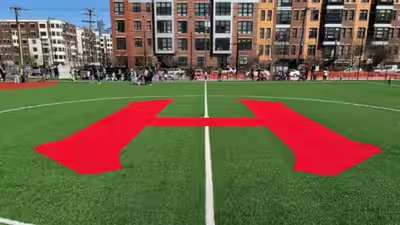
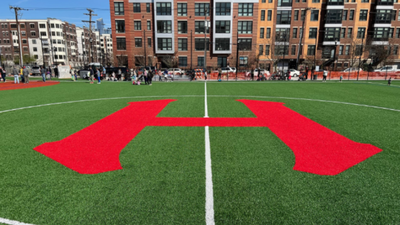
In 2023, Hoboken opened a 5.4-acre park on a former industrial site. Its playgrounds and lawns can hold up to 2 million gallons of stormwater. Located at 12th and Madison Streets, ResilienCity Park is New Jersey’s largest resiliency park. It has turned a once-blighted site into a public space that serves two purposes: providing recreation and helping protect the city from flash flooding caused by extreme weather, according to the City of Hoboken.The park’s flood-control system combines features above ground with underground storage to protect low-lying areas in western Hoboken. In these areas, rain of more than 0.8 inches per hour can usually cause streets and basements to flood. Funding for the project came from federal, state, and county sources, allowing the park to be completed without increasing the municipal tax levy.The site officially opened after a ribbon-cutting ceremony attended by local, state, and federal officials, including Mayor Ravi S. Bhalla, Governor Phil Murphy, and US Senator Bob Menendez.“I am incredibly thrilled to celebrate the grand opening of ResilienCity Park, a testament to our City’s unwavering commitment to both our residents and the environment,” said Mayor Bhalla. “This park opening is a significant milestone in our ongoing efforts to create a sustainable and resilient community, serving as the largest resiliency park in our great state and a model for the rest of the county.”
How the flood defence works
During heavy rain, the park absorbs extra water through green infrastructure and sends it into a 1-million-gallon underground detention tank. Another 1 million gallons can be stored above ground through rain gardens, a basketball court designed to act as a detention basin, and a special cistern that stores water for irrigation at the park.After a storm, a 30-million-gallon-per-day flood pump, built in partnership with the North Hudson Sewerage Authority, moves the stored water from the underground tank directly into the Hudson River.Dr. Richard J. Wolff, Executive Director of The North Hudson Sewerage Authority, explained the benefits for local sanitation systems:“We are very pleased be a partner in this grand endeavor which brings parkland to the community and diverts millions of gallons of CSO to our Hoboken Treatment Plant, thus reducing the amount of untreated wastewater going into the river. The park, the storage tank below it, and the attendant pump station contribute to a cleaner waterway and bring us one, very big step closer to a truly recreational Hudson River.”Along with flood protection, the park includes a multi-purpose athletic field, a playground, open lawn areas, a water spray site, and a terrace pavilion with a cafe and community room.
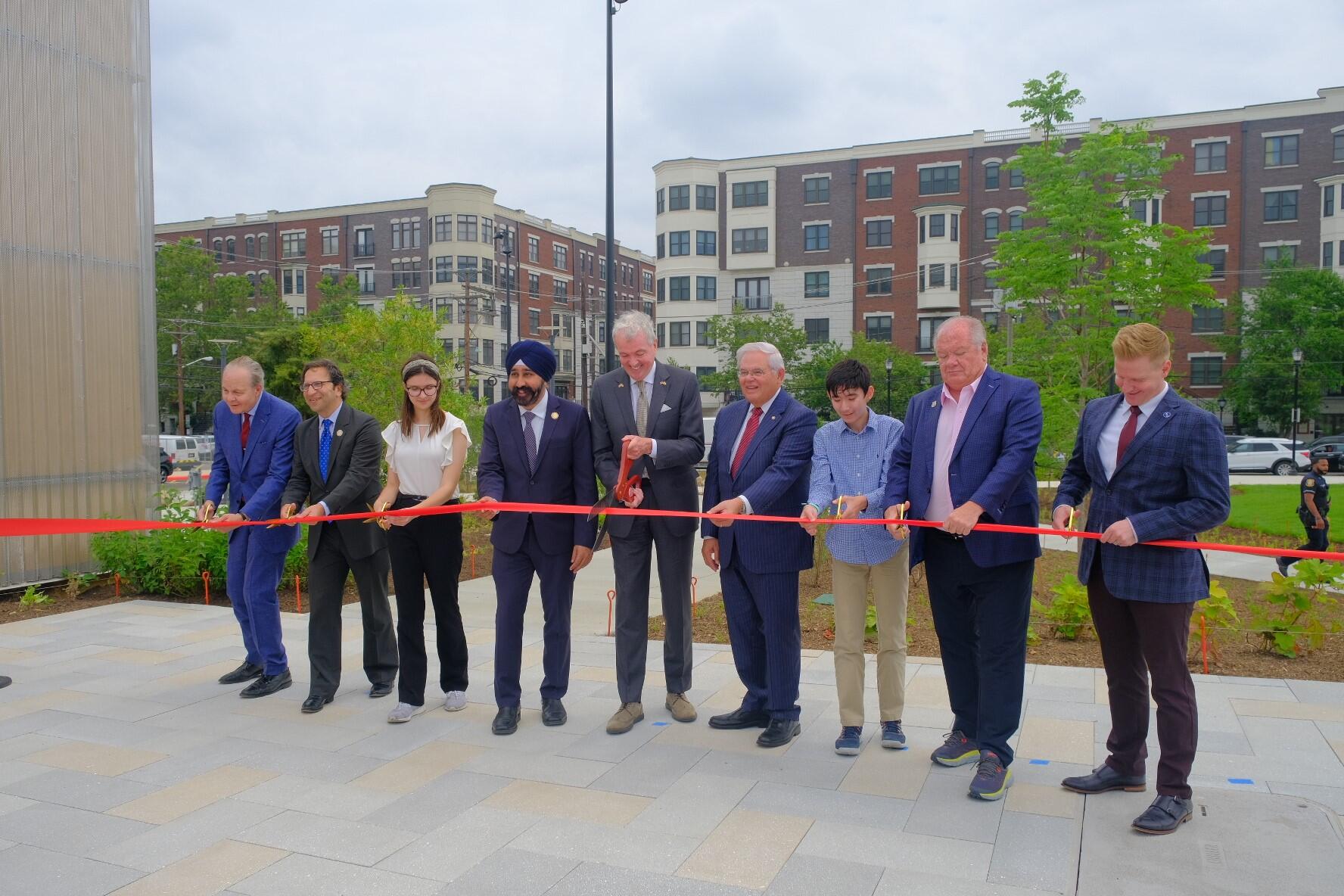
City of Hoboken opens New Jersey’s largest resiliency park
Financing and broader climate strategy
The redevelopment took several years and was paid for through a number of government programs, meaning local taxpayers did not have to cover the cost. Funding included a $10 million grant from the Federal Emergency Management Agency (FEMA) Building Resilient Infrastructure in Communities (BRIC) program, low-interest loans with $2 million in principal forgiveness from the Environmental Protection Agency Clean Water State Revolving Loan Fund through the New Jersey Infrastructure Bank, and $1 million from the Hudson County Open Space Trust Fund.The project is part of the Rebuild by Design initiative, which is funded by the state and the US Department of Housing and Urban Development. Federal officials stressed the importance of targeted investments to help communities adapt to changing climate conditions.“I extend my deepest gratitude to the Biden Administration and our congressional delegation for their continued investment in the health and resilience of New Jersey communities, and to the City of Hoboken for its ongoing efforts to expand opportunity among its residents,” said Governor Phil Murphy. “The ResilienCity Park – the largest of its kind in the state – will connect New Jerseyans to green, open space while offering our children and families a host of recreational activities.“US Senator Bob Menendez added:“Today we are cutting the ribbon on a project that is a shining example of community investment at its best – building the green infrastructure of tomorrow and an innovative stormwater management system that will reduce the risk of devastating floods, while providing Hoboken residents with a new active open space and multi-purpose athletic fields. I was proud to advocate for $10 million in FEMA funding that helped make this project a reality, in partnership with the city, state, and county, as we work to meet the climate challenges of the 21st century head on.“US Senator Cory Booker highlighted the wider impact of the project across New Jersey:“ResilienCity Park represents the type of state-of-the-art resilient infrastructure New Jersey needs to mitigate the impact of climate change, such as extreme flooding and sea level rise. I am proud to have secured federal investment for this project and will continue fighting for funding so we can better protect our communities.”Hudson County Executive DeGise said the Hudson County Open Space Trust Fund saw the park as providing two major benefits:“Not only were we able to contribute to new open space in a corner of the city that desperately needs it, but we are also able to support flood mitigation in Hoboken again with Trust dollars—something our administration has supported since Super Storm Sandy’s devastating impact on Hoboken back in 2012.”Environmental leaders also described the site as an example that other communities could follow. Shawn M. LaTourette, Commissioner of Environmental Protection, praised the transformation:“By reclaiming contaminated land to provide recreational opportunities and mitigate flooding, this remarkable park exemplifies the creative ideas communities across New Jersey, with the DEP’s help, are implementing to respond to the impacts of climate change – and it truly embodies the resilient spirit of the people of Hoboken.”Angie Fyfe, Executive Director of ICLEI USA, added:“With the unveiling of ResilienCity Park, the City of Hoboken showcases its commitment to sustainable infrastructure and innovative solutions that protect people from hazardous flooding. As a pioneer in the Cities Race to Zero and with its nation-leading Rebuild by Design initiative, Hoboken continues to lead on climate adaptation and serves as an inspiring resilience blueprint for cities everywhere.”
Expansion plans across the city
ResilienCity Park is the third resiliency installation in Hoboken since 2017. It follows the Southwest Resiliency Park and the 7th & Jackson Resiliency Park. Together, the first two parks can hold 670,000 gallons of stormwater.City officials plan to double the Southwest Resiliency Park from 1 acre to 2 acres. This would increase its stormwater capacity from 200,000 gallons to 510,000 gallons. Public planning and design are also underway for a fourth park at 800 Monroe Street. Once these projects are finished, Hoboken will have added about 10 acres of resiliency parkland to its urban area since 2016.