






‘I climbed out of the emergency exit’: Woman recalls how she survived the Pan Am Flight 73 hijacking that killed 20 and injured more than 100

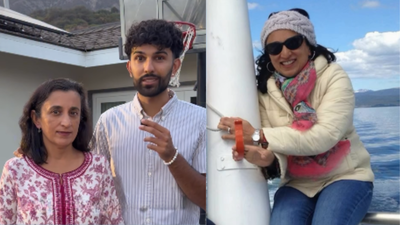
Forty years ago, she was a 15-year-old girl travelling alone, returning to the US after a vacation in India. She had no idea that the flight home would become one of the most terrifying experiences of her life- or that the memory of it would stay with her for decades.On September 5, 1986, Pan Am Flight 73 was hijacked during a stopover in Karachi, Pakistan. The passengers were held hostage for hours before the ordeal ended in gunfire. Twenty passengers and crew members were killed and more than 100 people were wounded, according to the FBI.Among those on board was a teenage girl who survived. Four decades later, her son Rohan Sharma @rohabits, shared her story in an emotional post on Instagram. His message was not simply about the horror she witnessed that day. It was about what she did with her life after surviving it.According to the account shared by Sharma and his mother, she was travelling alone when the hijackers took control of the aircraft. In her recollection shared by Sharma, she describes being herded with other passengers towards the middle of the aircraft as the situation turned increasingly violent.“Another passenger opened the emergency exit door, so my mom went out,” Sharma said, recounting his mother’s experience. She then found herself standing frozen on the plane’s wing while gunfire erupted inside.It was during those chaotic moments that a flight attendant helped her escape. Sharma identifies the crew member as “Sunshine”, who guided his mother from the aircraft’s wing down an emergency slide. His mother survived physically unharmed. But the experience did not simply disappear when she walked away from the aircraft.
‘The images of the hijacking are still imprinted’
Pan Am Flight 73 was hijacked on September 5, 1986, during a stopover at Karachi. The FBI says the attack resulted in the deaths of 20 passengers and crew members, including two Americans, while hundreds of others were targeted and more than 100 people were wounded.Among those who became synonymous with the tragedy was Indian flight purser Neerja Bhanot, who displayed extraordinary courage while helping passengers during the hijacking. The Government of India later honoured Bhanot posthumously with the Ashoka Chakra.For survivors, however, the end of the hijacking did not necessarily mean the end of the ordeal. Sharma says his mother still remembers the incident vividly, even four decades later.“Unlike other painful memories that fade with time, the images of the hijacking are still imprinted in my mom’s mind,” he wrote. That detail is perhaps the most striking part of her story. Survival, in her case, did not mean forgetting. Instead, it meant learning to live alongside a memory that could not be erased.
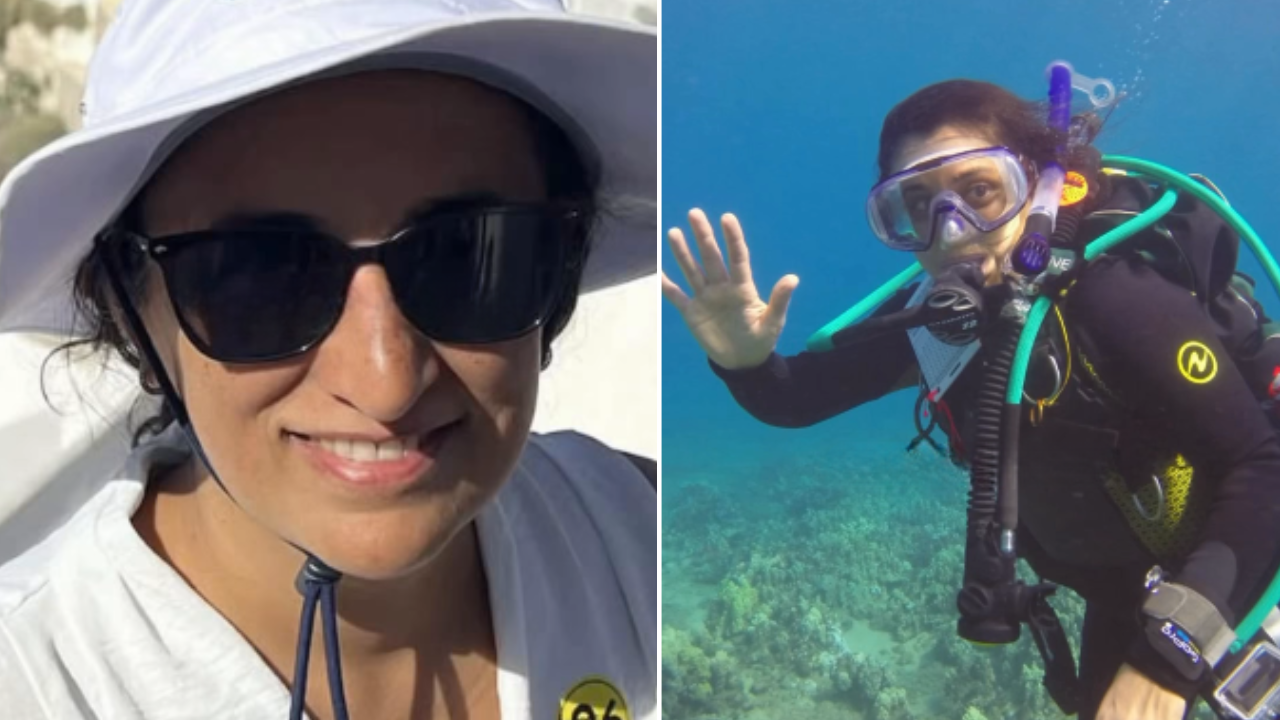
Despite remaining uneasy about flying, she continued travelling and pursued her lifelong dream of seeing the world.
She was still afraid of flying- but she kept travelling Sharma says his mother never pretended that the experience had left her completely fearless. “I’m still not at ease on airplanes,” she adds. Yet she also had a lifelong dream of seeing the world. And so, rather than waiting for the fear to disappear before beginning to live again, she travelled anyway.Her journeys over the years have included scuba diving in the Caribbean and skiing in the Swiss Alps. More recently, she swam in the open waters of Portugal. For her son, these experiences represent something much bigger than travel.They are evidence of a choice she made after surviving the hijacking- not to allow the worst experience of her life to become the definition of her life. “None of this would have been possible had I allowed the trauma to get the best of me,” she says in the post.
‘Trauma doesn’t just disappear’
There is no neat ending to her story, and perhaps that is what makes it resonate. She does not claim that time erased what happened. It did not. She does not say that she stopped being afraid of flying. She has not. And she does not suggest that healing means forgetting the people who did not survive. Instead, she acknowledges the people who never made it off the aircraft and those whose lives were permanently changed by the attack.Her understanding of healing is therefore less about erasing the past and more about refusing to surrender the future to it. “The truth is, trauma doesn’t just disappear, and healing doesn’t mean forgetting what happened,” she says.Then comes the line that has resonated most strongly with her son’s post: “Healing doesn’t happen before we live, it happens because we live.”