




In 2005, two art dealers bought a damaged painting with a Leonardo da Vinci connection for just $1,175; 12 years later, it sold for a world record $450 million
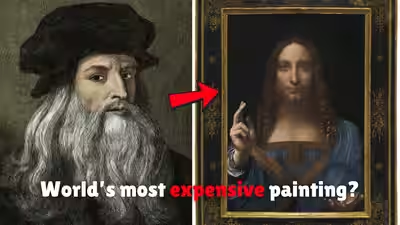
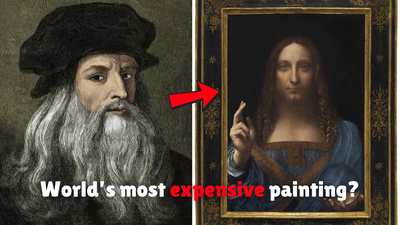
In 2005, two art dealers bought an old painting of Jesus Christ at an auction in New Orleans for $1,175. The work was in poor condition and had been attributed to a follower of Leonardo da Vinci, rather than the Renaissance master himself. Twelve years later, the same painting sold for $450.3 million at Christie’s in New York, setting a record for the most expensive painting ever sold at auction.The painting, known as ‘Salvator Mundi,’ meaning ‘Saviour of the World,’ became one of the art market’s biggest stories. Its dramatic rise in value followed years of restoration, historical research and expert examination. But its attribution to Leonardo has remained contested, and the painting has not been publicly displayed since its planned unveiling at the Louvre Abu Dhabi was postponed in 2018.Its journey raises two questions: how did a painting once dismissed as a copy become a record-breaking work, and who actually painted it?
A painting that disappeared from history
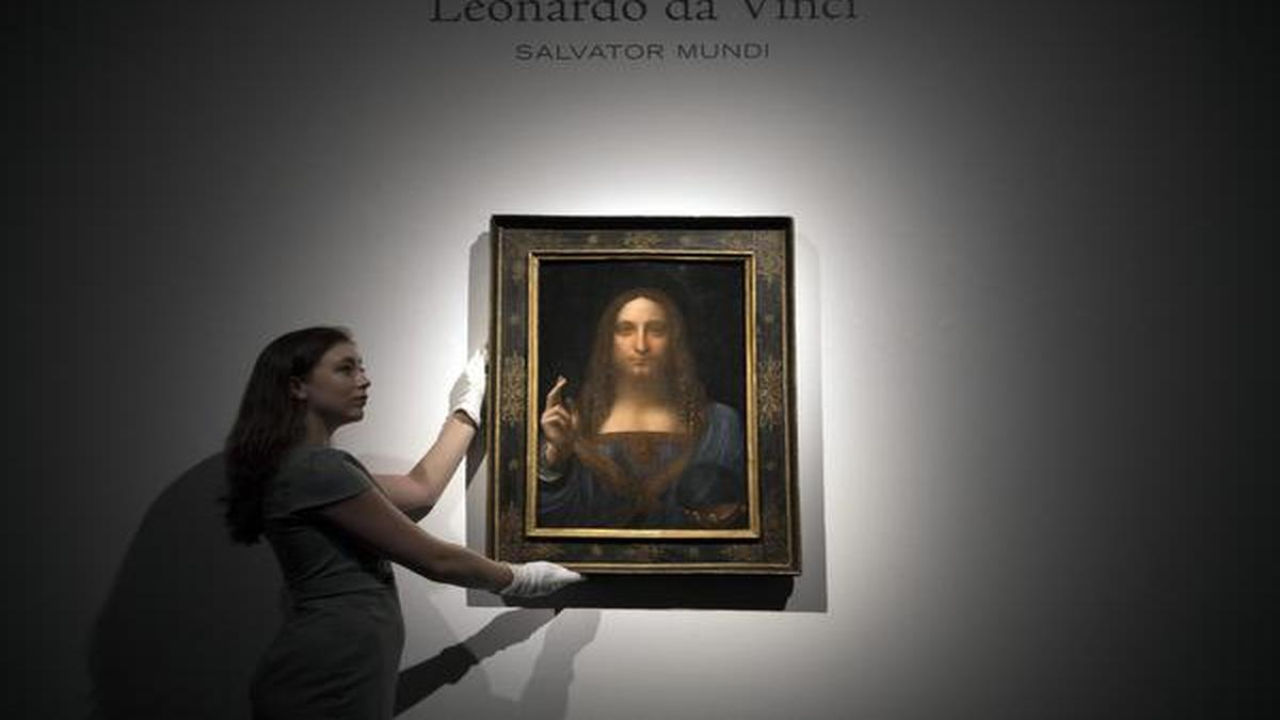
The painting belonged to King Charles I of England and was recorded in an inventory of the royal collection drawn up in 1650, a year after his execution.
‘Salvator Mundi’ depicts Christ facing forward, raising his right hand in blessing while holding a transparent crystal orb in his left. The composition is associated with the Christian image of Christ as the saviour of the world. The painting is generally dated to around 1500, although its precise date and authorship remain debated.According to the official website of British auction house Christie’s, the painting belonged to King Charles I of England and was recorded in an inventory of the royal collection drawn up in 1650, a year after his execution. Its whereabouts between 1763 and 1900 are not fully documented.In 1900, the painting entered the Cook Collection in England after being acquired from Sir Charles Robinson, who had purchased it as a work by Bernardino Luini, an artist associated with Leonardo’s circle. In 1958, the painting was sold at Sotheby’s in London for just £45. The auction catalogue attributed it to Giovanni Boltraffio, another painter associated with Leonardo’s circle. After the sale, the work again remained out of public view for decades.
Next major turning point came in April 2005
The next major turning point came in April 2005. According to research by art historian Frank Zöllner, the work appeared at an auction at the St Charles Gallery in New Orleans. It was catalogued as a work after Leonardo da Vinci. Art dealers Robert Simon and Alexander Parish acquired it for a total of $1,175, including the buyer’s premium, after a hammer price of $1,000.At that point, it was not being sold as an undiscovered Leonardo masterpiece. It was a damaged old painting whose true artistic significance had yet to be established.
Restoration changed the painting’s story
After the 2005 purchase, the painting underwent extensive conservation under Dianne Dwyer Modestini. The restoration, carried out from 2007, helped reveal details that had been obscured by layers of old paint, dirt and previous interventions. The process also exposed the difficulties of assessing a work that had suffered significant damage. Parts of the panel and painted surface were in poor condition, and some areas required careful reconstruction.The restoration was followed by years of research. Experts examined the composition, drawing beneath the paint, materials and relationship between the work and other versions of Salvator Mundi. In 2011, London’s National Gallery included it in an exhibition devoted to Leonardo da Vinci, presenting it as a work by the artist. That exhibition was a decisive moment.
From $1,175 to $127.5 million
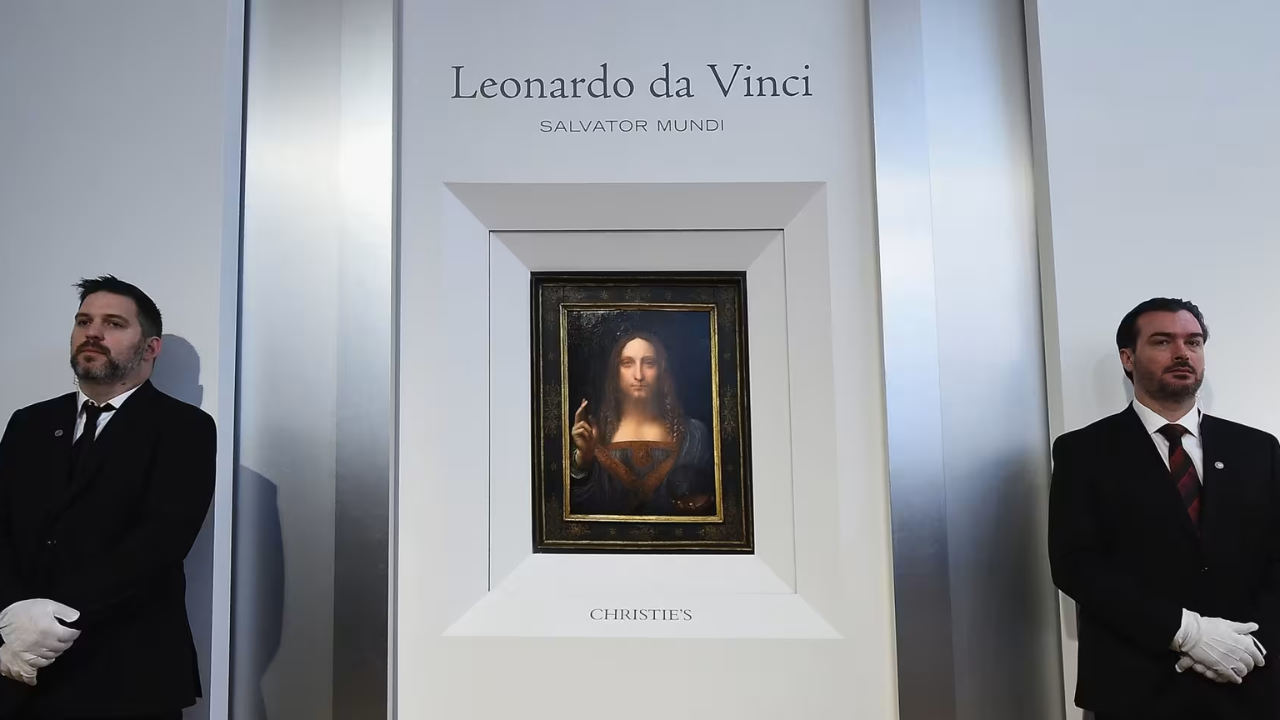
Photo credit: HISTORY
The painting’s value rose sharply after its attribution gained recognition. In May 2013, Swiss art dealer Yves Bouvier acquired it through a private sale for $83 million. He subsequently sold it to Russian billionaire Dmitry Rybolovlev for $127.5 million. The difference between the two prices later became part of a legal dispute between Rybolovlev and Bouvier. Rybolovlev accused the dealer of misleading him about transactions involving artworks, including the prices at which they had been acquired. Bouvier denied wrongdoing. Their dispute became one of the art market’s most prominent legal battles and was settled in 2023.Rybolovlev eventually decided to sell Salvator Mundi. Christie’s placed it in its Post-War and Contemporary Art evening sale in New York on November 15, 2017, rather than in a traditional Old Masters auction.The decision helped bring the painting before a global audience of major collectors. Christie’s reported that nearly 30,000 people visited exhibitions of the work in Hong Kong, London, San Francisco and New York before the sale. The auction lasted around 19 minutes. The hammer fell at $400 million, and the final price, including the buyer’s premium, reached $450,312,500.According to Christie’s, the sale broke the previous auction record for a work of art by a wide margin. Guinness World Records also lists ‘Salvator Mundi’ as the most expensive painting sold at auction.
Why experts still disagree
The record price did not end the debate over the painting’s authorship. Some specialists believe Leonardo painted the work himself, while others argue that it was produced largely by an assistant or in his workshop, perhaps using a design by the master. Bernardino Luini and Giovanni Boltraffio, both associated with Leonardo’s circle, have been mentioned in discussions of the painting.The disagreement is partly rooted in the painting’s condition. Extensive restoration makes it difficult to determine how much of the visible surface belongs to the original artist and how much reflects later work. The debate is not simply about whether the painting is a Leonardo or a copy. Some specialists believe that Leonardo may have contributed to parts of the work while assistants from his workshop executed other sections.
Where is the $450 million painting now?
After the 2017 sale, the identity of the buyer remained uncertain for a time. Prince Badr bin Abdullah al-Saud was identified as the successful bidder. Christie’s subsequently confirmed that Abu Dhabi’s Department of Culture and Tourism was acquiring the painting. However, later reports linked the purchase to Saudi Crown Prince Mohammed bin Salman, with Prince Badr reportedly acting on his behalf.The painting was expected to be displayed at the Louvre Abu Dhabi in September 2018, but the planned unveiling was postponed without a public explanation. It was also absent from the Louvre in Paris’s major 2019 Leonardo exhibition.An August 2024 report by The Guardian said Princeton academic Bernard Haykel had been told by Saudi culture minister Prince Badr that the painting was being kept in a secure vault in Geneva until a museum in Riyadh was completed. The report also examined suggestions that it could eventually become a centrepiece of a future Saudi museum. However, its present location has not been independently confirmed.