



In 2017, a couple moved to a remote outback station in New South Wales, fenced off 4,000 hectares and cleared it of rabbits, cats, foxes; 10 years later, bilbies, bandicoots, bettongs, gone for over 100 years, are back and breeding
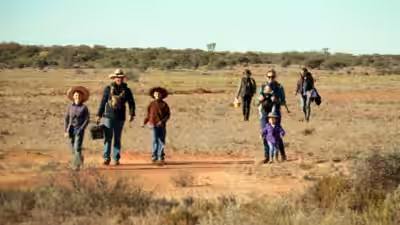
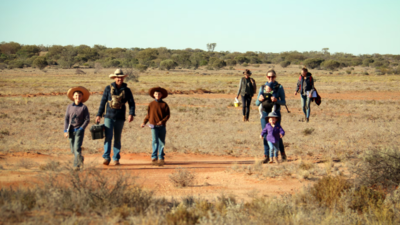
What began as an ambitious conservation experiment in one of Australia’s most isolated landscapes has grown into a remarkable wildlife recovery effort. Nearly a decade after moving to a remote station in north-western New South Wales, ecologists Rebecca West and Reece Pedler are witnessing the return of native mammals that had disappeared from the region for morqe than a century. According to a September 2026 report by ABC Landline journalist Bill Ormonde, alongside updates from the University of New South Wales (UNSW) and the NSW Government, the couple’s work through the Wild Deserts project has helped reintroduce six native mammal species to Sturt National Park. More significantly, some of these animals are now breeding and establishing populations beyond the project’s predator-proof enclosures.
A remote home with an ambitious mission
West and Pedler moved to Fort Grey in 2017, leaving behind their lives in Adelaide to work on a conservation programme designed to reverse the damage caused by introduced predators and grazing animals. The former sheep and cattle station, located in the remote Corner Country near the meeting point of New South Wales, South Australia and Queensland, became the headquarters of the Wild Deserts initiative.The project, which began in 2016, is a partnership involving UNSW Sydney, the NSW National Parks and Wildlife Service and conservation specialists Ecological Horizons. Its central objective was to bring back native mammals that once played an important role in Australia’s desert ecosystems but had vanished following European settlement. Introduced rabbits damaged vegetation and competed with native wildlife for food, while feral cats and foxes preyed on smaller mammals, contributing to their disappearance.The team established two large fenced areas, each covering approximately 2,000 hectares. Together, the enclosures protect around 4,000 hectares from feral predators and grazing pressures. Rabbits, cats and foxes were removed to create safer conditions for native animals to establish breeding populations.Bringing back animals that disappearedThe first reintroductions began in 2020, with greater bilbies, crest-tailed mulgaras and Shark Bay bandicoots among the earliest arrivals. Golden bandicoots followed in 2022, while western quolls and burrowing bettongs were subsequently introduced.These animals were selected not simply because they had disappeared from the landscape, but because of the ecological roles they perform. Bilbies, bandicoots and bettongs are natural diggers. Their burrows and feeding activities turn over the soil, improve water infiltration and create conditions that help native plants regenerate. The return of these mammals is therefore expected to benefit more than just the animals themselves. It could gradually help restore the natural processes that once sustained the desert ecosystem.
Taking conservation beyond the fences
One of the project’s biggest achievements has been its move beyond predator-free enclosures. While protected areas offer native mammals a safe environment to reproduce, conservationists ultimately want them to survive in the wider Australian landscape, where feral predators are still present.To work towards that goal, the team established a 100-square-kilometre Wild Training Zone surrounding the protected enclosures. Here, feral cat populations are kept at lower levels, allowing reintroduced animals to gradually adapt to living alongside predators. The approach is showing encouraging results. By September 2026, researchers had recorded survival, breeding and the arrival of new individuals among populations of bilbies, bettongs, golden bandicoots and western quolls released beyond the fences. The project had also established the largest rabbit-free area of its kind, covering approximately 4,000 hectares.
A decade of conservation begins a new chapter
The progress has been significant enough for the NSW Government and UNSW to extend their partnership for another 10 years, announced in June 2026. The next phase will focus on improving predator management, monitoring animal populations and finding ways to expand successful reintroductions across larger landscapes.The work is particularly important for Australia’s native mammals, which have experienced some of the world’s highest rates of mammal extinction since European settlement. According to the NSW Government, several species being restored through conservation programmes across the state had not been seen in the wild in New South Wales for more than 100 years.For West and Pedler, the transformation of Sturt National Park represents more than the return of individual species. It is an attempt to rebuild an ecosystem in which native animals, vegetation and natural processes can once again support one another. After years of research, predator control and carefully monitored releases, the desert is showing signs of life that had been missing for generations.