






India’s GLOF panel working on disaster mitigation at 200 high-risk glacial lakes | India News
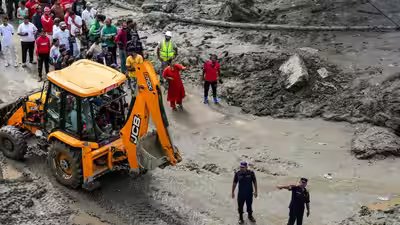
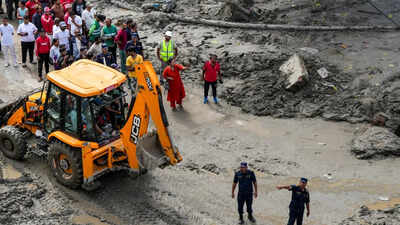
NEW DELHI: The Glacial Lake Outburst Flood (GLOF) disaster in Nepal on Wednesday has renewed discussion on India’s own strategy and preparedness to mitigate such risk, with the presence of approximately 200 high-risk glacial lakes in the Himalayan regions.According to the government’s survey of these glacial lakes, the Himalayan ranges are host to as many as 7,500 glacial lakes, of which 10% are in Sikkim alone. While their mapping revealed that the Ganga River basin has more than 4,700 glacial lakes, from its origin to the foothills of the Himalayas, covering a catchment area of nearly 2.5 lakh sq km, the 25 most at risk are in Sikkim.India has already suffered one of the worst GLOF disasters in recent times when, on Oct 3, 2023, glacial rocks of 14.7 cubic meters collapsed in South Lhonak Lake in Sikkim, close to midnight, generating a “20m high displacement wave”, wiping out several hydropower assets and settlements on its way downstream.In response, the Centre had set up a high-level coordination committee on GLOF disaster risk reduction. The initiative, spearheaded by PM’s principal secretary PK Mishra, was tasked with hosting multi-agency deliberations and surveys of such lakes and identifying the high-risk ones. The Centre also allocated Rs 150 crore for the National GLOF Risk Mitigation Programme for four Himalayan states having high-risk glacial lakes.The first meeting of the coordination committee on DRR was held in November 2024, when the PM’s principal secretary expressed his satisfaction with the group’s “tri-focal lens — assessment, monitoring, and mitigation”. The committee hosted regular meetings and received feedback, which then formed part of a joint strategy between states and the Centre. Not much is known on follow up developments.
Share your thoughts in the comments
Be respectful · TOI community guidelines
Earlier, the government had claimed that multi-agency expeditions were conducted to assess all A-category lakes, comprising scientists and officials from NDMA, Central Water Commission, Geological Survey of India, Centre for Development of Advanced Computing, Indo-Tibetan Border Police and the Army. The Centre’s Rs 150 crore allocations were used for mitigation measures at five lakes in Sikkim and others.Previous efforts of GLOF risk reduction by setting up two solar-powered twin-camera Automated Weather Stations (AWS) at South Lhonak and Shako Cho in Sikkim had not been very effective. This was supposed to feed vital data to authorities and work as an early warning system. The Centre is currently preparing a “Risk Mitigation Programme which incorporates setting up solar-powered AWS and early warning systems (EWS) at all high-risk glacial lakes.