





Isro to launch NVS-03 on Oct 30, but NavIC has a long way to go | India News
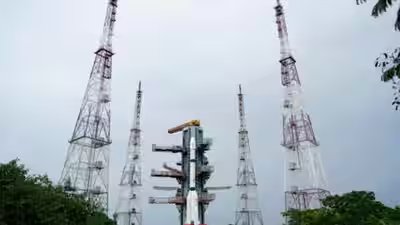
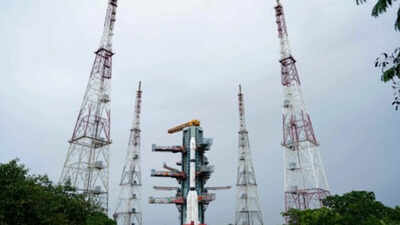
BENGALURU: Isro will launch its next navigation satellite, NVS-03, aboard the GSLV-F18 rocket on Friday (Oct 30) at 11.51 pm from the Second Launch Pad at the Satish Dhawan Space Centre, Sriharikota.GSLV-F18 is the 20th flight of India’s Geosynchronous Satellite Launch Vehicle (GSLV). The mission is a crucial attempt to rebuild India’s ailing NavIC navigation constellation, which currently lacks enough operational satellites to provide standalone positioning services.The roughly 50-metre rocket, with a lift-off mass of about 420 tonnes, will place the approximately 2,250-kg NVS-03 into a geosynchronous transfer orbit with a perigee (closest point to Earth) of 170 km, apogee (farthest point from Earth) of 37,023 km and inclination of 20.75°.Why the launch mattersNVS-03 is the third satellite in Isro’s next-generation navigation series, designed to ensure continuity of the services of the Indian Regional Navigation Satellite System, now called Navigation with Indian Constellation, or NavIC.NavIC is intended to provide Position, Navigation and Timing (PNT) services across India and up to about 1,500 km beyond the country’s landmass, reducing dependence on foreign navigation systems.“NVS-03 carries an indigenous atomic clock alongside procured clocks and introduces the L1 signal, in addition to the existing L5 and S signals,” Isro said. The addition is expected to widen compatibility with more user devices and strengthen NavIC’s civilian and strategic utility.But the launch comes at a time when NavIC is operating below its minimum requirement. Earlier this year, union minister Jitendra Singh told Parliament: “After completion of mission life (10 years) of IRNSS-1F, presently the NavIC constellation has three satellites — IRNSS-1B, IRNSS-1I and NVS-01 — for providing PNT services.To provide basic positioning service, a minimum of four operational satellites are required in orbit.” The govt acknowledged that, as a result, “the NavIC constellation cannot provide standalone positioning service, however timing service is functional.”A troubled programmeNavIC’s difficulties stem from a combination of ageing satellites, atomic-clock failures and a failed replenishment mission. IRNSS-1F completed its 10-year mission life in March 2026; soon after, Isro said its procured onboard atomic clock stopped functioning, removing the satellite from navigation service.The more immediate setback was NVS-02, launched on Jan 29, 2025 aboard GSLV-F15. Although the satellite separated successfully and deployed its solar panels, it could not perform the orbit-raising manoeuvres needed to move from its elliptical transfer orbit to its designated circular orbit.An Isro apex committee traced the anomaly to the spacecraft’s pyro system. It found that the drive signal did not reach the pyro valve in the oxidiser line of the orbit-raising engine, preventing the engine from firing. The committee concluded that the most likely cause was disengagement of at least one contact in each of the main and redundant connector paths.Isro said the panel recommended corrective measures to enhance redundancy and improve the reliability of pyro-system operations, and that these recommendations have already been implemented.
Share your thoughts in the comments
Be respectful · TOI community guidelines
Still a long roadNVS-03’s successful launch would raise the number of navigation-capable satellites, but it will not by itself restore NavIC to full operational strength. The spacecraft must first complete orbit-raising manoeuvres, reach its designated orbit and be validated for service.The govt has said NVS-04 and NVS-05 are in an advanced stage of realisation, meaning further launches will be needed before NavIC regains a robust, redundant constellation.NavIC’s return to standalone positioning service depends not only on NVS-03 reaching orbit, but on Isro executing the post-launch operations that failed for NVS-02, and on the timely induction of the satellites that follow.