






Isro’s GSLV-F17 successfully places EOS-05 Earth observation satellite in geosynchronous orbit | India News
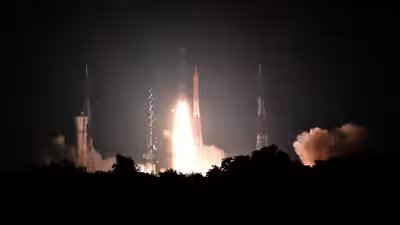
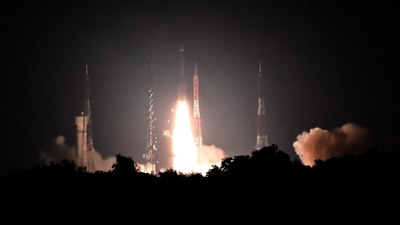
SRIHARIKOTA: The Indian Space Research Organisation (Isro) successfully launched EOS-05, India’s first imaging satellite designed to operate from a geosynchronous orbit, aboard GSLV-F17 in the early hours of Friday.The 51.7-metre-tall, 420.5-tonne, three-stage rocket lifted off from the second launch pad at Sriharikota at 2.55am and placed the around 2,367kg Earth observation satellite in its intended sub-geosynchronous transfer orbit.This was the 19th GSLV flight. GSLV-F17 had a S139 solid core with four L40H liquid strap-ons, a GL40HT liquid second stage and a CUS15 indigenous cryogenic upper stage, besides a four-metre composite ogive payload fairing.EOS-05 was injected into a geosynchronous transfer orbit. It will eventually achieve a nominal perigee of 170km, apogee of 28,934km and inclination of 19.28 degrees. The satellite will be moved to the final orbit through a series of manoeuvres using onboard thrusters.Isro chairman V Narayanan said the rocket injected the satellite in the intended orbit precisely. This is the 107th launch from Sriharikota and 19th GSLV flight. The chairman addressed from the mission control complex post launch.“From launching 1536kg payload in the first GSLV launch, the chairman said the rocket has carried the heaviest payload in its history at 2367kg. We gradually improved the performance of the vehicle by optimising the structural mass and improving propulsion system. The satellite is India’s first dedicating imaging satellite from geosynchronous orbit. It will provide strategic data.”The chairman also said Isro will have six more launches this financial year including navigation satellite NVS-03 and Gaganyaan first uncrewed mission.India had 21 operational Earth observation satellites as of February 2026. Of these, most are in low-Earth or sun-synchronous polar orbits, while India’s geostationary-orbit Earth observation capability is currently represented by the meteorological satellites INSAT-3D, INSAT-3DR and INSAT-3DS.
Share your thoughts in the comments
Be respectful · TOI community guidelines
EOS-05 is India’s first imaging satellite to operate from geosynchronous orbit.The launch was the first GSLV mission since GSLV-F16 successfully placed the joint Nasa-Isro NISAR Earth observation satellite in a 743km sun-synchronous orbit on July 30, 2025. Friday’s launch was Isro’s second orbital mission of 2026. The first, PSLV-C62 carrying EOS-N1 and other payloads on Jan 12, failed following an anomaly towards the end of the rocket’s third-stage flight.